Steep & Origin

  • Home
  • Reviews
  • Best
    • All Best
      • Oolong Tea Picks
    • Chinese Black Tea Picks
    • Green Tea Picks
    • Matcha Picks
    • Pu-erh Tea Picks
    • Tea and Caffeine Picks
    • Tea pottery & teaware Picks
  • Guides
    • All Guides
      • Oolong Tea Guides
    • Chinese Black Tea Guides
    • Evening Tea Guides
    • Green Tea Guides
    • Matcha Guides
    • Organic Tea Guides
    • Pu-erh Tea Guides
    • Tea and Caffeine Guides
    • Tea and Health Guides
    • Tea pottery & teaware Guides
    • White Tea Guides
  • Comparisons
    • All Comparisons
      • Oolong Tea Comparisons
    • Chinese Black Tea Comparisons
    • Green Tea Comparisons
    • Matcha Comparisons
    • Pu-erh Tea Comparisons
    • Tea pottery & teaware Comparisons
  • Favorites
Guides

Choosing Dancong samples: turn aroma names into a useful order

2 min read
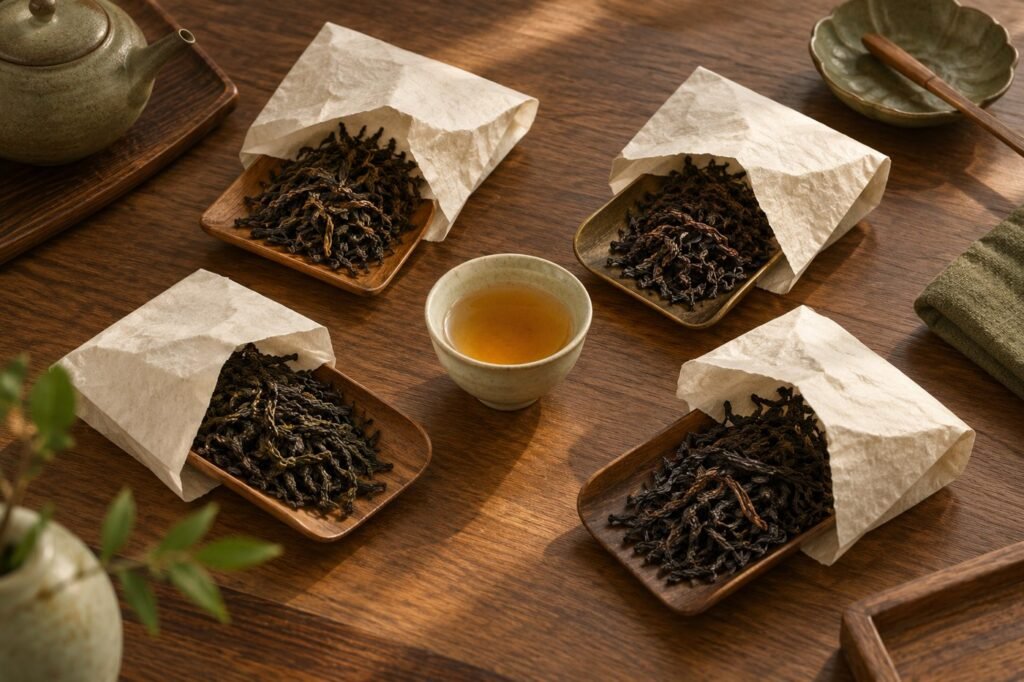
Editorial illustration for Choosing Dancong samples: turn aroma names into a useful order

Table of Contents

Choose two Dancong samples that answer a real preference question, and keep enough leaf to repeat each. Aroma names are leads to investigate, not guaranteed ingredients or a checklist of flavors you must detect.

Begin with the quality you want to compare

Question A useful pair What to notice
Do I prefer a gardenia-fruit or honey-orchid direction? Ya Shi Xiang and Mi Lan Xiang Fragrance after swallowing, fruit character and any sour or woody edge
Do I value a mild aromatic finish or more developing aftertaste? Da Wu Ye and Song Zhong How the finish changes, and whether timing demands feel worthwhile
Does a nutty note add interest? Xing Ren Xiang beside a floral sample Whether almond-like fragrance emerges and whether the rest of the cup is enjoyable

These pairings are editorial sampling suggestions drawn from separate original customer evidence. They are not claims that one cultivar always tastes stronger, sweeter or more complex.

Budget leaf for repeat sessions

The reviewed Dancong gongfu recipes use eight grams per 110 mL. A sample smaller than sixteen grams cannot provide two full sessions at that exact dose. Check the selected sample weight before buying; product-page sample availability and pack sizes can change. A cup method may use less leaf, but it asks a different preparation question.

  1. Choose one preference question, rather than collecting every grade or aroma name.
  2. Confirm the exact listing and sample weight. Standard and Nonpareil Ya Shi Xiang are separate offers.
  3. Save the product’s own recipe and mark the packet so you do not mix samples.
  4. Make the first session with that complete method. Record the strongest appeal and the main drawback.
  5. Repeat the more uncertain sample with one deliberate adjustment before ordering a large pack.

Names cannot decide the cup for you

Da Wu Ye can be fragrant but mild; Song Zhong can have a rewarding finish yet turn bitter at the listed start; Xing Ren Xiang’s almond note can be faint or arrive later. These limits are why a sample order is useful. If a cup remains unappealing after a reasonable adjustment, the result is information rather than a failure to understand tea.

Use the Dancong shortlist for the five exact options and the existing TeaVivre sample-order guide for planning a broader order. This guide narrows that process to Dancong preference questions.
Frequently Asked Questions

Should I buy the highest grade first?

Not automatically. Original feedback can disagree about intensity, complexity and ease even for a Nonpareil listing.

How much sample tea do I need?

For two sessions at an eight-gram recipe, at least sixteen grams is required. Check actual packet weights rather than assuming every sample supports two full sessions.

Share this article

Twitter Facebook LinkedIn Email

Related Articles

Editorial illustration: How to hold and pour a gaiwan with better control

How to hold and pour a gaiwan with better control

Read More
AI-generated tea and teaware scene for How to brew white tea: loose leaves, buds and mini cakes — editorial illustration

How to brew white tea: loose leaves, buds and mini cakes

Read More
Editorial illustration: Gaiwan vs teapot: choose your first gongfu brewer

Gaiwan vs teapot: choose your first gongfu brewer

Read More

About Steep & Origin

Chinese tea, thoughtfully explored.

We distinguish merchant tea details, customer experiences and editorial interpretation. We do not claim personal testing unless it has actually been performed.

Quick Links

  • Home
  • All Reviews
  • Best Articles
  • Comparisons
  • Guides
  • About
  • Contact
  • Privacy Policy

Categories

  • Chinese Black Tea
  • Evening Tea
  • Green Tea
  • Matcha
  • Oolong Tea
  • Pu-erh Tea

© 2026 Steep & Origin. All Rights Reserved.

We may earn a commission when you buy through our affiliate links. Affiliate disclosure