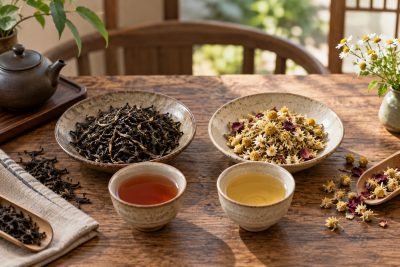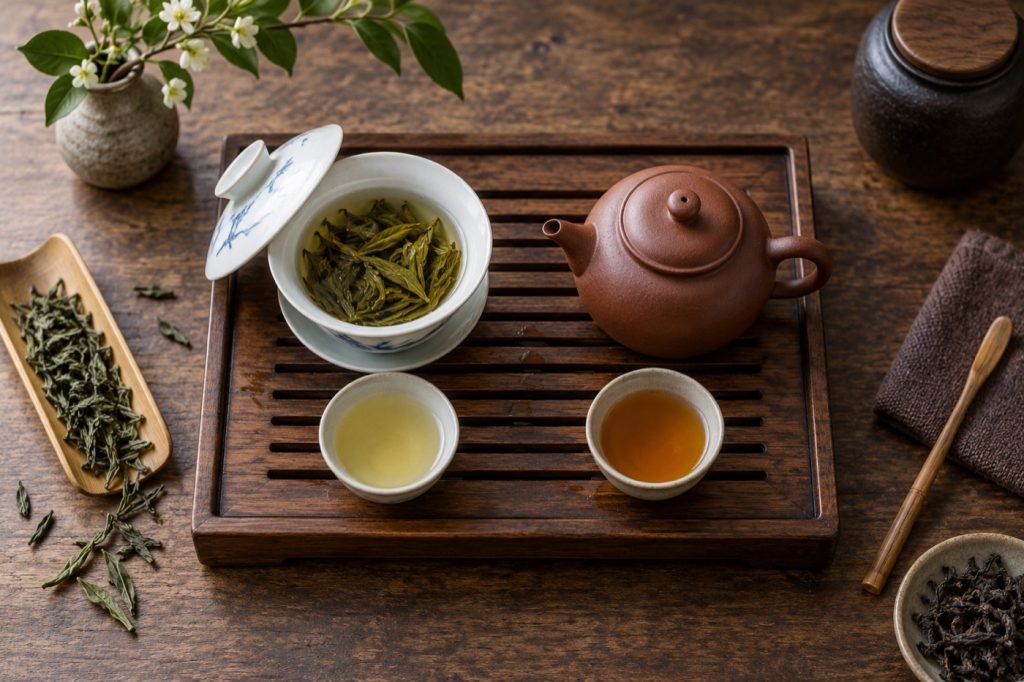
Choose a gaiwan when watching the leaf and adjusting the lid are part of the experience you want. Choose a small teapot when a handle-and-spout routine feels more natural. Neither format removes the need to check grip, serving volume and pouring control.
What changes at the tea table
A gaiwan lets you open the lid, inspect the leaves and adjust the outlet gap. That flexibility asks you to coordinate bowl and lid during a pour. A teapot moves the pouring task to its handle, spout and lid, but a narrow outlet can introduce a different problem when leaves impede the flow. These are different controls, not a universal easy-versus-hard distinction.
Compare the working session
Start with the number of small cups you actually want to serve. A 60 mL mini gaiwan and a 200 mL pot are not useful substitutes merely because both are gongfu vessels. Keep leaf displacement, headroom and the receiving cup in the comparison. Our gaiwan size guide explains that measurement.
Use the original feedback as a fit check
The White Porcelain Gaiwan has successful first-use accounts as well as a pouring complaint. The Xi Shi teapot has good everyday-use reports alongside drips and flow concerns. Those contrasting experiences are more useful than assuming a handle guarantees a clean pour.
Keep material separate from shape
A gaiwan can be porcelain or clay, and a teapot need not be unglazed. If you are also deciding whether to dedicate a vessel to a narrower tea routine, read the material comparison. Do not attribute every difference between two vessels to the presence of a spout.
Check grip, working volume and routine
- Try the grip. With a cool, empty vessel, check whether you can support the lid and direct a low pour without stretching.
- Match the volume. Compare the intended working water with your cup or pitcher, not a close-up product photograph.
- Buy for the routine. Pick the controls you want to use repeatedly; decoration can follow that functional decision.
Sources: White Porcelain Gaiwan, Xi Shi Yixing Purple Clay Teapot.