White Porcelain Gaiwan review
A plain, versatile gaiwan for watching the leaf and learning small-session pouring; check the selected size and your grip before committing.
We may earn a commission if you buy through our links. Affiliate disclosure.
At a Glance
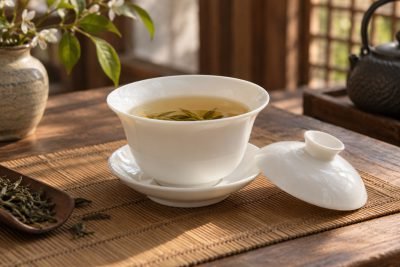
KEY FEATURES
- White porcelain
- 100 mL and 130 mL choices; shared review listing
- Adjustable lid gap
Gaiwan assessment
Research-based editorial assessment for the uses described below, not personal tasting or hands-on testing. Scores are qualitative judgments out of 5, separate from customer stars; historical feedback may cover other harvests or variants.
Easy pours coexist with an awkward-pour report; fit cannot be guaranteed.
Light, simple use appeals, while the propped-lid arrangement can tip if disturbed.
A plain interior helps viewing the infusion; lid-rim texture has mixed implications.
Straightforward cleaning is supported for this glazed vessel; appliance permissions are not inferred.
PROS
- Plain interior makes the infusion easy to observe.
- Small-session use and straightforward cleaning are supported.
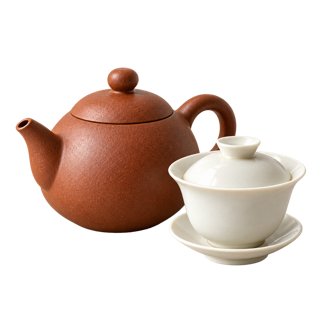
- Lid can rest beside the bowl on the saucer.
CONS
- Pouring comfort is not consistent across the feedback.
- Resting the lid against the bowl can make it easier to tip.
The White Porcelain Gaiwan makes sense when you want one straightforward vessel for exploring different teas. Its unpatterned interior gives the infusion a clear visual background, and the original feedback includes successful first-gaiwan and solo-brewing use. The choice still depends on the size you select: the listing combines 100 mL and 130 mL options, while many comments describe the smaller one.
A clear view is useful between infusions
The pale interior is more than decoration for a drinker who watches leaf opening and liquor color. Customer observations support that use, along with easy cleaning and a simple everyday routine. Color alone cannot tell you that an infusion is ready, so keep the tea’s own time and temperature guidance alongside what you see.
The lid-rest trick has a practical limit
Feedback describes resting the lid between bowl and saucer, which can free space on a small tray. The same arrangement can tip if the lid is knocked. Treat it as an optional resting position on a stable surface, rather than a reason to leave the vessel near the edge of the table.
Pouring is a fit question
Easy handling and tidy pouring appear in the feedback, but so does difficulty pouring. A slightly rough lid rim also draws mixed implications: it may feel secure while producing a scratchy sound when moved. The useful first check is a cool-water pour into your actual cup, with room below the rim and the lid supported.
Set up the White Porcelain Gaiwan
Check the option
Select 100 or 130 mL, then measure a comfortable cool-water fill.
Give the lid a safe place
Use a separate stable resting place if a propped lid could be knocked.
Brew by the tea
Scale the tea’s documented dose to actual working water and decant with a supported lid.
These are practical setup recommendations, not a report of hands-on testing. The working-volume guide helps with dosing, and the pouring guide starts with cool-water control.
Sources: White Porcelain Gaiwan.
Pros & Cons Analysis
Based on supplied customer reviews and verified product documentation
Pros
- The uncluttered interior suits comparing the appearance of successive infusions, without an interior pattern competing with the tea.
- First-gaiwan and regular-use reports make the smaller option a credible starting point for a solo routine. Check the variant rather than applying every comment to both sizes.
- The documented lid-rest position can help on a compact tea tray, provided the arrangement is stable.
Cons
- A comfortable pour for some drinkers coexists with an awkward pour for another. Hand fit and controlled lid placement matter more than a blanket beginner label.
- The light bowl can tip if a propped lid is bumped; give the lid a separate resting place if the tray is busy.
- A historical capacity complaint does not overturn the current seller labels, but it does justify measuring working fill before copying a brewing recipe.
A straightforward brewer for rotating teas
Choose it for a flexible first setup
The strongest case is a simple vessel for rotating teas and observing the infusion. Start with the size that feels secure in your hand and feeds your actual cup.
Consider Ru Yao for a different feel
The Ru Yao offers a documented substantial build and a developing crackle finish. That is a different handling and appearance preference, not proof of better tea.
Frequently Asked Questions
Should I buy 100 mL or 130 mL?
Choose by comfortable grip and intended serving volume. The source reviews pool the options, so they do not establish that both handle identically.
Can I use it for different teas?
This glazed porcelain format is a practical option for rotating teas. Rinse and clean appropriately between sessions; use each tea’s own brewing instructions.
Vessel details
| Vessel type | Gaiwan |
|---|---|
| Material | White porcelain |
| Glaze / finish | Ivory-white glaze |
| Seller-stated origin | Dehua, Fujian, China |
| Reviewed variant | 100 mL and 130 mL choices; shared review listing |
| Stated capacity | 100 / 130 mL |
| Capacity measurement basis | Seller labels; historical customer capacity disagreement, usable fill not independently measured |
| Dimensions (width × height) | Not specified |
| Net weight | Not specified |
| Pouring / filtration design | Adjustable lid gap |
| Seller-stated workmanship | Not specified |
| Documented care | Exact cleaning limits not specified on product listing |
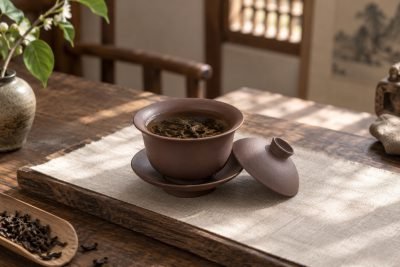
Yixing Zisha Gaiwan 100ml
Yixing, Jiangsu, China
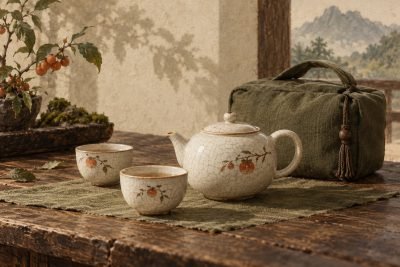
Japanese Style Ru Yao Kuai Ke Bei Travel Tea Set
Dehua, Quanzhou, Fujian, China
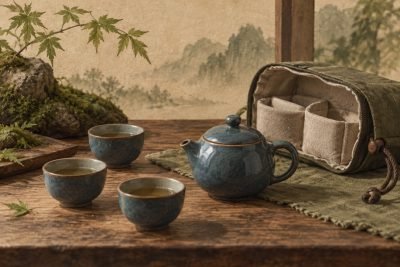
Bluestone Glazed Kuai Ke Bei Travel Tea Set
Dehua, Quanzhou, Fujian, China
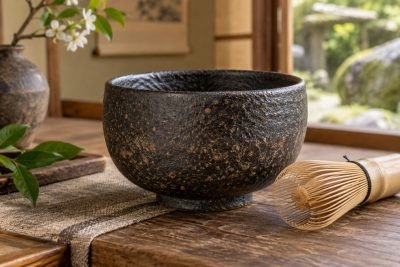
Coarse Pottery Matcha Bowl
Anji, Huzhou, Zhejiang, China