Yixing Zisha Gaiwan 100ml review
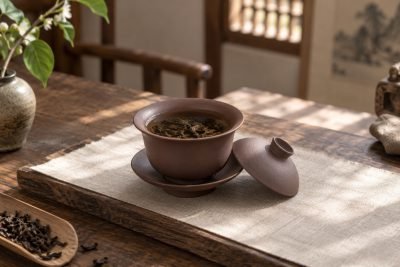
A clay gaiwan for a focused pu-erh or black-tea routine, with favorable heat impressions but an explicitly reported hot lid knob.
We may earn a commission if you buy through our links. Affiliate disclosure.
At a Glance
KEY FEATURES
- Zi Ni clay
- Current title and summary: 100 mL; gallery retains 150 mL wording
- Lid-gap pouring
Gaiwan assessment
Research-based editorial assessment for the uses described below, not personal tasting or hands-on testing. Scores are qualitative judgments out of 5, separate from customer stars; historical feedback may cover other harvests or variants. Provisional: the customer evidence for this vessel is small.
Easy-pour impressions are favorable, with no measured flow rate.
A hot lid-knob report qualifies otherwise positive handling experiences.
Clay and warmth impressions do not establish authentication or controlled heat performance.
Unglazed clay calls for its own preparation and cleaning routine rather than the more flexible glazed-porcelain routine; this is a conditional fit for someone willing to keep that distinction.
PROS
- Original accounts support pu-erh and black-tea use.
- Pleasant handling and easy pouring are reported.
CONS
- Lid knob can become hot.
- Older gallery capacity wording conflicts with the current listing.
The Yixing Zisha Gaiwan combines an open brewing bowl with a clay-focused routine. Original feedback includes pu-erh and black-tea use, favorable warmth impressions and easy pouring. The main practical caution is unusually concrete: a lid knob can become hot. Choose it because you want this form in clay, rather than assuming clay removes the handling demands of a gaiwan.
Resolve the size before the recipe
The current heading and summary say 100 mL, while gallery wording still says 150 mL. A customer also describes approximately 100 mL of practical water capacity. Keep the current 100 mL identity in the review, but measure your own working fill instead of treating an old gallery label as a larger brewing allowance.
Keep heat and flavor claims separate
The feedback supports a perception of retained warmth and enjoyable pu-erh sessions. It does not provide a controlled comparison against matching porcelain at the same fill and temperature. Nor can a pleasant mellow impression certify the clay’s origin or guarantee a change in every tea.
The knob needs attention
A hot lid knob is part of the original evidence and matters during repeated hot infusions. Practice the motion with cool water, keep fingers away from steam and pause if a safe grip is not available. A clay bowl is not a substitute for secure hand placement.
Check the Yixing gaiwan’s fill and lid contact
Confirm working fill
Use the current 100 mL identity, then measure the water you can handle comfortably.
Check contact points
A hot-knob report makes secure lid control important during repeated infusions.
Choose a tea routine
Use the exact pu-erh or black tea’s instructions; the vessel supplies no universal dose or timing.
These are practical setup recommendations, not a report of hands-on testing. The working-volume guide helps with dosing, and the pouring guide starts with cool-water control.
Sources: Yixing Zisha Gaiwan 100ml.
Pros & Cons Analysis
Based on supplied customer reviews and verified product documentation
Pros
- The format suits someone who already enjoys gaiwan control and wants a clay vessel for a narrower tea routine. Reported use is specific enough to support that buying brief.
- Warmth and comfortable-pour impressions are favorable reasons to investigate the model, with no invented retention time or flow rate.
Cons
- The hot-knob observation places a limit on the otherwise positive handling story; repeated infusions still require checking the grip.
- A 150 mL gallery label must not enlarge a recipe based on the current 100 mL summary. The inconsistency makes a working-volume check worthwhile.
Choose a clay routine with a secure lid grip
Choose a focused routine
This gaiwan is worth considering if clay and an open bowl are both deliberate preferences, especially for a pu-erh routine.
Choose porcelain for a simpler rotation
The White Porcelain alternative makes the varied-tea decision easier. The exact comparison explains the different commitments without claiming a taste winner.
Frequently Asked Questions
Is it 100 mL or 150 mL?
The current title and specification summary state 100 mL. Older gallery wording says 150 mL; we retain that discrepancy rather than treating them as equivalent.
Can the lid get hot?
Yes, that concern is present in the original feedback. Check handling carefully and stop if the vessel is too hot to control securely.
Vessel details
| Vessel type | Gaiwan |
|---|---|
| Material | Zi Ni clay |
| Glaze / finish | Zisha clay; glaze not documented |
| Seller-stated origin | Yixing, Jiangsu, China |
| Reviewed variant | Current title and summary: 100 mL; gallery retains 150 mL wording |
| Stated capacity | 100 mL |
| Capacity measurement basis | Current seller summary; historical size wording differs |
| Dimensions (width × height) | 10 × 9 cm |
| Net weight | Not specified |
| Pouring / filtration design | Lid-gap pouring |
| Seller-stated workmanship | Not specified |
| Documented care | Exact first-use procedure not specified in the captured product text |
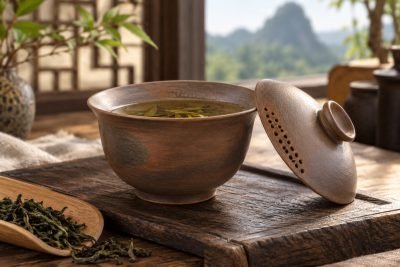
Handmade Qinzhou Nixing Pottery Easy Using Gaiwan
Qinzhou, Guangxi, China
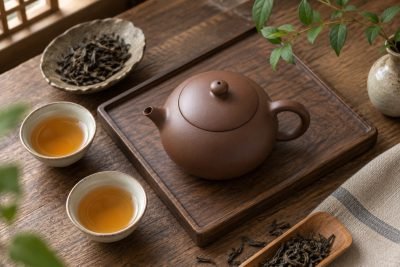
Xi Shi Yixing Purple Clay Teapot
Yixing, Jiangsu, China
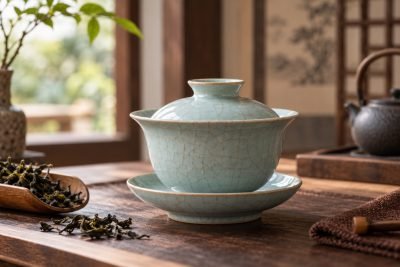
Ru Yao Porcelain Gaiwan
Dehua, Fujian, China
Hand Painted Mini Porcelain Gaiwan 60ml
Chaozhou, Guangdong, China