Xi Shi Yixing Purple Clay Teapot review
A well-documented entry into a clay-teapot routine, with mixed lid and pour experiences and two clay variants that must stay distinct.
We may earn a commission if you buy through our links. Affiliate disclosure.
At a Glance
KEY FEATURES
- Zi Ni / Duan Ni purple clay, seller-stated
- Zi Ni and Duan Ni; pooled review listing
- Spout with internal leaf filtering and vented lid
Teapot assessment
Research-based editorial assessment for the uses described below, not personal tasting or hands-on testing. Scores are qualitative judgments out of 5, separate from customer stars; historical feedback may cover other harvests or variants.
Good pours coexist with lid seepage, slow flow and leaf blockage.
Clay options and inconsistent capacity figures require checking the received variant.
The rounded form has a broad everyday-use record; clay authenticity is not independently established.
Retain the variant-specific odor concern and exact care directions; seasoning is not a repair claim.
PROS
- Longer-term everyday use supports its workhorse role.
- Rounded shape and pleasing hand feel are frequent themes in the corpus.
- Successful small pu-erh and oolong sessions are well documented.
CONS
- Lid seepage and inconsistent pouring coexist with positive reports.
- Current selector and summary capacities differ.
- Some tea pairings feel muted rather than improved.
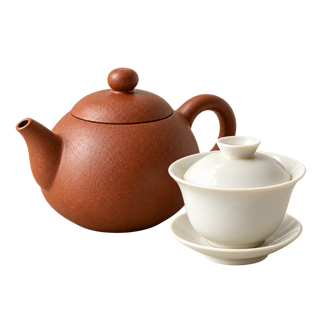
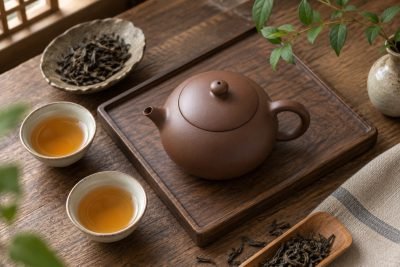
The Xi Shi Yixing Purple Clay Teapot has a convincing everyday-use story, but not a flawless one. The original record includes sustained pu-erh and oolong use, appreciation of the rounded form and satisfying pours. It also includes lid seepage, slow emptying, leaf blockage and capacity surprises. The listing pools Zi Ni and Duan Ni, so a comment about one clay cannot become a promise for the other.
Buy the variant, not only the silhouette
Both selector options say 150 mL, while the current summary lists 160 mL for Zi Ni and 170 mL for Duan Ni when filled with water. Historical answers mention other sizes. We preserve the current conflict rather than choosing the neatest number. Establish working fill before deciding how much leaf a session requires.
Pouring reports point in different directions
Quick, clean pouring and a close-fitting lid are well represented, but they coexist with drips, a less steady stream and a blocked filter. Slow pouring matters most when you want very short infusions: extraction does not stop merely because you began to tip the pot. Assess the actual emptying routine instead of assigning a universal pour time.
Tea pairing is a preference to investigate
Some feedback describes a rounder impression in pu-erh or roasted oolong; another account could not tell whether flavor changed, while lighter teas could feel muted. These are useful limits on the idea that clay is an automatic upgrade. Keep a porcelain brewer available when exploring what a particular tea does in the pot.
First use should be ordinary and controlled
Customers describe assorted seasoning and seal tests. We do not turn inversion tests into buying or safety advice, or infer clay authenticity from a successful vacuum demonstration. Rinse and prepare according to the seller’s instructions, check for damage and practice a low, controlled cool-water pour.
Check your Xi Shi variant and outlet
Identify the clay option
Keep Zi Ni and Duan Ni separate when checking the order and care instructions.
Measure working water
Resolve the selector/summary discrepancy with your received pot; leave comfortable headroom.
Observe the outlet
Check a cool-water pour, then note whether leaves change the flow. Do not modify the spout or lid.
These are practical setup recommendations, not a report of hands-on testing. Follow the first-use guide and investigate any persistent issue with the pouring checklist.
Sources: Xi Shi Yixing Purple Clay Teapot.
Pros & Cons Analysis
Based on supplied customer reviews and verified product documentation
Pros
- Repeat use and replacement purchases after accidents support a meaningful daily-use role; they do not establish a failure rate or comparative lifespan.
- The simple rounded form appeals to people who want a working pot rather than a strongly decorated display object.
- The broad record gives practical pairing examples, especially pu-erh and oolong, while leaving individual preference open.
Cons
- A tidy pour is not universal. Leaf blockage, gurgling and lid drops deserve a receiving tray and an unhurried first assessment, not dismissal as user error.
- Pooling clay variants and old capacity descriptions makes literal recipe transfer unreliable; the selected option and actual working water need checking.
- Flavor impressions differ, including uncertainty about improvement and a report of muted light tea. This cannot support an objective taste score.
- A residual odor concern appears for a Duan Ni purchase. Keep that variant-specific concern visible without assigning it to every Zi Ni pot.
Xi Shi requires an exact-variant decision
For a regular clay-tea routine
Consider Xi Shi when you want a modest, rounded pot and accept that the received lid fit and working capacity need checking.
For a tighter volume brief
The 100 mL Dragon Egg is the smaller documented alternative in this set. Choose it for its volume and decorated form, not because fewer negative reviews prove higher reliability.
Frequently Asked Questions
Which capacity should I use for a recipe?
Measure the comfortable working water in your own pot. The current selector says 150 mL, while the summary lists 160 mL Zi Ni and 170 mL Duan Ni full-water volumes.
Are the reviews all for the same clay?
No. The listing combines Zi Ni and Duan Ni, and some accounts explicitly identify a variant. Keep those distinctions when interpreting feedback.
Does a tight seal prove authentic clay?
No. Lid fit and a seal demonstration concern construction and handling, not independent material authentication.
Vessel details
| Vessel type | Teapot |
|---|---|
| Material | Zi Ni / Duan Ni purple clay, seller-stated |
| Glaze / finish | Unglazed clay |
| Seller-stated origin | Yixing, Jiangsu, China |
| Reviewed variant | Zi Ni and Duan Ni; pooled review listing |
| Stated capacity | 160 / 170 mL |
| Capacity measurement basis | Summary full-water figures; both selector labels say 150 mL |
| Dimensions (width × height) | Not specified |
| Net weight | Not specified |
| Pouring / filtration design | Spout with internal leaf filtering and vented lid |
| Seller-stated workmanship | Semi-handmade; seller names Jing Zhengjuan |
| Documented care | Merchant recommends seasoning and a dedicated tea type; exact method needs matching instructions |
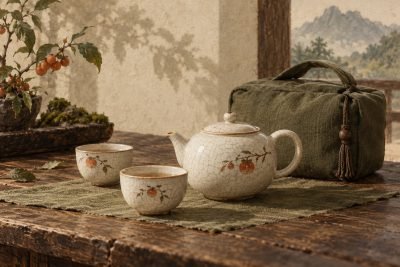
Japanese Style Ru Yao Kuai Ke Bei Travel Tea Set
Dehua, Quanzhou, Fujian, China
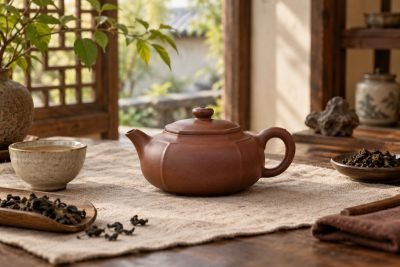
Handmade Antique Style Fanggu Yixing Zisha Teapot
Yixing, Jiangsu, China
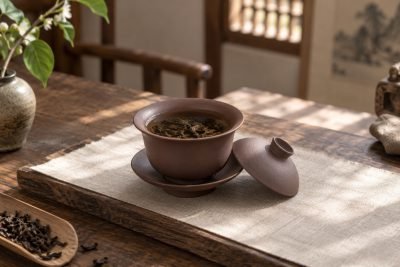
Yixing Zisha Gaiwan 100ml
Yixing, Jiangsu, China
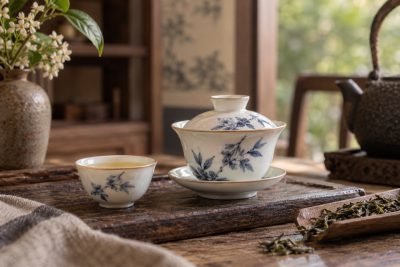
Hand Painted Mini Porcelain Gaiwan 60ml
Chaozhou, Guangdong, China