Handmade Antique Style Fanggu Yixing Zisha Teapot review
A low, rounded Zhuni pot with useful size choices and favorable pours, tempered by small-knob and lid-seepage feedback.
We may earn a commission if you buy through our links. Affiliate disclosure.
At a Glance
KEY FEATURES
- Zhuni clay
- 130 mL and 200 mL options; shared listing
- Short rounded body with spout and separate lid
Teapot assessment
Research-based editorial assessment for the uses described below, not personal tasting or hands-on testing. Scores are qualitative judgments out of 5, separate from customer stars; historical feedback may cover other harvests or variants. Provisional: the customer evidence for this vessel is small.
Smooth pours and good fit coexist with slight lid leakage.
Choose 130 or 200 mL by the session; a small lid knob may not suit large hands.
The low rounded form and workmanship have favorable customer support.
The seller specifically advises gradual warming and avoiding rapid temperature changes.
PROS
- Smooth pouring and attractive workmanship are supported.
- Two listed sizes serve different session plans.
CONS
- Slight lid leakage appears in the feedback.
- The lid knob can feel small for large hands.
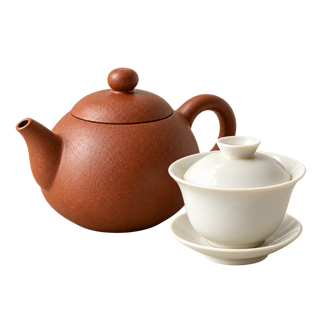
The Antique Style Fanggu is a thoughtful option when you want a rounded, low-profile clay pot and a choice between 130 mL and 200 mL. Original feedback supports attractive workmanship and smooth pouring, but it also raises slight lid leakage and a small lid grip for large hands. The handmade label is a seller statement, not a reason to overlook those practical details.
Choose the session size first
The two capacity choices belong in one review because the listing and customer corpus are shared. A complaint that 200 mL feels too large for solo use is meaningful for that routine, not proof that the larger version is badly designed. Decide how many small cups you want from each infusion before choosing.
The lid is the handling checkpoint
Positive fit reports coexist with a little seepage and a small-knob concern. Do not make pressing or shifting a hot lid into a universal fix. A cool-water trial can show whether the received fit and your grip are comfortable before tea and heat complicate the movement.
Warm the Zhuni gradually
The product page specifically advises warming the pot with warm water before brewing and warns about rapid temperature changes. That instruction is more relevant than a customer’s successful pre-use boil. It belongs in the routine for this exact pot, alongside a stable surface and careful separation of lid and body.
Prepare the Fanggu size you actually ordered
Choose the capacity
Set the 130 or 200 mL choice by the cups you intend to serve.
Warm gradually
The listing advises warm-water preparation before hot brewing and warns against rapid temperature changes.
Check the lid grip
Practice cool and resolve uncomfortable grip or seepage before relying on a hot-session workaround.
These are practical setup recommendations, not a report of hands-on testing. Follow the first-use guide and investigate any persistent issue with the pouring checklist.
Pros & Cons Analysis
Based on supplied customer reviews and verified product documentation
Pros
- The low rounded design has a real use record, including dedicated raw pu-erh sessions, rather than only visual praise.
- The 130/200 mL choice allows a buyer to select a session scale without pretending that the pooled reviews measure both variants independently.
Cons
- Seepage remains relevant even though other lids fitted well. The evidence supports checking the received piece, not guaranteeing a perfect seal.
- The small lid grip is a specific ergonomic limit; large hands may find a visually compact pot less comfortable to control.
- Customer uncertainty about flavor improvement keeps the recommendation grounded in form and handling rather than a promised clay transformation.
Choose Fanggu by size and lid control
For a rounded pot at your chosen scale
Choose Fanggu if its shape and size options suit the cups you actually serve, while accepting a careful lid-fit check.
For a very small decorated pot
Compare Dragon Egg if the 100 mL specification and engraved body appeal more than Fanggu’s two-volume choice.
Frequently Asked Questions
Is the Fanggu fully handmade?
The seller confirms that in its Q&A and names the maker. We report this as a merchant statement, not independent authentication.
Does it need warming before brewing?
The exact listing advises warming with warm water before hot brewing and avoiding rapid temperature changes.
Vessel details
| Vessel type | Teapot |
|---|---|
| Material | Zhuni clay |
| Glaze / finish | Unglazed red clay |
| Seller-stated origin | Yixing, Jiangsu, China |
| Reviewed variant | 130 mL and 200 mL options; shared listing |
| Stated capacity | 130 / 200 mL |
| Capacity measurement basis | Seller-stated; brim/working basis unspecified |
| Dimensions (width × height) | Not specified |
| Net weight | Not specified |
| Pouring / filtration design | Short rounded body with spout and separate lid |
| Seller-stated workmanship | Seller confirms fully handmade; Sun Wen |
| Documented care | Merchant: warm with warm water before hot brewing; avoid quick temperature changes |
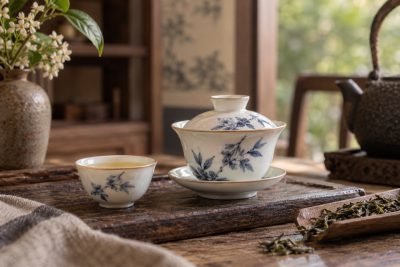
Hand Painted Mini Porcelain Gaiwan 60ml
Chaozhou, Guangdong, China
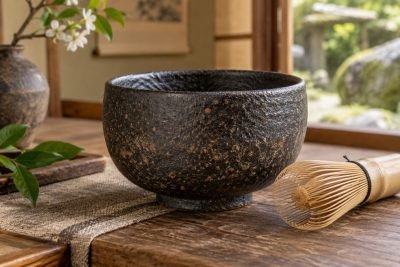
Coarse Pottery Matcha Bowl
Anji, Huzhou, Zhejiang, China
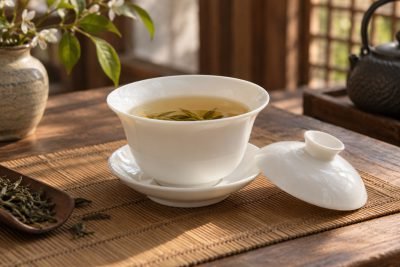
White Porcelain Gaiwan
Dehua, Fujian, China
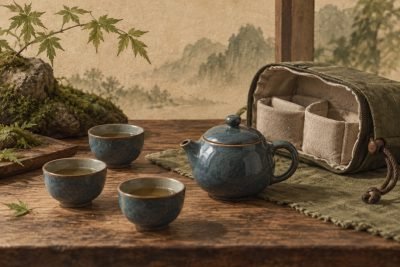
Bluestone Glazed Kuai Ke Bei Travel Tea Set
Dehua, Quanzhou, Fujian, China