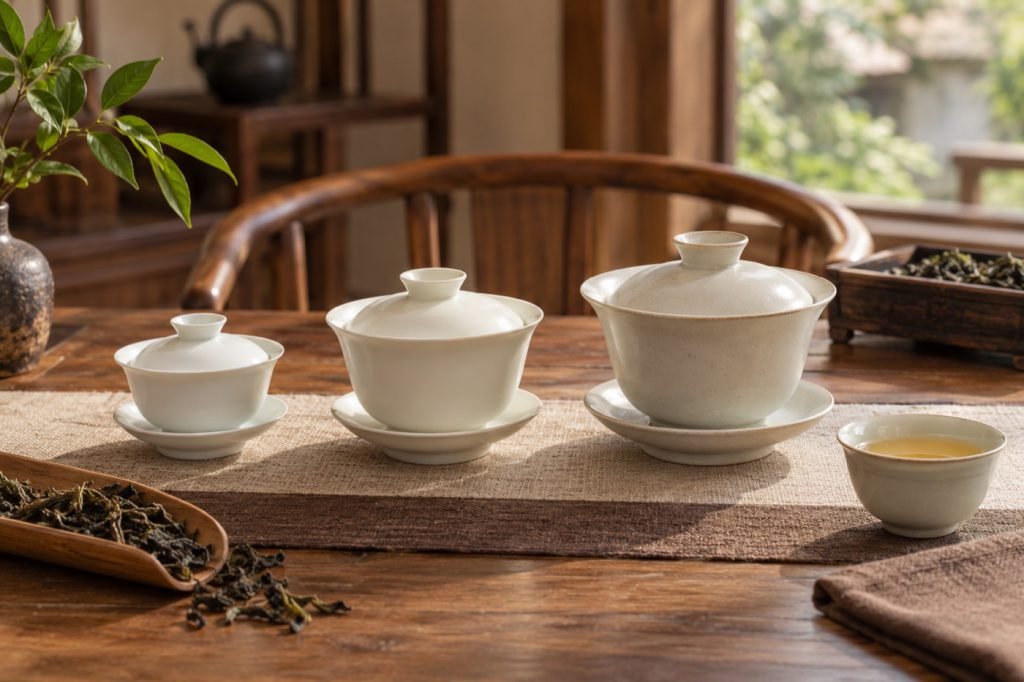
For one person, choose a gaiwan by comfortable working fill and the cup that receives it. Advertised capacity may mean water to the lid, water to the brim or an unspecified measurement. Those figures cannot be compared as if they described the same serving.
A useful example of measurement
The Mini Porcelain Gaiwan is described as 60 mL to the lid and 70 mL to the brim in the merchant’s answer. By contrast, the Nixing Easy Using Gaiwan lists 130 mL full of water with handmade variation. The larger number is not a measured difference in ready-to-drink yield.
Measure with cool water first
Put the empty vessel on a stable surface. Add a measured amount of cool water only to a level at which you can control it comfortably, then decant into your usual cup or pitcher. Note both the water added and the amount collected. This is your own setup check, not a verification of the seller’s nominal capacity.
Scale the recipe from actual water
If a documented tea recipe uses 5 g per 100 mL, then 60 mL at the same ratio uses 3 g. That is arithmetic, not a new recipe recommendation for every tea. Leaves take space, and a comfortable water-only trial may need adjustment once they are in the bowl.
Small hands and small cups are different questions
A tiny bowl may reduce the water per infusion without fitting every hand. Original feedback on the White Porcelain Gaiwan includes both comfortable beginner use and fit considerations. Check rim reach and lid support rather than treating 100 mL as a universal ergonomic standard.
Measure the serving before scaling leaf
- Define the serving. Choose the receiving cup and how much tea you want per infusion.
- Find a secure water line. Practice with cool water below the rim and record the amount.
- Scale one tea recipe. Use that tea’s documented ratio and adjust only after tasting the result.
Sources: White Porcelain Gaiwan, Ru Yao Porcelain Gaiwan, Hand Painted Mini Porcelain Gaiwan 60ml, Handmade Qinzhou Nixing Pottery Easy Using Gaiwan.