Handmade Qinzhou Nixing Pottery Easy Using Gaiwan review
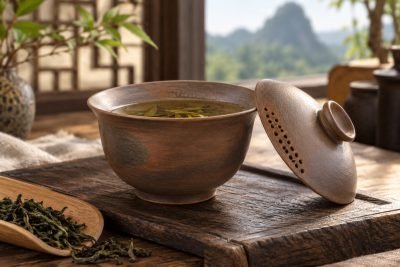
A solid unglazed Nixing bowl whose perforated lid offers a different straining approach, with handmade capacity variation to account for.
We may earn a commission if you buy through our links. Affiliate disclosure.
At a Glance
KEY FEATURES
- Nixing pottery
- 130 mL nominal full-water listing
- Circle of filtering holes in the lid
Gaiwan assessment
Research-based editorial assessment for the uses described below, not personal tasting or hands-on testing. Scores are qualitative judgments out of 5, separate from customer stars; historical feedback may cover other harvests or variants. Provisional: the customer evidence for this vessel is small.
The perforated lid has direct filtering praise, without a guarantee of catching every fragment.
A solid, heavy feel is reported; net weight remains unverified.
Engraving and polish contribute to the appeal, with handmade variation.
The unglazed vessel requires a material-specific cleaning routine. Its filter is convenient in use, but exact preparation directions should be confirmed before the first session.
PROS
- Filtering lid receives specific positive feedback.
- Solid construction and decorative finish are appreciated.
CONS
- A heavy feel may be unsuitable for a lighter grip.
- Full-water capacity varies between handmade pieces.
The Qinzhou Nixing Easy Using Gaiwan earns its place through the lid design. Instead of relying only on an adjusted gap around a conventional lid, it has a ring of small holes for pouring and straining. The original customer feedback specifically appreciates that filtering system, alongside a solid, heavy feel and decorative workmanship.
A different control to learn
The filter holes are the meaningful feature, not the promise that every user will find it easy. They can be attractive if managing a conventional lid gap is the part of gaiwan brewing you dislike. The evidence does not include measured flow speed or a guarantee that all fine fragments will be caught.
Plan for variation, not an exact 130 mL dose
The listing gives full-water capacity and allows up to 20% variation for handmade teaware. That prevents a fair numerical comparison with a gaiwan measured to the lid. Use your received vessel to establish a comfortable water line before calculating leaf quantity.
The finish has no glaze barrier
The seller explicitly identifies this pottery as unglazed. That matters more for care than the decorative engraving. Do not transfer a glazed-porcelain cleaning routine automatically; seek the seller’s exact instructions where the product page does not specify a method.
Learn the Nixing filtering lid before hot brewing
Learn the filtering lid
Try the hole-based pour with cool water before adding leaf or heat.
Measure your piece
Full-water capacity is nominal 130 mL with stated handmade variation, not a fixed working recipe.
Follow unglazed care
Confirm preparation and cleaning guidance for this exact pottery surface.
These are practical setup recommendations, not a report of hands-on testing. The working-volume guide helps with dosing, and the pouring guide starts with cool-water control.
Pros & Cons Analysis
Based on supplied customer reviews and verified product documentation
Pros
- The perforated lid gives this model a distinct buyer question: whether built-in straining is preferable to adjusting a normal gaiwan gap. The customer praise is directly relevant to that choice.
- The engraved, polished surface is part of its appeal as an everyday object; variations should be expected in a handmade piece.
Cons
- A favorable description of solidity also signals weight. With no verified net weight in the listing, do not infer that the Easy Using name means effortless handling.
- The 130 mL claim and tolerance concern full-water volume, not the amount that will reach a cup after leaves and headroom.
Nixing offers a different pouring mechanism
Choose it for the lid design
The filtering system is a substantive reason to consider this Nixing gaiwan when a standard lid-gap routine does not appeal.
Choose a simpler surface for varied care
A plain glazed porcelain gaiwan remains the straightforward comparison if you want fewer questions about an unglazed vessel’s cleaning routine.
Frequently Asked Questions
Does the lid have a filter?
The merchant documents a ring of small holes in the lid, and the original customer feedback specifically praises the filtering system.
Is 130 mL a precise working volume?
No. It is a full-water figure with a stated handmade tolerance. Measure a comfortable working fill in the piece you receive.
Vessel details
| Vessel type | Gaiwan |
|---|---|
| Material | Nixing pottery |
| Glaze / finish | Unglazed, naturally fired and polished |
| Seller-stated origin | Qinzhou, Guangxi, China |
| Reviewed variant | 130 mL nominal full-water listing |
| Stated capacity | 130 mL |
| Capacity measurement basis | Full water; merchant says capacity error within 20% is normal |
| Dimensions (width × height) | 9 × 8.5 cm |
| Net weight | Not specified |
| Pouring / filtration design | Circle of filtering holes in the lid |
| Seller-stated workmanship | Seller-stated fully handmade, engraved |
| Documented care | Detailed cleaning procedure not specified in product text |
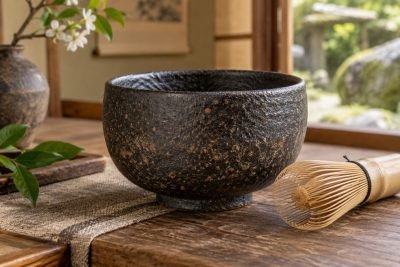
Coarse Pottery Matcha Bowl
Anji, Huzhou, Zhejiang, China
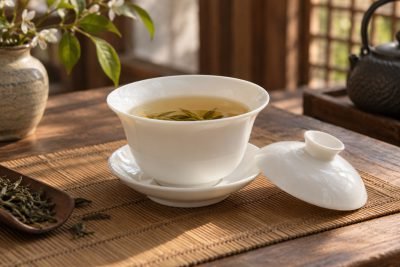
White Porcelain Gaiwan
Dehua, Fujian, China
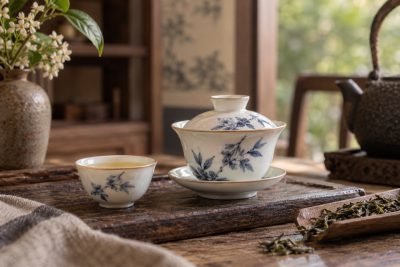
Hand Painted Mini Porcelain Gaiwan 60ml
Chaozhou, Guangdong, China
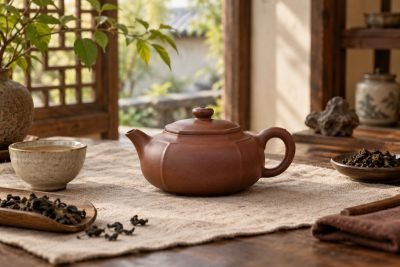
Handmade Antique Style Fanggu Yixing Zisha Teapot
Yixing, Jiangsu, China