Ru Yao Porcelain Gaiwan review
A substantial 120 mL gaiwan for drinkers who enjoy a smooth surface and an evolving crackle finish, with weight that will not suit every hand.
We may earn a commission if you buy through our links. Affiliate disclosure.
At a Glance
KEY FEATURES
- Porcelain
- 120 mL listing
- Lid-gap decanting; concave lid edge described in feedback
Gaiwan assessment
Research-based editorial assessment for the uses described below, not personal tasting or hands-on testing. Scores are qualitative judgments out of 5, separate from customer stars; historical feedback may cover other harvests or variants. Provisional: the customer evidence for this vessel is small.
Positive lid-edge and fast-pour observations support regular small sessions.
The stated 233 g weight can feel reassuring or heavy.
The smooth crackle finish is intended to develop visible character over time.
Intended glaze darkening must be distinguished from residue or structural damage.
PROS
- Smooth finish and developing character appeal in the feedback.
- Supported ergonomic handling and pouring reports.
CONS
- Substantial weight and thick walls may not suit a light-vessel preference.
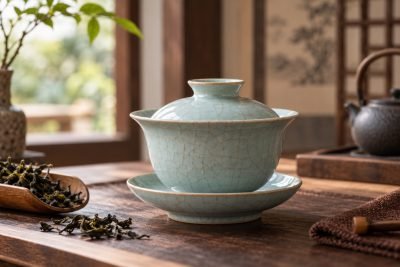
The Ru Yao Porcelain Gaiwan is a deliberate choice for a more substantial bowl. Its seller-stated 233 g weight and 120 mL capacity give useful context to feedback that calls it both reassuringly solid and fairly heavy. The smooth surface and changing crackle pattern are central to its appeal; it is a poor match if you want very fine walls or an unchanged, spotless-looking finish.
A finish intended to change
The merchant explains that tea gradually makes the glaze’s fine crackle lines more visible. Customer feedback also describes a developing character. Decide whether you like that appearance before buying, rather than treating every darkened line as a cleaning failure. This decorative description does not establish the condition of a vessel with a new structural crack or leak.
Solid can be comfortable, but not weightless
The original accounts include good ergonomics and a fast pour, with comments about a sturdy feel. Others emphasize heaviness. Those reports are compatible: a reassuringly substantial bowl can still require more effort to lift. Compare the listed weight with teaware you already handle comfortably.
Plan the cup around working volume
Feedback supports solo and shared small sessions, but the 120 mL label is not a promise of two full cups after leaves and headroom. Measure what reaches the pitcher at your normal fill. The size guide explains how to make that check without changing the leaf ratio by accident.
Lift and pour the Ru Yao at your working fill
Assess the lift
Account for the 233 g stated vessel weight before adding water.
Measure the yield
Check the amount that reaches your cup rather than dividing the nominal 120 mL by a person count.
Keep the finish in mind
Follow seller care guidance for the crackle surface; do not equate intended darkening with a defect.
These are practical setup recommendations, not a report of hands-on testing. The working-volume guide helps with dosing, and the pouring guide starts with cool-water control.
Sources: Ru Yao Porcelain Gaiwan.
Pros & Cons Analysis
Based on supplied customer reviews and verified product documentation
Pros
- The surface offers a tactile reason to choose this model, while the crackle development gives it a different long-term appearance from plain white porcelain.
- Positive lid-edge and pouring comments make it worth considering for regular small sessions; these are customer observations rather than measured flow tests.
Cons
- At a stated 233 g, this is a weight-conscious purchase. Reports of both comfortable solidity and heaviness mean the same build will not suit every drinker.
- The intended darkening of fine glaze lines may disappoint someone seeking a permanently uniform surface; it should be part of the buying choice, not discovered afterwards.
Choose Ru Yao for its substantial feel and finish
Choose the substantial feel
Ru Yao suits a drinker who welcomes a smooth, solid bowl and a finish that acquires visible character.
Keep plain porcelain in the comparison
Choose the simpler White Porcelain listing if a pale, visually uncomplicated interior matters more than the Ru Yao finish. Its weight is not documented here, so this is not a numerical weight ranking.
Frequently Asked Questions
Is the crackle pattern meant to darken?
Yes. The seller describes fine glaze lines becoming more visible with tea use. A new leak or structural crack is a separate issue.
Is 120 mL enough for two people?
It can support small shared pours, but leaves and headroom reduce the usable yield. Match the actual decanted amount to your cups.
Vessel details
| Vessel type | Gaiwan |
|---|---|
| Material | Porcelain |
| Glaze / finish | Azure Ru Yao crackle glaze |
| Seller-stated origin | Dehua, Fujian, China |
| Reviewed variant | 120 mL listing |
| Stated capacity | 120 mL |
| Capacity measurement basis | Seller-stated; brim/working basis unspecified |
| Dimensions (width × height) | 10.3 × 7.8 cm |
| Net weight | 233.0 g |
| Pouring / filtration design | Lid-gap decanting; concave lid edge described in feedback |
| Seller-stated workmanship | Not specified |
| Documented care | Product describes tea-darkened crackle development; detailed cleaning limits unspecified |
Hand-made Heart Sutra Dragon Egg Yixing Zisha Teapot
Yixing, Jiangsu, China
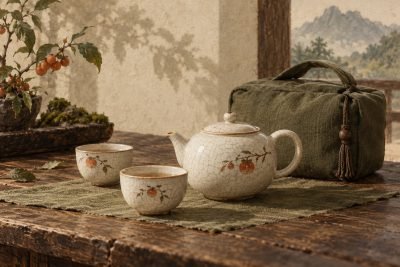
Japanese Style Ru Yao Kuai Ke Bei Travel Tea Set
Dehua, Quanzhou, Fujian, China
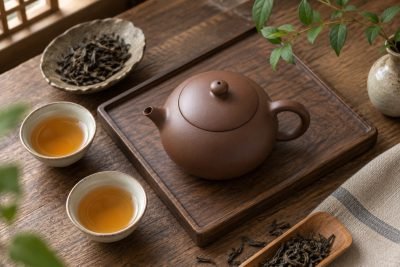
Xi Shi Yixing Purple Clay Teapot
Yixing, Jiangsu, China
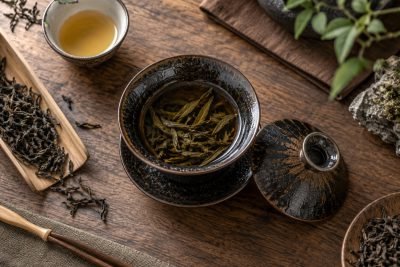
Handmade Jianyang Jianzhan Gaiwan
Jianyang, Fujian, China