Hand-made Heart Sutra Dragon Egg Yixing Zisha Teapot review
A compact, engraved 100 mL Zhuni pot for a deliberate small session, with attractive craftsmanship and some contrary lid and tea-pairing feedback.
We may earn a commission if you buy through our links. Affiliate disclosure.
At a Glance
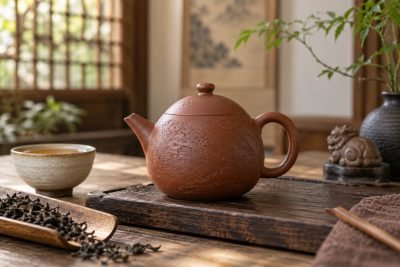
KEY FEATURES
- Zhuni clay
- 100 mL listing
- Short straight spout; separate lid and handle
Teapot assessment
Research-based editorial assessment for the uses described below, not personal tasting or hands-on testing. Scores are qualitative judgments out of 5, separate from customer stars; historical feedback may cover other harvests or variants. Provisional: the customer evidence for this vessel is small.
Fast-pour and close-fit observations coexist with a slight leak report.
The stated 100 mL suits small repeated pours; it is not two ordinary cups.
Engraving and the rounded decorated form are a meaningful part of the appeal.
Follow the exact gradual-warming instructions and retain another brewer while exploring pairings.
PROS
- Compact size and engraved appearance are supported attractions.
- Positive balance and pouring observations are present.
CONS
- Slight lid leakage is also reported.
- Some tea pairings were perceived as muted.
The Heart Sutra Dragon Egg is for someone who wants the teapot itself to be part of a small tea ritual. The stated 100 mL size and engraved rounded body distinguish it from larger, plainer pots. Customer feedback supports its visual appeal and compact use, but also includes lid seepage and tea pairings that muted flavors the drinker wanted to retain.
The small volume is intentional
The accounts describe both solo use and small pours for two. Neither description makes 100 mL a promise of two ordinary cups: leaf displacement and headroom reduce the yield. Think of the pot as a repeated-infusion vessel and check the receiving cups before purchase.
Engraving does not settle the functional choice
The lettering and finish are appreciated, while a fast pour and close lid fit appear in the evidence. A separate account describes a slight leak. A decorative reason to buy can be legitimate, but it should coexist with an ordinary handling check rather than replacing one.
Keep an alternative brewer for pairing
Feedback includes raw pu-erh and oolong use, as well as dissatisfaction with some black and aged white tea pairings. These are individual preferences, not a material hierarchy. If preserving a familiar tea’s exact character is the main objective, compare it in your usual porcelain vessel before dedicating the pot.
Set up a compact Dragon Egg session
Plan small pours
Nominal 100 mL supports a compact session; leaves and headroom reduce the yield.
Warm before hot brewing
Follow the seller’s gradual warming advice for this Zhuni pot.
Keep a familiar reference
Compare your preferred tea in your usual brewer before deciding on a dedicated pairing.
These are practical setup recommendations, not a report of hands-on testing. Follow the first-use guide and investigate any persistent issue with the pouring checklist.
Sources: Hand-made Heart Sutra Dragon Egg Yixing Zisha Teapot.
Pros & Cons Analysis
Based on supplied customer reviews and verified product documentation
Pros
- The small form has a practical use record rather than being only a display piece; it suits a buyer already comfortable with small repeated pours.
- Craft details contribute to the ownership appeal, especially when an engraved pot is something the buyer wants to leave on the tea table.
Cons
- The high displayed rating does not erase the reported leak. Handle the delivered lid as a functional component that needs checking.
- Taste responses differ by tea and preference; neither the shape nor the clay name establishes an across-the-board flavor improvement.
Dragon Egg for small pours and a decorated form
For a small pot with visual character
Choose Dragon Egg when the 100 mL scale and engraving are both welcome, and you can accept a measured, gradual first-use routine.
For a plainer everyday purchase
Compare Xi Shi if decorative carving is not a priority. Its broader feedback is useful, but review volume alone does not make it more reliable.
Frequently Asked Questions
Can it serve two people?
It can provide small shared pours across repeated infusions. The nominal 100 mL does not mean two full-size cups per steep.
Will it improve every tea?
No such conclusion is supported. The original evidence includes both enjoyable pairings and unwanted muting.
Vessel details
| Vessel type | Teapot |
|---|---|
| Material | Zhuni clay |
| Glaze / finish | Unglazed, engraved Heart Sutra body |
| Seller-stated origin | Yixing, Jiangsu, China |
| Reviewed variant | 100 mL listing |
| Stated capacity | 100 mL |
| Capacity measurement basis | Seller-stated; working basis unspecified |
| Dimensions (width × height) | 8.5 × 8 cm |
| Net weight | Not specified |
| Pouring / filtration design | Short straight spout; separate lid and handle |
| Seller-stated workmanship | Seller-stated handmade; Sun Wen |
| Documented care | Merchant: warm with warm water before brewing; avoid sudden temperature changes |
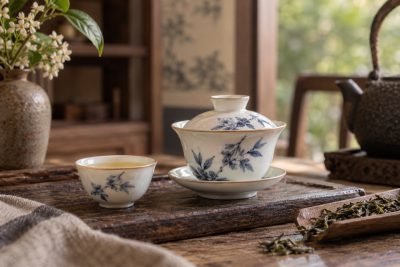
Hand Painted Mini Porcelain Gaiwan 60ml
Chaozhou, Guangdong, China
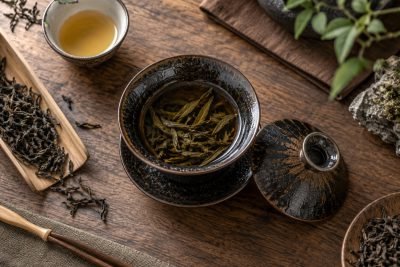
Handmade Jianyang Jianzhan Gaiwan
Jianyang, Fujian, China
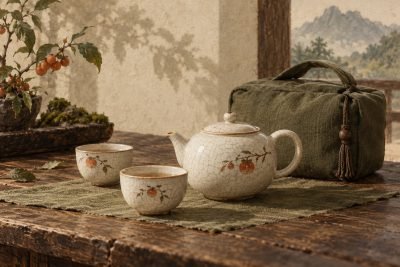
Japanese Style Ru Yao Kuai Ke Bei Travel Tea Set
Dehua, Quanzhou, Fujian, China
Yixing Zisha Gaiwan 100ml
Yixing, Jiangsu, China