Decaffeinated tea and caffeine-free infusions are different choices. If your aim is to avoid caffeine, read the ingredients and the product’s explicit information rather than assuming that a pale or herbal-sounding drink contains none.
Two labels, two checks
Decaffeinated tea
This is tea that has undergone a caffeine-removal process. The name does not promise absolute zero; check the information for the product you are buying.
Caffeine-free infusion
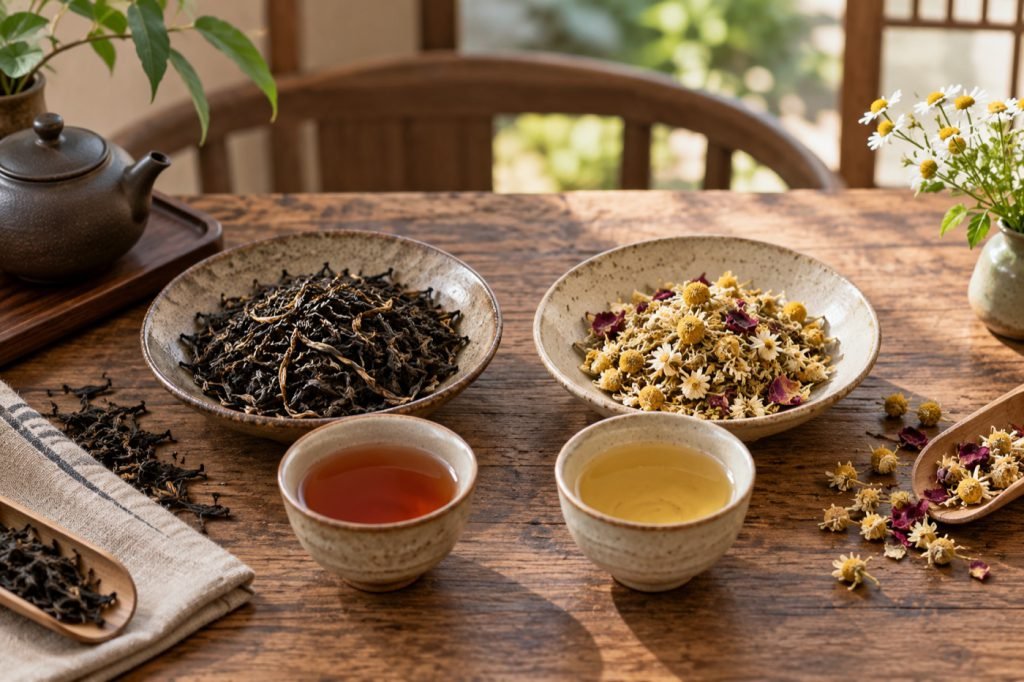
This may be made from flowers, fruit or other ingredients. Verify the whole blend, especially if it also contains tea or another caffeine source.
FDA guidance makes clear that caffeine can appear in a range of products. Green, black and pu-erh tea should not be treated as caffeine-free simply because a seller uses soothing language.
Read the whole blend
- Find the full ingredient list, not just the flavor name.
- Look for an explicit caffeine statement for the exact product.
- Check whether a serving contains added tea, coffee, cocoa or another caffeine source.
- If a medically necessary restriction depends on the answer, resolve uncertainty with the maker and your clinician before relying on the drink.
The evening shortlist is based on ingredients and taste suitability, not on a claim to treat insomnia. An infusion can be enjoyable as part of winding down without proving a sleep effect.
Use the evening-drink guide for the flavor decision and tea versus coffee if you are comparing your usual daytime drinks.
Sources: reference 1.