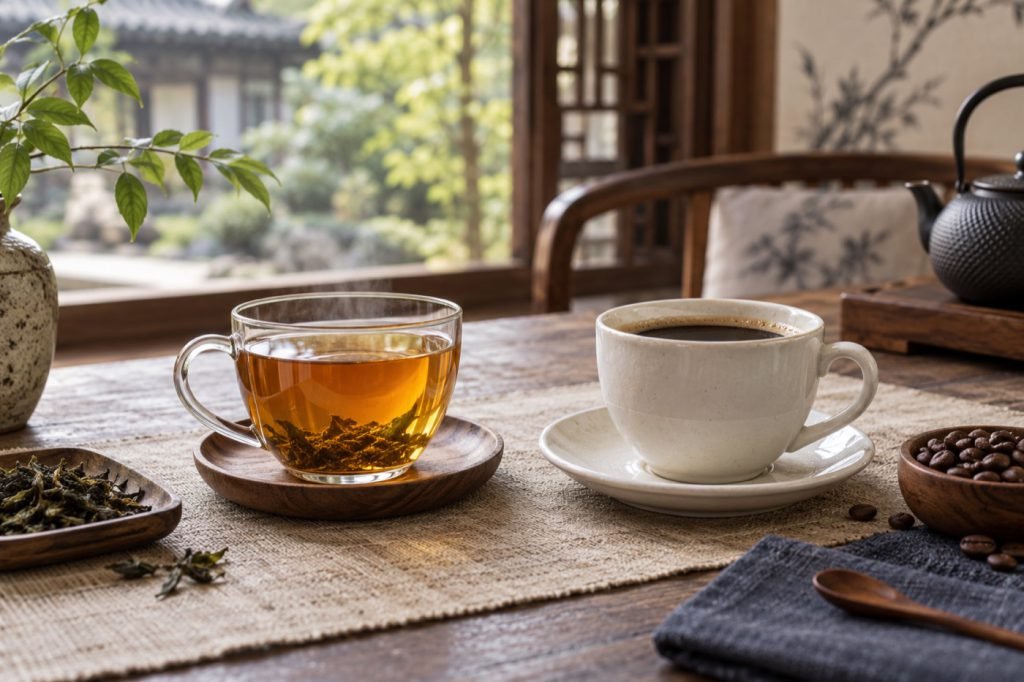
Tea and coffee can both provide caffeine. The useful comparison starts with your actual serving and preparation—not the name of the drink or the color in the cup.
Make the comparison fair
| Question | Tea | Coffee |
|---|---|---|
| What is one serving? | A mug, a bowl or several small infusions | A small espresso, a mug or a larger café drink |
| What was used? | Leaf or powder dose and preparation | Coffee dose and preparation |
| What else is in it? | Milk, sweetener or a premixed powder | Milk, syrups or other additions |
| What evidence is available? | Exact label or a comparable measured preparation | Exact label or a comparable measured preparation |
A small gongfu cup cannot stand in for a whole session. A matcha latte can contain a variable powder dose even when the glass size stays the same. Without measured data for the specific preparation, a precise caffeine number would create false confidence.
Use a general limit carefully
FDA guidance cites 400 mg a day as an amount not generally associated with negative effects for most adults, while emphasizing individual variation. It is not a target, and it does not establish what is appropriate for pregnancy, particular medicines or a health condition. Ask a health professional about a personal limit when relevant.
Choose by the change you want
A different flavor
Choose tea because you enjoy its taste and preparation. The morning selection separates malty, earthy and powdered options.
Less caffeine
Check your actual intake and portions. Use decaf versus caffeine-free when avoidance matters; simply replacing the word coffee with tea is not enough.
If you usually add sugar or syrup, compare the whole drink as well. A sweet tea latte does not automatically become a lighter choice than plain coffee. For powdered tea specifically, read matcha versus coffee.
Sources: reference 1.