The material decision is about the routine you want to maintain. Glazed porcelain is a straightforward starting point for rotating teas; an unglazed clay purchase deserves more attention to pairing, first use and care. Neither choice establishes an automatic flavor upgrade.
Ask what touches the tea
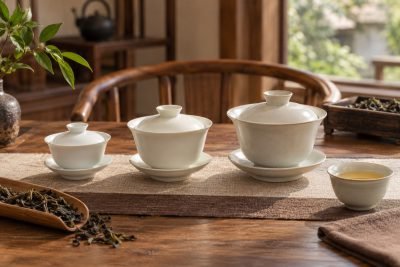
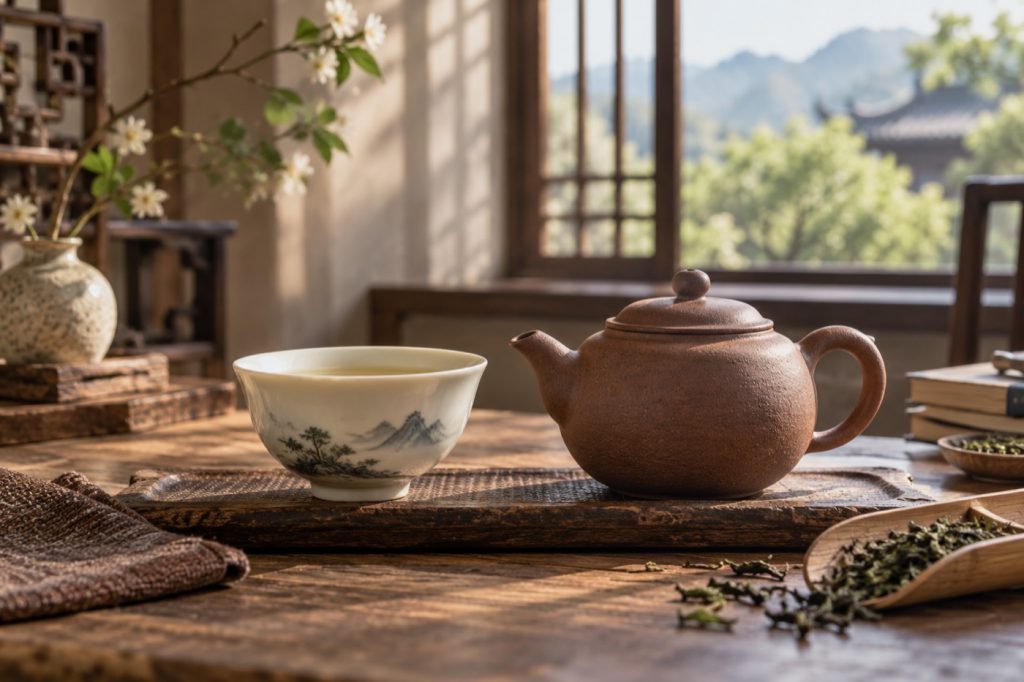
The word ceramic is not enough to identify a care routine. Look for the stated body material and whether the tea-contact surface is glazed. The Nixing Easy Using Gaiwan is explicitly unglazed, while the Ru Yao is a glazed porcelain vessel whose crackle appearance is meant to develop.
Read flavor claims with restraint
Some original clay-vessel accounts describe pleasant changes, while others describe muting or cannot identify an improvement. That disagreement matters if you already like a tea in your current brewer. A side-by-side personal preference check can help you choose; it does not authenticate clay or become a laboratory result.
Decide how much variety you want
If a session often moves between unrelated or strongly scented teas, a simple glazed vessel keeps the decision less complicated. For a clay pot you intend to dedicate, select the tea routine first and follow the seller’s preparation guidance. Avoid treating a customer’s favorite pairing as a rule for every tea.
Do not transfer cleaning permissions
A cleaning method suitable for one glazed bowl is not automatically suitable for porous unglazed clay or a crackle finish. The gaiwan cleaning guide separates surface identification from stain removal, and the Yixing first-use guide keeps maker instructions central.
Confirm material, tea role and care
- Identify the surface. Record material and glaze status from the exact listing.
- Choose a tea routine. Decide whether variety or a dedicated vessel is the stronger priority.
- Confirm care. Ask about cleaners and temperature changes before attempting an intensive cleaning or seasoning method.
Sources: White Porcelain Gaiwan, Yixing Zisha Gaiwan 100ml, Xi Shi Yixing Purple Clay Teapot.