Identify the glaze and the seller’s care instructions before trying to remove a stain. Glazed porcelain, crackle-glazed ware and unglazed clay should not automatically receive the same treatment. Routine rinsing and full drying are a better starting question than an aggressive stain-removal recipe.
Separate residue from an intended finish
The Ru Yao Gaiwan is sold with a crackle glaze that becomes more visible with tea use. That described appearance is different from leftover leaves or a new structural crack. Do not decide to scrub away every line simply because a plain white bowl would look different.
Start after the vessel is safe to handle
Remove spent leaves, rinse away loose residue and follow the maker’s cleaning instructions. Avoid sudden temperature changes and give the lid and bowl space to dry separately. If an exact cleaner or appliance method is not documented, ask before trying it.
Keep unglazed care distinct
The Nixing gaiwan is explicitly unglazed; the clay-vessel care question is therefore different from washing an ordinary glazed bowl. Do not assume a general household detergent or abrasive treatment is appropriate merely because a customer describes easy cleaning.
Know when cleaning is the wrong task
Persistent unexplained odor, a new leak or a visible structural crack should prompt a seller inquiry rather than stronger chemicals or a home repair. Cosmetic staining and a functional defect are different problems. The buying checklist helps retain the exact material and variant information for that conversation.
A surface-first cleaning routine
- Read the surface description. Confirm glaze status and any special finish.
- Remove ordinary residue. Use the exact maker’s routine and avoid an abrupt hot-to-cold transition.
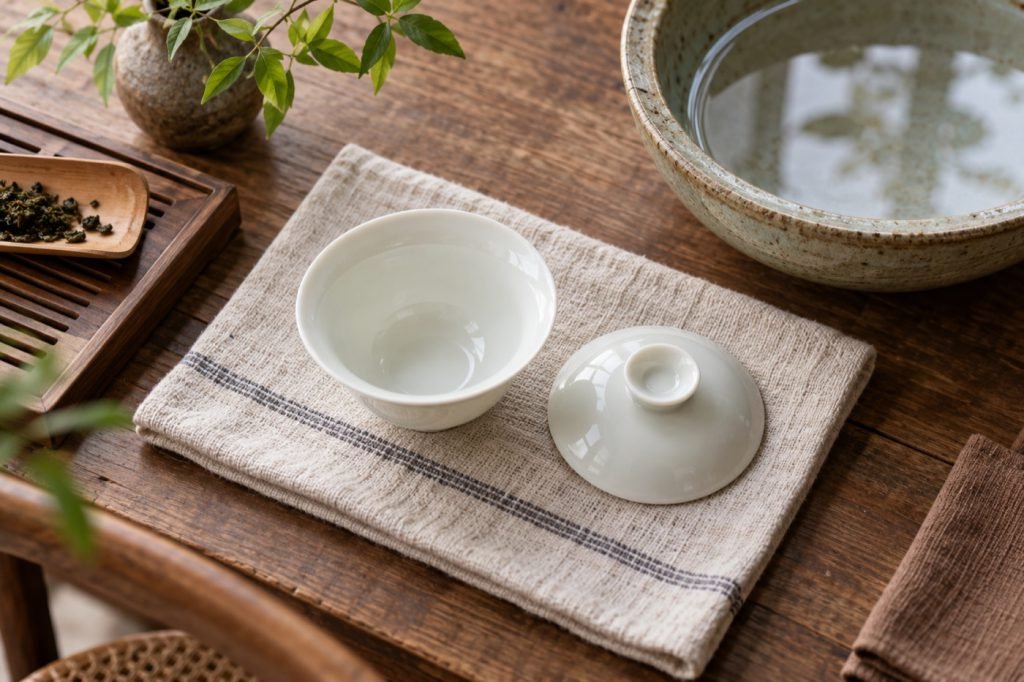
- Dry before storage. Keep lid and bowl separate until dry, in a position where they cannot knock together.
Sources: White Porcelain Gaiwan, Ru Yao Porcelain Gaiwan, Yixing Zisha Gaiwan 100ml.