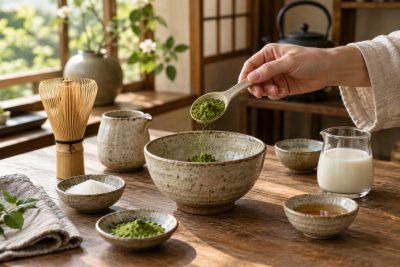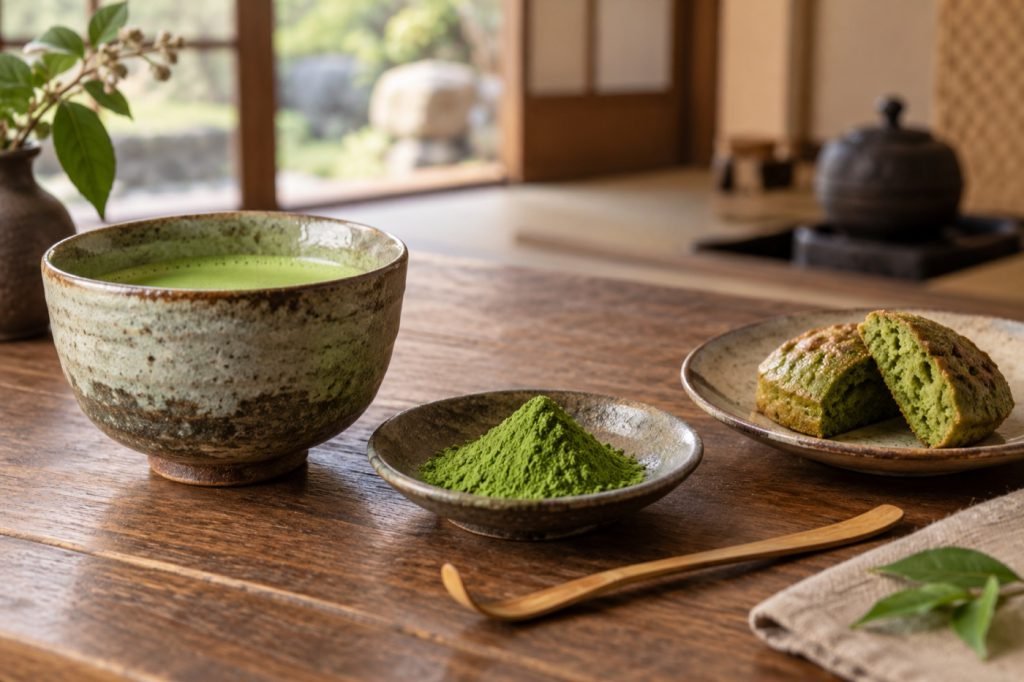
Choose a powder around how you will use it: plain water, a milk drink or a recipe. A grade word is a starting description, not a guarantee of sweetness, color or performance in your kitchen.
Read past the grade name
The two powders covered here are the merchant’s Daily and Culinary listings. Both are sold as Chinese green tea powders. The current summaries identify Wuyuan, while older origin prose mentions Tianmu; this inconsistency needs clarification if provenance is central to your purchase. Neither should be silently presented as a Japanese product.
Plain drinking
Daily has positive feedback for whisked drinks, but also complaints about bitterness, grassy flavor and a lack of sweetness. Buy a small amount if a delicate unsweetened bowl is your goal.
Baking and mixed drinks
Culinary has customer feedback about cakes, biscuits and milk drinks. It also has reports of weak flavor, settling and an unpleasant plain cup. A recipe can suit it even when water alone does not.
Use a fair first comparison
- Compare the ingredients and supplied pack, not just the front-of-bag grade.
- Prepare one measured drink or small recipe batch with the same other ingredients.
- Assess the finished portion: does the flavor remain noticeable, and do you enjoy its bitterness?
- Keep the powder dose recorded before changing sugar, milk and tea together.
A high price or vivid listing photograph cannot establish better results. For the exact choice, read Daily versus Culinary. For a baking purchase, the small culinary shortlist explains the limits of the available evidence.
Sources: reference 1, reference 2.