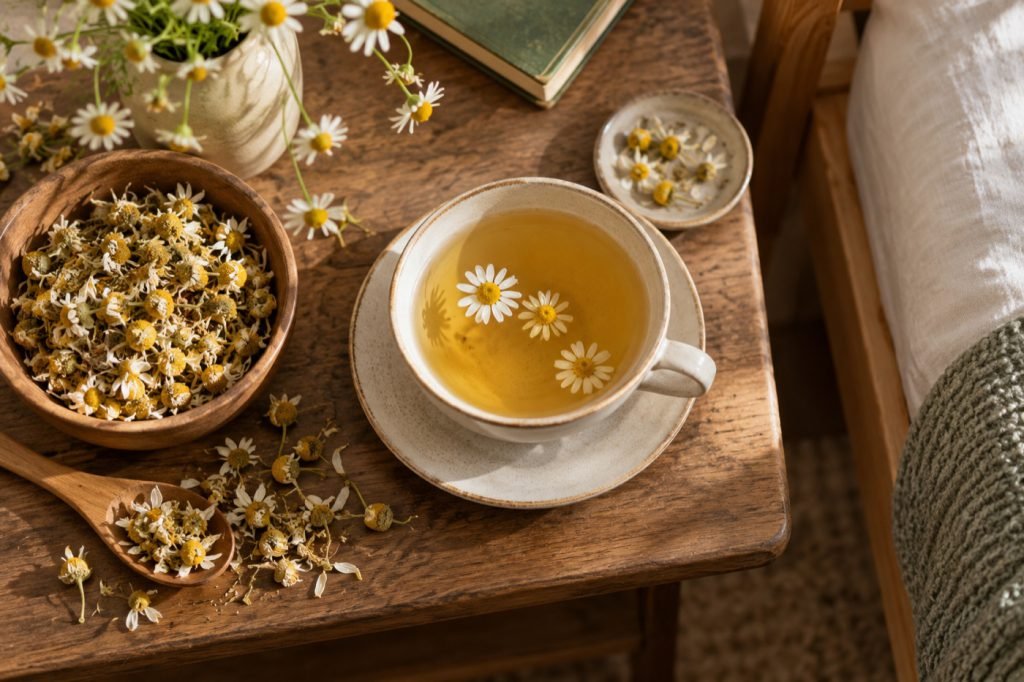
A warm evening drink may be a pleasant routine, but chamomile tea should not be presented as a proven treatment for insomnia or anxiety. The evidence does not support turning a comforting ritual into a guaranteed clinical result.
What the research can tell us
NCCIH’s chamomile overview describes insufficient reliable evidence for many promoted uses. Studies of extracts or supplements are not automatically evidence for a mug of tea, and a customer’s feeling of relaxation does not establish treatment effectiveness.
Choose an evening drink for practical reasons
| Check | Why it matters |
|---|---|
| Full ingredient list | A blend may contain more than the herb named on the front. |
| Caffeine statement | A relaxing name is not proof of caffeine absence. |
| Your allergies and medicines | Herbal products can have relevant risks or interactions. |
| What you enjoy | Flavor and ritual are valid reasons to choose a drink without a medical promise. |
NCCIH notes potential allergic reactions and medicine interactions. If you have relevant allergies, take medication, are pregnant or are breastfeeding, discuss herbal-product use with an appropriate health professional. Do not replace established care for ongoing sleep problems with a tea.
For choosing among eligible drinks, use the evening infusion article. To understand the label, read decaf versus caffeine-free. The useful outcome is a drink you enjoy with clear ingredients, not an unsupported promise to make you sleep.
Sources: reference 1.