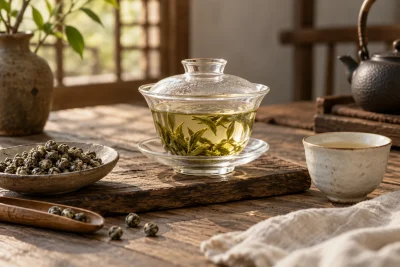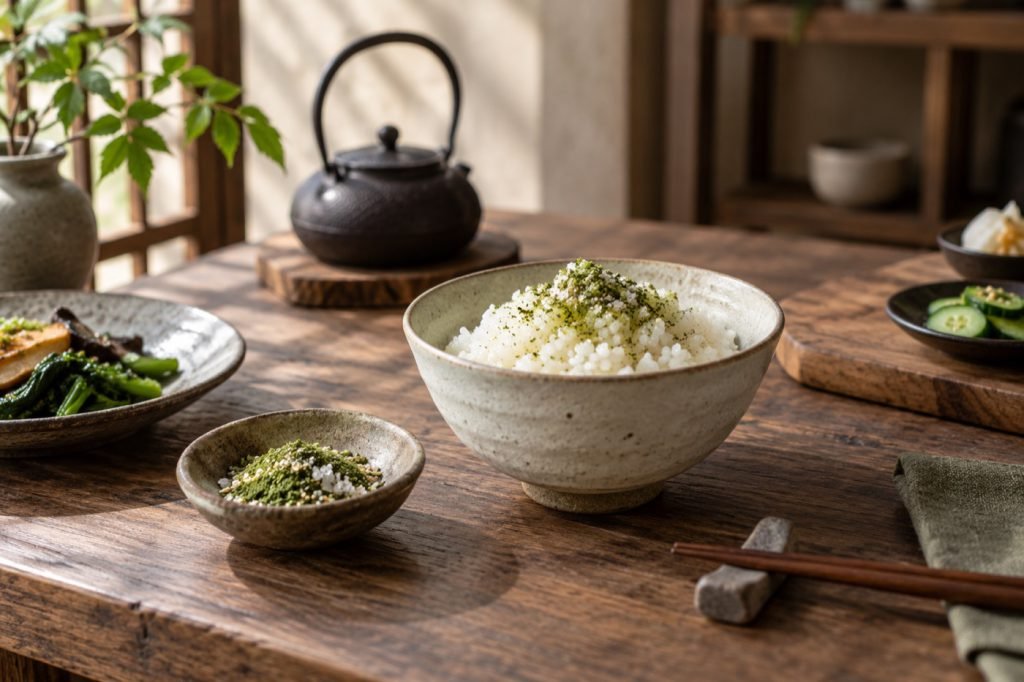
Try matcha in a small portion of food before adding it to an entire dish. A measured seasoning lets you decide whether its grassy, bitter character belongs with the ingredients you already enjoy.
Two small development formulas
Matcha salt
Mix 1 g Culinary Matcha with 9 g fine salt. This is a seasoning blend, not a serving size. Try only a small pinch on a prepared portion of food, then adjust the next blend if needed.
Yogurt dressing
Whisk 0.5 g Daily Matcha into 50 g plain yogurt. Add water a teaspoon at a time to reach a spoonable consistency. Taste before adding lemon, salt or another seasoning.
These are editorial kitchen-development ideas, not tested recipes. The Culinary listing supports a cooking role, while the Daily listing suggests yogurt and simple mixtures. Neither verifies these ratios.
Keep the food recognizable
- Taste the unseasoned food first.
- Apply a small amount to one portion and compare it with an unseasoned portion.
- Change the powder amount before remaking a large batch.
- Keep a note of the food, tea powder and ratio you actually liked.
A strong seasoning can overwhelm a delicate ingredient. Do not assume that more powder makes a better dish or a healthier one. Salt remains salt, and a matcha blend is not a substitute for any dietary advice about sodium.
If you prefer a sweeter starting point, the iced latte method gives a separate water-based concentrate. For buying, compare Daily and Culinary powder by use rather than by a health promise.
Sources: reference 1, reference 2, reference 3.