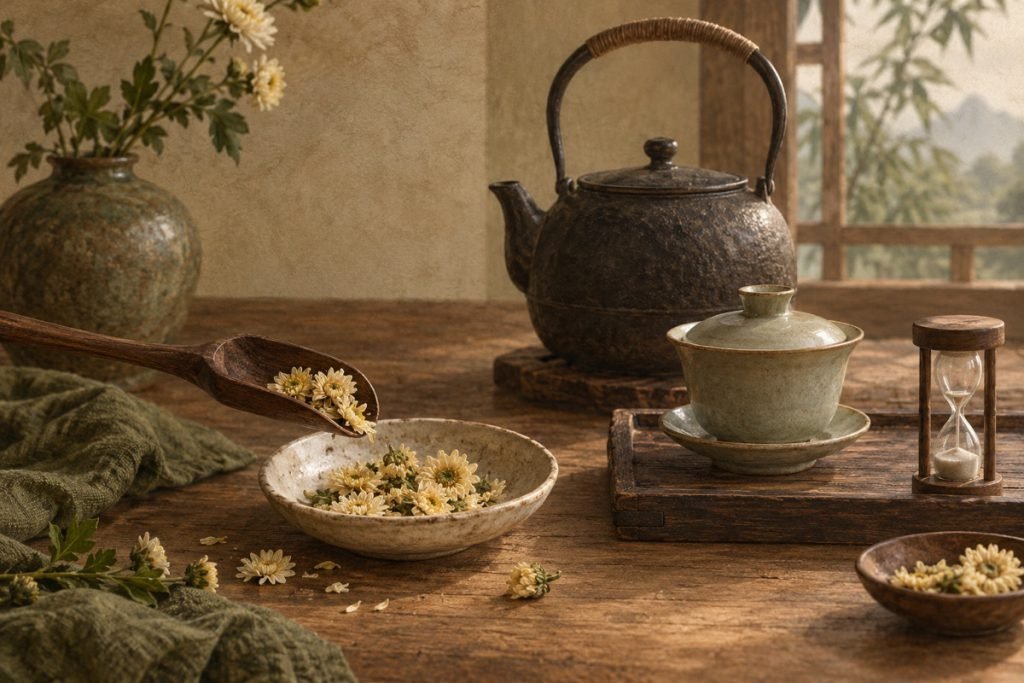
Brew dried chrysanthemum with boiling water and sufficient hot contact time, then adjust the flower dose if the cup is too strong or bitter. A weak-looking pale infusion is not necessarily unfinished.
Choose a measured first cup
TeaVivre’s general chrysanthemum article suggests 3 g of flowers and five minutes in hot water, but does not specify the water volume. The exact Huang Shan Gongju listing does not supply a complete product-specific recipe. The starting trial below makes that missing volume explicit instead of presenting it as a merchant instruction.
Editorial starting trial
3 g dried flowers · 300 mL water · rolling boil · at least 5 minutes. The 300 mL amount is an editorial choice for a repeatable first cup, not a tested optimum or exact-product instruction. Follow more specific package directions when available.
Separate the flowers afterward
Use a heatproof vessel large enough for the measured water and expanding flowers. Strain into a drinking cup after the hot steep. No rinse or successive-infusion sequence is verified for this product.
BfR’s herbal-infusion guidance calls for boiling water and at least five minutes. This is why reducing the flower dose is the first adjustment here, rather than switching to lukewarm water or a very short steep to tame bitterness.
Watch taste, not just color
Customer feedback for the Huang Shan Gongju product describes floral and herbal character, sometimes with earthy or grassy notes. Enjoyable mild sweetness and a bitter finish both occur. The flowers opening in the vessel can be part of the pleasure, but neither dramatic expansion nor pale liquor tells you exactly how strong the cup will taste.
| What you notice | Next adjustment | Keep unchanged |
|---|---|---|
| Too bitter or heavy | Use less flower in the next measured cup; note the new weight | Boiling water and the minimum hot steep |
| Too faint but otherwise pleasant | Increase the flower dose modestly in the next cup | Water amount, vessel and initial timing |
| Flavor deteriorates while flowers remain in the cup | Strain after the completed hot steep | The required preparation time before straining |
| Loose flower pieces interfere with drinking | Use a securely supported food-safe strainer | The documented hot preparation |
Keep blends intentional
Some customer feedback describes mixing chrysanthemum with black tea or pu-erh. That changes both the flavor and the caffeine question: adding ordinary tea leaves means the blend is no longer simply a caffeine-free flower infusion. If your aim is a caffeine-free evening drink, inspect every ingredient.
Sweetening can change your impression of bitterness, but it does not fix an overly concentrated starting recipe. Taste a plain cup first so that you know whether the flower itself suits you. For a stronger fruit-led alternative, the Watermelon Lychee review describes a different ingredient and flavor profile; it is not another grade of chrysanthemum.
Record flower weight, water volume and steep time. Once you have a cup you enjoy, repeat that small batch. No sleep, relaxation or eye-health benefit is established by the flavor reports used here.