Pu-erh contains caffeine. A dark ripe infusion is not a caffeine measurement, and neither a raw/ripe label nor an aged date tells you the amount in your serving.
Why the brewing method belongs in the question
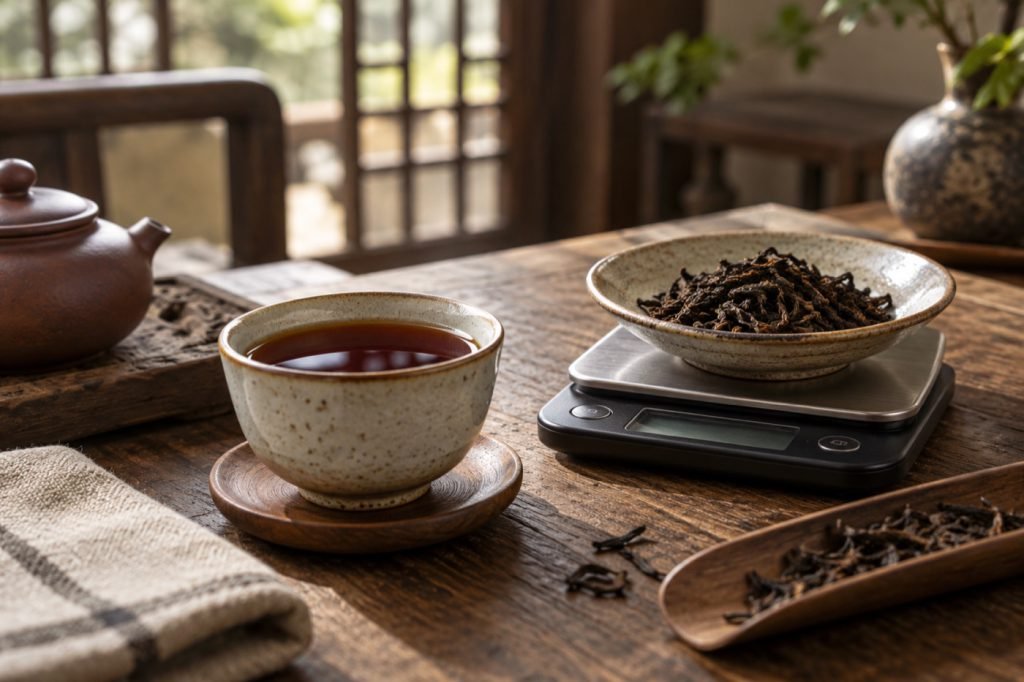
Our reviewed loose ripe tea has two merchant recipes: 5 g in 355 mL for a long cup steep, and 7 g in 110 mL for repeated short infusions. These are different drinking sessions. Comparing one tiny infusion with a full mug of coffee would not describe the total caffeine consumed across the session.
| Record this | Why it matters |
|---|---|
| Leaf weight | A portion name such as one tuocha is not a measured caffeine dose. |
| Water and cups actually drunk | A session can contain several small servings. |
| Time and repeated infusions | An isolated first cup is not the whole session. |
| Comparable product data | A tested amount should identify serving size and preparation. |
The merchant uses percentage-of-coffee language, but the pages do not provide a matched coffee recipe or a product-specific assay that we can use. We therefore do not publish those percentages as measured facts.
If you are reducing caffeine
Keep the amount and timing of tea visible in your routine, and do not assume a rinse makes it decaffeinated. If avoiding caffeine is the aim, choose an explicitly caffeine-free drink rather than relying on a darker or older tea.
FDA guidance explains that individual sensitivity and caffeine levels vary. For a broader beverage choice, use tea versus coffee; for preparation, keep the pu-erh recipe separate from any caffeine estimate.
Sources: reference 1, reference 2, reference 3, reference 4.