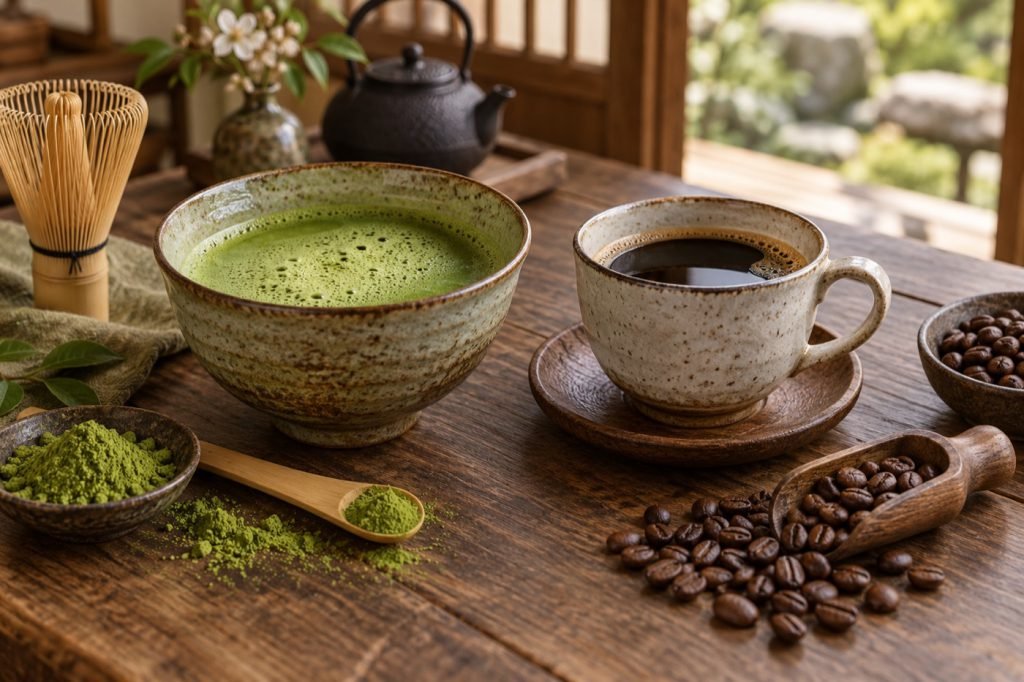
For matcha, record how many grams of powder go into the drink. A large glass may contain a small amount of tea—or several times that amount—so glass size alone cannot tell you its caffeine content.
Start with the concentrate
The Daily Matcha instructions use 2 g in 60–70 mL water. Adding milk changes the finished volume; it does not erase the tea already added. This is why comparing a small bowl of matcha with a large café coffee without the dose is not very informative.
| Your choice | Record before comparing |
|---|---|
| Homemade matcha | Powder grams, water and milk volumes, number of servings |
| Café matcha latte | Actual powder or premix serving, added ingredients and available caffeine information |
| Coffee | Drink size, preparation and published information for that exact drink |
Keep taste and caffeine separate
The Daily powder feedback includes enjoyable milk drinks as well as grassy and bitter plain cups. These taste observations do not measure alertness or establish a crash-free effect. Claims about a smoother experience with tea cannot replace a measured caffeine comparison.
If you want a milk drink
Use the measured latte starting recipe and change the milk ratio deliberately.
If you want to reduce caffeine
Track the actual amounts you consume, rather than automatically adding more powder until matcha feels like coffee.
FDA notes wide variation in caffeine sensitivity and recommends discussing relevant conditions or medicines with a health professional. If caffeine is causing unwanted effects, choosing a fashionable drink name does not resolve that concern.
For the wider beverage decision, use tea versus coffee. Choose matcha when you like its flavor and method; avoid treating it as a guaranteed upgrade in energy or health.
Sources: reference 1, reference 2.