Choose cold brew when you can plan a refrigerated infusion with a suitable tea. Choose hot-brewed iced tea when you want to follow a documented hot recipe or the ingredients require boiling water.
Plan ahead
Cold brewing extracts the leaf in cold water. Keep a covered batch refrigerated throughout; the method’s waiting time is part of the choice.
Brew, then cool
Iced tea can begin as an ordinary hot infusion. Remove the leaf at the documented time, then cool the drink promptly. Ice changes the final dilution.
Choose the process your ingredients support
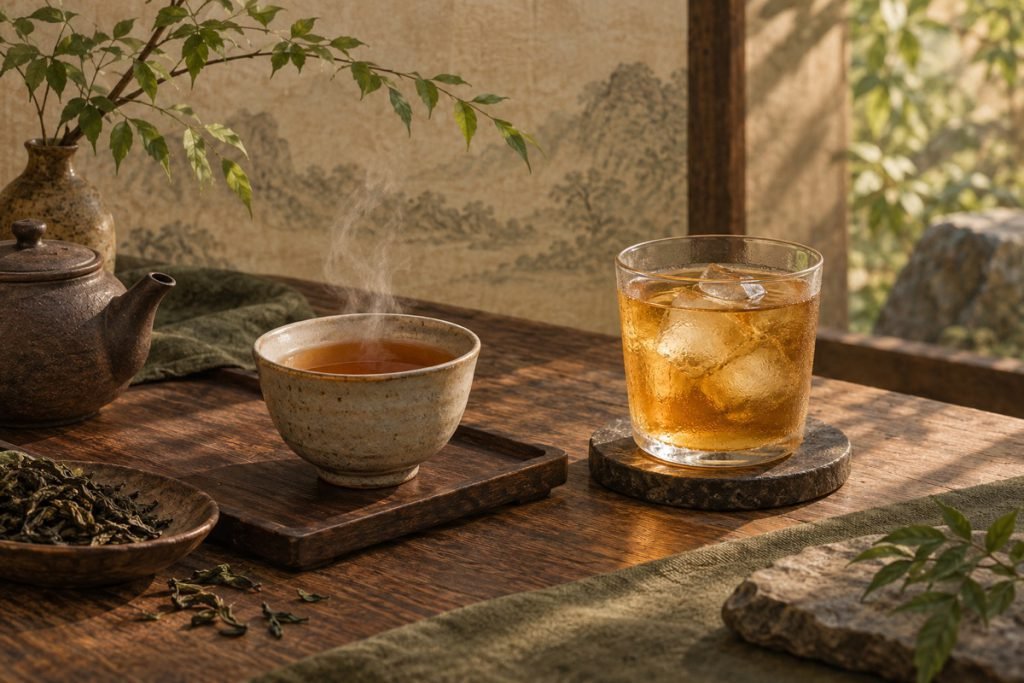
The temperature at which you drink tea does not tell you how it was extracted. A glass served over ice may have been brewed hot, cold or as a concentrated hot infusion. That distinction matters more than the label on the glass.
| Your starting point | Useful preparation | What to control |
|---|---|---|
| Loose leaf with cold-brew directions | Refrigerated cold infusion | Weighed leaf, water volume, covered cold storage and the stated timing |
| A tea with a clear hot recipe | Hot infusion, strained and cooled | Leaf contact time before cooling; final dilution |
| Dried fruit or flowers requiring hot preparation | Boiling-water infusion, then cooling | Follow the hot-water requirement even when serving cold |
There is no universal winner for sweetness, smoothness or caffeine here. Different leaves and recipes can produce different outcomes. Compare the same tea at a strength you enjoy before buying a large pack for one preparation. The measured cold-brew guide keeps ratio and timing separate so that comparison is repeatable.
Account for the ice
As ice melts, it adds water. A drink brewed with 200 mL of water and served with 100 g of ice approaches 300 mL of liquid if all the ice melts, ignoring small losses. That is a dilution calculation, not an endorsed recipe for every tea. If an ordinary cup becomes thin over ice, first try cooling the strained infusion and using less ice rather than extending the leaf’s steep until it becomes harsh.
A practical route from kettle to cold glass
- Brew with the exact tea’s documented dose, water volume and temperature. For fruit or herbal ingredients, use boiling water for at least five minutes as BfR advises.
- Strain into a clean, suitable vessel. Avoid pouring very hot liquid into ordinary cold glass unless the manufacturer permits that temperature change.
- Cool promptly in manageable portions and refrigerate covered. FDA food-storage guidance supports prompt refrigeration and smaller portions for faster cooling; it does not certify a tea-specific storage duration.
- Serve a small amount over ice, taste, then decide whether the next batch needs a different leaf dose. Keep the rest cold instead of leaving a serving pitcher out for hours.
For an evening option with a documented hot recipe, the Watermelon Lychee infusion can be prepared hot before chilling. Its name describes the flavor direction; check the ingredient list rather than assuming which fruits it contains.