Steep & Origin

  • Home
  • Reviews
  • Best
    • All Best
      • Oolong Tea Picks
    • Chinese Black Tea Picks
    • Green Tea Picks
    • Matcha Picks
    • Pu-erh Tea Picks
    • Tea and Caffeine Picks
    • Tea pottery & teaware Picks
  • Guides
    • All Guides
      • Oolong Tea Guides
    • Chinese Black Tea Guides
    • Evening Tea Guides
    • Green Tea Guides
    • Matcha Guides
    • Organic Tea Guides
    • Pu-erh Tea Guides
    • Tea and Caffeine Guides
    • Tea and Health Guides
    • Tea pottery & teaware Guides
    • White Tea Guides
  • Comparisons
    • All Comparisons
      • Oolong Tea Comparisons
    • Chinese Black Tea Comparisons
    • Green Tea Comparisons
    • Matcha Comparisons
    • Pu-erh Tea Comparisons
    • Tea pottery & teaware Comparisons
  • Favorites
Guides

Cold-brew loose-leaf tea: a measured refrigerator method

3 min read
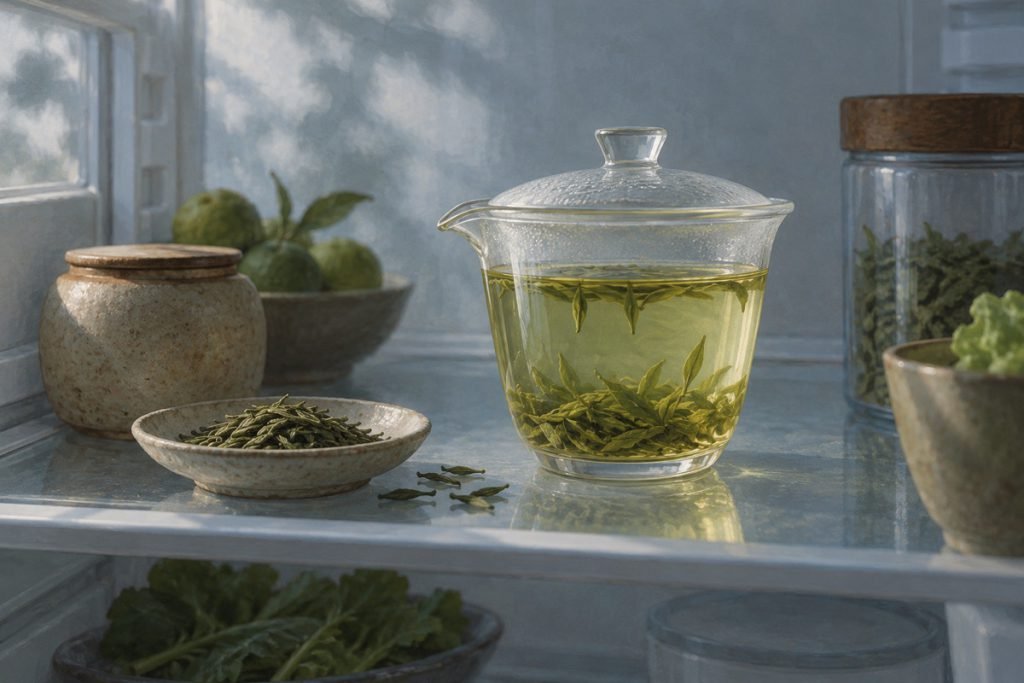
Illustrated Cold-brew loose-leaf tea: a measured refrigerator method — AI-generated editorial artwork

AI-generated editorial illustration; not an exact-product or customer photograph.

Table of Contents

Start with a small refrigerated batch, a measured leaf-to-water ratio and a tea sold for cold preparation. Cold brewing needs time and planning; it is not a way to make ordinary tea caffeine-free.

Set the ratio before the clock

For suitable loose-leaf tea, TeaVivre gives 1 g of leaf per 100–150 mL of water. That range is a useful starting point, not a promise that every green, white or oolong tea will taste balanced at the same strength. Use a scale and the amount of water actually added; the container’s advertised capacity is not the recipe volume.

Water added Leaf at 1 g / 150 mL Leaf at 1 g / 100 mL
500 mL 3.3 g 5 g
750 mL 5 g 7.5 g
1 L 6.7 g 10 g

These are calculated quantities from the merchant’s ratio. For the first batch, choose one end of the range and write it down. Changing both leaf and time makes the next adjustment harder to interpret.

Make one small, covered batch

  1. Check the product directions. Use tea intended for cold preparation. If its instructions require boiling water, use the hot-brewed iced method instead. This routine is for tea leaves, not an all-purpose recipe for dried flowers or fruit.
  2. Prepare a clean vessel. Use a covered food-safe container, potable water and clean handling tools. Allow room for the leaves and for pouring without spilling.
  3. Weigh, add water and refrigerate immediately. Keep the covered container at 4°C / 40°F or colder. This guide does not use a counter or sunny-window steep.
  4. Use the packet’s timing first. If none is supplied for a cold-brew product, four hours can be an editorial tasting checkpoint, not a validated safety limit or guaranteed finish. Pour a small sample into a clean cup rather than drinking from the batch.
  5. Strain when the flavor suits you. Remove the leaves, keep the drink covered and refrigerated, and make only what you expect to drink promptly. Record the actual time for your next batch.
Refrigeration is not sterilization

The FDA’s refrigeration guidance supports cold storage and prompt chilling; it does not establish a universal shelf life for homemade tea. This recipe makes no multi-day safety guarantee. Cold extraction does not remove caffeine.

Adjust the next batch, not every variable

If the tea is clean but too faint, increase the leaf within the stated range before trying an indefinitely longer soak. If it is too concentrated, dilute a poured serving with safe cold water and reduce the next batch’s dose. If it has an unpleasant aftertaste, check the leaf, water and clean container separately; more time is not an automatic cure. A controlled comparison of two drinking waters can help when the same problem appears with several teas.

For fruit or herbal infusions, BfR advises boiling water and at least five minutes. Start those hot and chill them afterward. A customer’s enjoyable cold-soak result does not establish a safe process.
Frequently Asked Questions

Can I use tea bags instead?

Follow the bag’s cold-preparation directions and account for its actual tea weight. A bag count is not interchangeable with grams of loose leaf.

Does cold brewing make tea caffeine-free?

No. Ordinary tea leaves contain caffeine, and this method does not provide a measured caffeine reduction or removal.

Share this article

Twitter Facebook LinkedIn Email

Related Articles

Illustrated Gongfu cup size: match the cups to your brewer — AI-generated editorial artwork

Gongfu cup size: match the cups to your brewer

Read More
Tea leaves and cups in a tea-house setting — AI-generated editorial illustration

How to brew Dragon Well: a practical tea-table guide

Read More
Editorial illustration: Matcha baking: troubleshoot color and bitterness separately

Matcha baking: troubleshoot color and bitterness separately

Read More

About Steep & Origin

Chinese tea, thoughtfully explored.

We distinguish merchant tea details, customer experiences and editorial interpretation. We do not claim personal testing unless it has actually been performed.

Quick Links

  • Home
  • All Reviews
  • Best Articles
  • Comparisons
  • Guides
  • About
  • Contact
  • Privacy Policy

Categories

  • Chinese Black Tea
  • Evening Tea
  • Green Tea
  • Matcha
  • Oolong Tea
  • Pu-erh Tea

© 2026 Steep & Origin. All Rights Reserved.

We may earn a commission when you buy through our affiliate links. Affiliate disclosure