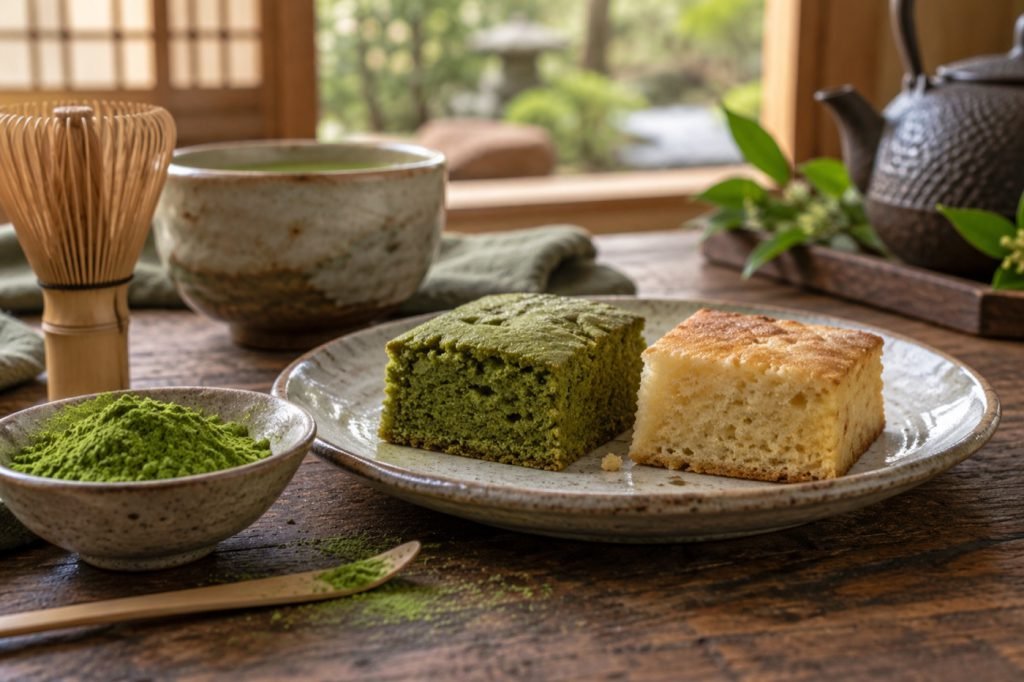
A greener result is not automatically a better-tasting result. When a matcha bake disappoints, record the powder, recipe and method before increasing the dose or changing the oven setting.
Start with what you can observe
| Problem | First check | Next controlled trial |
|---|---|---|
| Weak tea flavor | Was the powder weighed? Did other flavors dominate? | Change only the tea dose in a small batch. |
| Bitter finish | How much powder went into each portion? | Try a lower dose without changing the base dough. |
| Patchy color | Was the powder distributed through the dry or wet mixture? | Sift or disperse it before the final mix. |
| Duller color than the package image | Are you comparing dry powder with a baked product? | Photograph under the same light and assess the finished food, not a marketing image. |
Customer feedback for both Daily and Culinary includes baking uses. The same evidence also contains weak flavor, bitterness and differing color impressions. It does not establish a universal heat-stability ranking between the powders.
Keep an honest comparison
- Make a small batch using one clearly documented formula.
- Keep portion size and oven setup consistent.
- Cool the bake before comparing taste and texture.
- Record the result before trying a different powder or dose.
Do not shorten cooking solely to retain green color if that leaves the food underbaked. A chemistry explanation about pigments needs a specific food-science source; this guide focuses on practical observation rather than an unsupported claim that one ingredient always fixes color.
Use the cookie development draft as a test record, and the baking shortlist to decide whether a powder deserves a trial. Neither replaces a documented result in your recipe.
Sources: reference 1, reference 2.