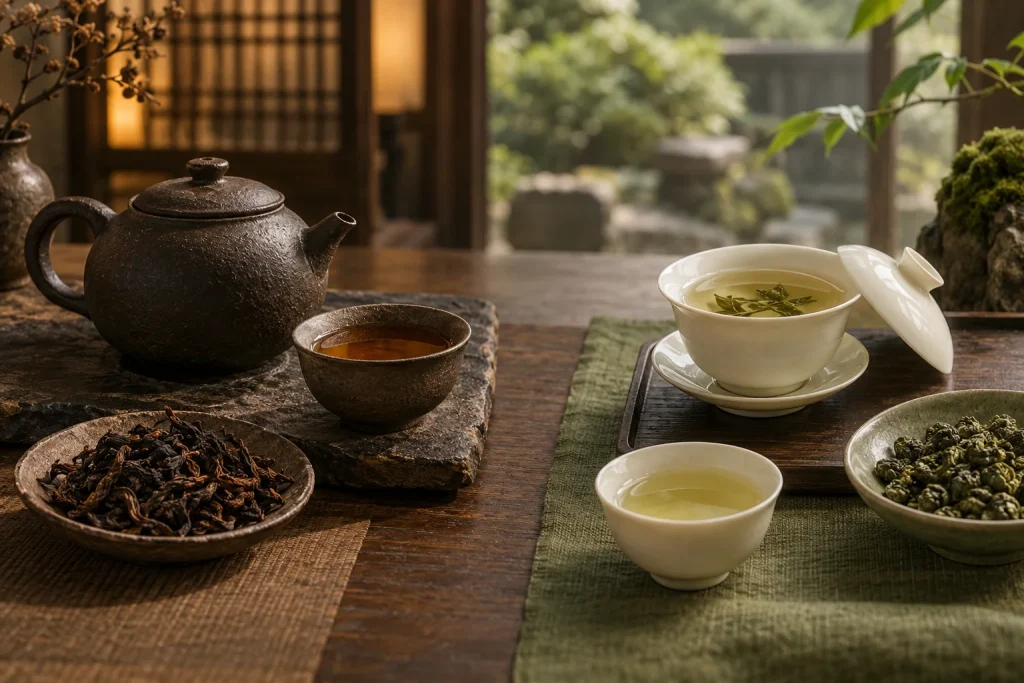
Choose Da Hong Pao when you want to explore roasted wood, darker aromas and a mineral edge; choose a light Tie Guan Yin when fresh floral fragrance and vegetal taste sound more appealing. These are useful style directions, not guarantees attached to every tea sold under either name.
The first decision is the flavor you want to avoid
Someone who dislikes smoke may be happier trying the green direction. Someone who dislikes grassy or cooked-green notes may prefer a roasted trial. Neither objection is a defect in the drinker or proof of poor tea. Decide which boundary matters before comparing popularity or merchant stars.
Our two examples show the limits of the names
The Da Hong Pao listing is described by the seller as a Qi Dan variety from Wuyi Mountain. Its customer feedback includes both balanced roast and overwhelming tobacco-like experiences. The Tie Guan Yin listing is a green xiaoqing style from Anxi; floral fragrance can coexist with a pronounced vegetable taste. This guide compares those directions, not every possible roast level or producer.
Texture is a separate preference
Both source sets contain descriptions of a substantial or rounded mouthfeel, as well as drying or disappointing preparations. A darker infusion does not establish a thicker texture, and a light floral aroma does not establish a gentle finish. Evaluate aroma, taste and aftertaste separately.
Use the same drinking goal, not blindly identical recipes
Both exact listings provide a 5 g/355 mL/100°C/3–5 minute cup method. Their gongfu instructions differ: Da Hong Pao starts with 8 g/110 mL and 5-second pours, while Tie Guan Yin uses 7 g/110 mL and starts at 15 seconds. A same-time concentrated comparison would not follow both merchant routines. The method guide keeps these differences visible.
Choose a roasted trial
Wood, nuts and deeper aromas interest you, and possible smoky notes are acceptable. Begin with a small amount of Da Hong Pao.
Choose a green-floral trial
You already enjoy fresh green tea and want a different texture. Try Tie Guan Yin while allowing for a distinctly vegetal sip.
Choose the next small sample
When neither direction sounds right
Do not force a choice between roast and green flavor. The milk-oolong guide introduces another texture-led direction and explains why added flavoring is a separate purchase decision.
For a useful first comparison
Use small packs, record each complete recipe and decide which cup you actually want to finish. That preference is more useful than declaring one style universally superior.
Exact merchant sources: Tie Guan Yin Iron Goddess Oolong Tea, Da Hong Pao Wuyi Rock Oolong Tea, Lao Cong Mi Lan Xiang Phoenix Dan Cong Oolong Tea, Taiwan Jin Xuan Milk Oolong Tea — Unflavored, Taiwan Jin Xuan Milk Oolong Tea — Flavored. Recipes are documented starting points; adjustment advice is not a report of controlled testing.