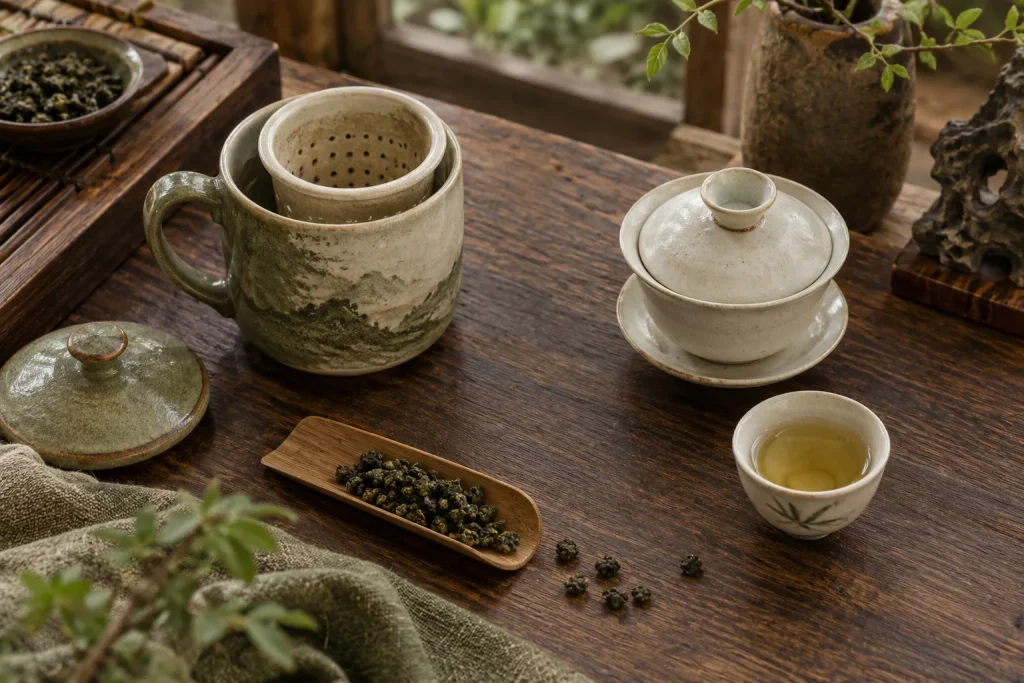
Choose a mug when you want one larger serving; choose a gaiwan when you want to follow several small infusions. The essential rule is to keep a complete recipe together. A concentrated gongfu leaf dose and a multi-minute mug time are not interchangeable parts of one recipe.
Start with the exact tea, then choose the vessel
Oolong covers different leaf shapes and flavor directions. In the five listings examined here, the merchant uses boiling water for both methods, but changes dose and timing substantially. That does not establish a universal recipe for every oolong. Use the current instructions for your selected tea, and treat the following examples as exact-listing starting points.
For one cup, leave space for the leaves to open
Use a removable basket or another brewer that lets you separate the liquid completely at the end. Weigh the dry leaf, measure the water and set a timer. A mug left with leaves immersed is a different routine from the timed, decanted recipes below.
For short pours, prepare the receiving vessel first
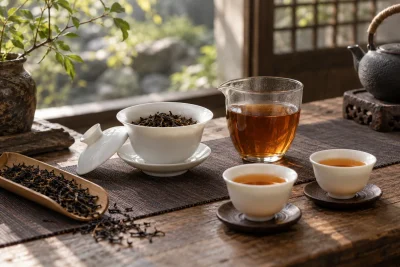
A small gaiwan changes the rhythm: fill, time, pour completely, taste and repeat only if the result remains enjoyable. Practice the lid-gap movement with cool water using the gaiwan handling guide. Place the receiving cup or pitcher within easy reach before using hot water.
Exact-listing starting recipes
| Tea | Cup: 355 mL at 100°C | Gongfu: 110 mL at 100°C |
|---|---|---|
| Tie Guan Yin Iron Goddess Oolong Tea | 5 g;3–5 minutes | 7 g; Listed, duration not stated rinse; 15, 25, 35, 45, 55, 75, 85 seconds |
| Da Hong Pao Wuyi Rock Oolong Tea | 5 g;3–5 minutes | 8 g; Around 5 seconds rinse; 5, 5, 10, 15, 25, 35, 50 seconds |
| Lao Cong Mi Lan Xiang Phoenix Dan Cong Oolong Tea | 3 g;3–5 minutes | 8 g; Around 5 seconds rinse; 10, 15, 15, 25, 20, 30, 45, 90 seconds |
| Taiwan Jin Xuan Milk Oolong Tea — Unflavored | 5 g;3–5 minutes | 7 g; Listed, duration not stated rinse; 25, 35, 45, 55, 65, 75, 85 seconds |
| Taiwan Jin Xuan Milk Oolong Tea — Flavored | 5 g;3–5 minutes | 7 g; Listed, duration not stated rinse; 25, 35, 45, 55, 65, 75, 85 seconds |
A repeatable brewing routine
- Choose one documented starting point. Keep its leaf weight, water volume, temperature and timing together. A scale and timer make changes easier to interpret.
- Account for the complete pour. Do not leave the last liquid sitting with the leaf while you drink. A slow-emptying vessel also changes contact time.
- Taste before lengthening. If the cup is already too strong or drying, more time is not the obvious next step. Shorten a fresh attempt while keeping other settings recorded.
- Stop on flavor, not a target count. A listed seven- or eight-pour sequence is not a guarantee of useful yield. End when the flavor no longer appeals.
Choose the routine you want to repeat
A mug for the daily routine
Start at the shorter end of the exact mug recipe and remove the leaf. Increase only when the cup is too light for your preference.
A gaiwan for exploration
Choose the small-pour routine if observing changes is part of the pleasure. The Dan Cong adjustment guide explains why a bitter finish should change the next decision.
Exact merchant sources: Tie Guan Yin Iron Goddess Oolong Tea, Da Hong Pao Wuyi Rock Oolong Tea, Lao Cong Mi Lan Xiang Phoenix Dan Cong Oolong Tea, Taiwan Jin Xuan Milk Oolong Tea — Unflavored, Taiwan Jin Xuan Milk Oolong Tea — Flavored. Recipes are documented starting points; adjustment advice is not a report of controlled testing.