Tie Guan Yin Iron Goddess Oolong Tea Review
A floral, vegetal light oolong for drinkers who welcome a fresh green cup; texture and later infusions vary.
We may earn a commission if you buy through our links. Affiliate disclosure.
At a Glance
KEY FEATURES
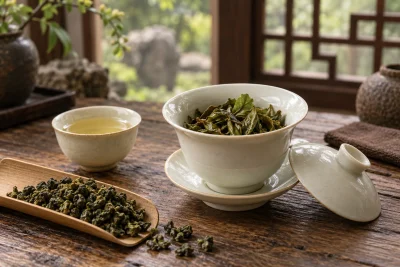
- Anxi Tie Guan Yin; rolled leaf
- Cup and gongfu methods documented
- Current season/harvest label discrepancy
Tea assessment
Research-based fit assessment from merchant documentation and selected customer feedback; not a personal tasting score.
Strong floral/green appeal for the stated taste preference; not a universal flavor judgment.
Favorable creamy/sweet impressions coexist with sourness and drying reports.
Two documented methods; strength and timing adjustment may be needed.
Repeated steeping supported, but fading and late astringency limit a stronger fit assessment.
PROS
- Floral fragrance with a fresh green character
- Soft or creamy texture described in favorable feedback
- Repeated infusions can reveal a changing finish
CONS
- Vegetal taste can dominate the floral appeal
- Later pours may turn sour, drying or weak
- Older harvest experiences do not guarantee the present flavor
The useful question about this Tie Guan Yin is whether you enjoy the green taste beneath its floral fragrance. The two need not make the same impression: feedback includes drinkers who like the aroma but find the sip too vegetal. A soft texture may make that contrast attractive; it does not turn the tea into a roasted oolong.
Enjoying the fragrance is only half the decision
Floral, buttery and fresh-green impressions run through the favorable accounts. Some describe a savory vegetable character with sweetness; others find the greenery too prominent or wish for more flowers. Choose it as a floral-green tea, with room for both qualities, rather than buying an orchid description and expecting the vegetal part to disappear.
Try the cup you actually intend to drink
A larger cup with a clear stopping point
5 g leaf · 355 mL water · 100°C/212°F · 3–5 minutes.
The merchant lists this larger-cup method. Separate the liquid from the leaves when the timed infusion ends.
Start at the shorter end of the listed time. If the strength is excessive, a shorter next trial is an adjustment to explore, not a proven way to remove a flavor you dislike.
This is where the texture matters. Favorable feedback describes softness or a creamy, buttery impression alongside the green flavor. Those are sensory descriptions, not an ingredient statement. Assess whether the combination is enjoyable before committing to repeated infusions.
Follow the changing finish in a small brewer
The documented Tie Guan Yin sequence
7 g leaf · 110 mL water · 100°C/212°F.
Merchant rinse instruction: listed, duration not stated. Infusions: 15, 25, 35, 45, 55, 75, 85 seconds, in the listed order.
The rinse has no stated duration. Prepare a secure pour before using hot water; the cool-water handling routine is a useful place to practise.
Later pours are not a predictable extension of the first. Historical accounts include persistent fragrance and sweetness, but also fading flavor, sourness and accumulating dryness. A buttery opening may give way to a lighter green cup. Continue because you like that change, not because seven times appear in the recipe.
An old favorite may return with a different balance
Returning drinkers describe differences between harvests, including less floral character, weaker flavor and less appealing later cups. These accounts cannot identify the taste of the pack currently offered. They do explain why a modest reorder is sensible when a remembered floral harvest is the benchmark.
Pros & Cons Analysis
Based on supplied customer reviews and verified product documentation
Pros
- The aroma and the sip offer different pleasures: floral fragrance can sit above a savory green taste. That makes this a useful sample for a green-tea drinker seeking a different texture, provided vegetable notes are welcome.
- Favorable accounts describe a rounded mouthfeel and lingering sweetness rather than only a strong aroma. The appeal is an unsweetened texture/finish experience, not proof that every preparation will be smooth.
- Both mug and short-infusion experiences appear in the source set. This gives two practical ways to explore the tea, although reported session lengths differ and the later cup can lose intensity.
Cons
- Disappointed drinkers still sometimes like the fragrance: the main obstacle is the green or grassy taste itself. A floral tag is therefore not a reason to overlook an existing dislike of vegetal tea.
- Sourness and accumulated astringency appear in some session reports, while others remain pleasant. Stop or adjust according to the cup rather than extending time simply to reach the listed seventh infusion.
- Returning-customer descriptions include a weaker or less floral harvest. Buy a small amount when the previous batch is your reference, and resolve the current season-label discrepancy before choosing a pack.
Does the green character belong in your cup?
Start with a sample if…
Your usual green tea feels too straightforward and you would welcome a floral aroma with a softer texture. Evaluate the green taste in the first cup before committing to a long session.
Choose another direction if…
Vegetal or grassy flavors are already the reason you avoid light oolongs. A roasted style is a more coherent next trial than expecting brewing changes to remove this tea’s central character.
Frequently Asked Questions
Is this a dark roasted Tie Guan Yin?
The checked listing describes a green xiaoqing style, and customer feedback includes strong vegetal notes. Do not choose it expecting a dark roasted profile.
Will it last for seven good infusions?
Seven infusions are listed in the merchant routine, but customer experiences differ. Stop when the result no longer appeals.
Is the currently listed tea an autumn harvest?
The listing shows an autumn season label and a May harvest date. Confirm the selected pack; the conflict remains unresolved.
Tea details
| Tea style | Light oolong; merchant describes xiaoqing process |
|---|---|
| Seller-stated origin | Anxi County, Quanzhou, Fujian, China |
| Cultivar | Tieguanyin |
| Listed harvest | 2026-05-18; season label conflicts |
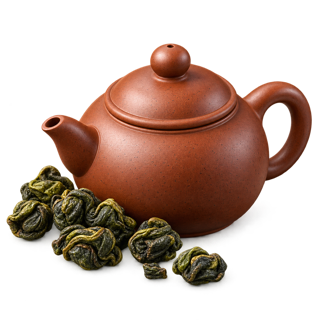
| Leaf form | Tightly rolled semi-ball leaves |
| Added flavoring | Not established by an explicit ingredient statement in this check |
| Cup leaf weight | 5 g |
| Cup water volume | 355 mL |
| Water temperature | 100°C / 212°F |
| Cup infusion time | 3–5 minutes |
| Gongfu leaf weight | 7 g |
| Gongfu water volume | 110 mL |
| Gongfu rinse | Listed, duration not stated |
| Gongfu infusion sequence | 15, 25, 35, 45, 55, 75, 85 seconds |
Taiwan Jin Xuan Milk Oolong Tea — Flavored
Ali Shan, Chiayi County, Taiwan · 2026-05-02
Lao Cong Mi Lan Xiang Phoenix Dan Cong Oolong Tea
Fenghuang Town, Chaozhou, Guangdong, China · 2026-05-20
Da Hong Pao Wuyi Rock Oolong Tea
Wuyi Mountain, Nanping, Fujian, China · 2025-04-30
Taiwan Jin Xuan Milk Oolong Tea — Unflavored
Ali Shan, Chiayi County, Taiwan · 2026-05-02