Da Hong Pao Wuyi Rock Oolong Tea Review
Da Hong Pao is the roasted option in this group, but roast is also the reason to approach it cautiously. Choose a sample if wood, toasted notes and a mineral edge sound inviting. If smoke or tobacco-like flavors spoil a cup for you, a famous rock-tea name is not a reason to ignore that preference.
We may earn a commission if you buy through our links. Affiliate disclosure.
At a Glance
KEY FEATURES
- Roasted Wuyi rock oolong
- Wuyi Mountain, Nanping, Fujian, China
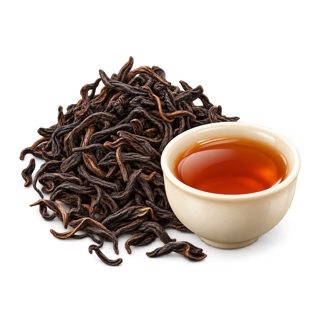
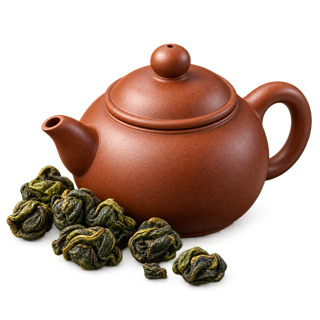
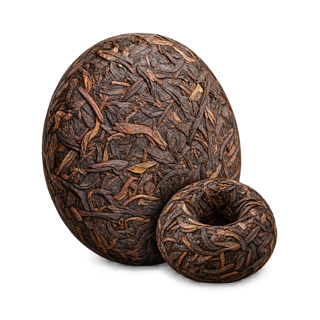
- Twisted strip leaves
Tea assessment
Research-based fit assessment from merchant documentation and selected customer feedback; not a personal tasting score.
Distinct roast/wood/fruit appeal, conditional on enjoying smoke-adjacent flavors.
Rounded and sweet reports coexist with drying finishes.
Documented methods; very short early pours require preparation.
Changing sessions are supported, but longevity and balance differ.
PROS
- Roasted, woody character with fruit or nut impressions
- Rounded texture and sweetness in favorable preparations
- Short infusions can show changing flavors
CONS
- Smoke or tobacco-like notes can dominate
- Dryness and uneven session development are reported
- Some historical feedback reports broken leaves
Roast is the reason to consider this Da Hong Pao—and the main reason to pass on it. Favorable accounts find depth beneath the dark aroma: wood, nuts, cooked fruit and a rounded mouthfeel. Others find smoke or tobacco so dominant that sweetness becomes beside the point. Sample it if the roasted direction itself appeals.
What sits beneath the roast?
The more inviting descriptions combine toasted or woody flavors with a mouth-coating texture and a sweet or mouthwatering finish. Mineral impressions also appear, sometimes pleasantly and sometimes too heavily. This is not a promise of a delicate floral cup concealed beneath a dark opening; the stronger roasted character can remain the defining experience.
The distinction becomes clearer over a session. Some feedback describes the roast easing as sweetness develops, while other sessions change little or become more tobacco-like. A long series of pours is worthwhile only when you enjoy where it goes.
A five-second opening calls for a ready pour
Da Hong Pao in successive small pours
8 g leaf · 110 mL water · 100°C/212°F.
Merchant rinse instruction: around 5 seconds. Infusions: 5, 5, 10, 15, 25, 35, 50 seconds, in the listed order.
Set the receiving cup or pitcher in place before adding water. The first two listed infusions are only five seconds each; an improvised, slow pour can extend contact substantially.
- Notice the roast first. Decide whether its woody or smoky direction is enjoyable in itself.
- Return to the finish. Look for the sweetness or fuller texture that makes the darker aroma worthwhile to you.
- Let the session end. If dryness or tobacco takes over, reaching the last listed time is not a useful goal.
These are prompts for assessing a sample, not results from our own tasting. Shortening contact on another trial may be worth exploring if the cup is drying; it cannot be relied on to remove a roast character you dislike.
Prefer a single larger cup?
5 g leaf · 355 mL water · 100°C/212°F · 3–5 minutes.
The merchant lists this larger-cup method. Separate the liquid from the leaves when the timed infusion ends.
The merchant also supplies this method, so a small gaiwan is not required to try the tea. Judge the roast in the format you normally use rather than assuming gongfu will necessarily suit you better.
Buy the listing, not the reputation of the name
The recorded merchant details identify a Qi Dan variety from Wuyi Mountain; they do not establish original mother-tree provenance. Historical comparisons also describe shifts between mineral and floral character. Neither the celebrated name nor a remembered harvest guarantees the balance in a new pack.
Broken-leaf observations belong to the historical evidence too. They warrant checking the leaf you receive if intact strips matter to you, but do not establish a current defect rate. If your main hesitation is smoke rather than appearance, compare the fresh-green alternative before buying a large quantity.
Pros & Cons Analysis
Based on supplied customer reviews and verified product documentation
Pros
- The roast gives a clear reason to choose this over a fresh green oolong: it can bring a toasted, savory aroma with dried-fruit sweetness underneath. Its appeal depends on wanting that darker direction, not simply on buying a prestigious tea name.
- The fuller mouthfeel described in favorable feedback can make a small cup feel substantial. A mineral or mouthwatering finish is part of some experiences, though neither quality is guaranteed for the listed harvest.
- Reports of changing nut, wood and fruit impressions give a reason to use short pours. The benefit is exploring those changes at your own stopping point, not extracting a promised number of cups.
Cons
- Tobacco and smoke are not merely hypothetical tasting tags here: they are also reasons drinkers dislike the tea. Someone sensitive to smoky flavors should choose a small pack or a lighter style.
- Longer or later infusions can become astringent, while other sessions stay balanced. The merchant’s sequence is not proof that every pour remains satisfying; judge the finish before adding more time.
- Broken-leaf observations exist in historical feedback. They do not establish a present defect rate, but a buyer expecting uniformly intact long leaves should inspect the received batch rather than infer appearance from the product name.
Is the roast the reason you want this tea?
Choose the roasted direction
Start small if toasted wood, nuts and a darker aroma are the point of your purchase. Use the first short pours to decide whether the roast leaves enough sweetness for you.
Choose a fresher direction
If smoke usually overwhelms your enjoyment, Tie Guan Yin offers a different preference to explore. It trades roast for a green, vegetal edge; neither style removes the need to know your own dislikes.
Frequently Asked Questions
Does Da Hong Pao mean this tea comes from the original mother trees?
No such provenance is established for this listing. The checked product describes a Qi Dan variety from Wuyi Mountain.
Should I follow all seven infusions?
Use the listed times as starting points, then stop when the taste weakens or becomes unpleasant. Customer sessions vary.
Tea details
| Tea style | Roasted Wuyi rock oolong |
|---|---|
| Seller-stated origin | Wuyi Mountain, Nanping, Fujian, China |
| Cultivar | Dahongpao, Qi Dan variety (seller-stated) |
| Listed harvest | 2025-04-30 |
| Leaf form | Twisted strip leaves |
| Added flavoring | Not established by an explicit ingredient statement in this check |
| Cup leaf weight | 5 g |
| Cup water volume | 355 mL |
| Water temperature | 100°C / 212°F |
| Cup infusion time | 3–5 minutes |
| Gongfu leaf weight | 8 g |
| Gongfu water volume | 110 mL |
| Gongfu rinse | Around 5 seconds |
| Gongfu infusion sequence | 5, 5, 10, 15, 25, 35, 50 seconds |
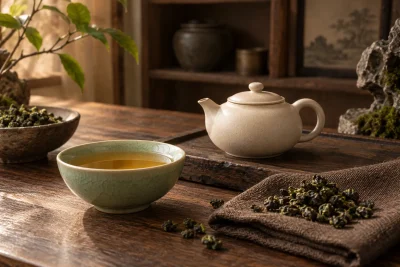
Taiwan Jin Xuan Milk Oolong Tea — Flavored
Ali Shan, Chiayi County, Taiwan · 2026-05-02
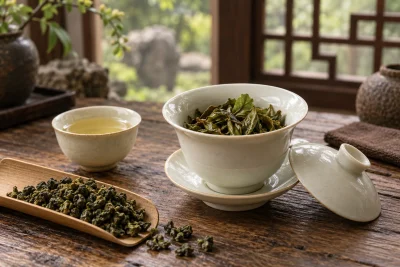
Tie Guan Yin Iron Goddess Oolong Tea
Anxi County, Quanzhou, Fujian, China · 2026-05-18; season label conflicts
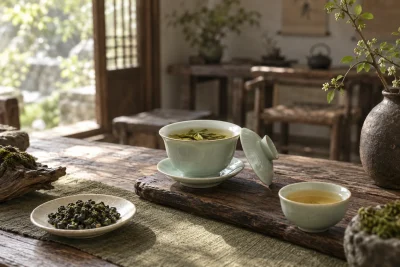
Taiwan Jin Xuan Milk Oolong Tea — Unflavored
Ali Shan, Chiayi County, Taiwan · 2026-05-02
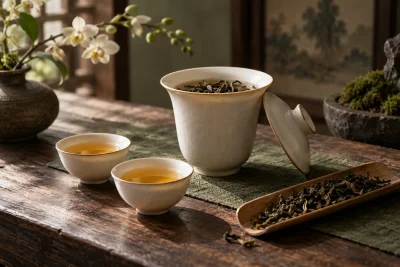
Lao Cong Mi Lan Xiang Phoenix Dan Cong Oolong Tea
Fenghuang Town, Chaozhou, Guangdong, China · 2026-05-20