Taiwan Jin Xuan Milk Oolong Tea (unflavored) Review
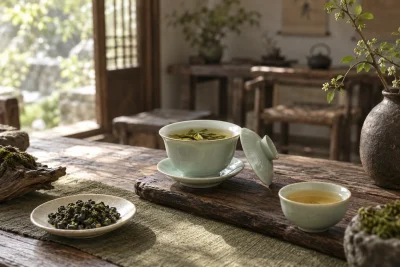
Buy this unflavored Jin Xuan to explore a soft texture and a light floral-green cup, rather than expecting milk in tea form. The merchant explicitly says no flavoring is added. Customer impressions range from a noticeable milky character to creaminess felt mainly in the mouth, with little milk-like taste at all.
We may earn a commission if you buy through our links. Affiliate disclosure.
At a Glance
KEY FEATURES
- Light Taiwanese oolong
- Ali Shan, Chiayi County, Taiwan
- No added flavoring, explicitly stated by seller; allergen certification not established
Tea assessment
Research-based fit assessment from merchant documentation and selected customer feedback; not a personal tasting score.
Floral/creamy appeal is supported, but expected milk intensity often differs.
Softness and coating texture coexist with sharper or flat outcomes.
Two documented methods; adjustments can be necessary.
Early creaminess may fade and later bitterness is reported.
PROS
- Soft or coating texture with floral-green flavors
- Explicit no-added-flavoring statement from the merchant
- A lighter creamy direction for an unsweetened routine
CONS
- Milk-like flavor may be faint or absent
- Later bitterness and weak repeat infusions are reported
- Historical batches do not give a fixed flavor benchmark
This unflavored Jin Xuan makes most sense when softness matters more than a strong milk-like aroma. The merchant explicitly states no added flavoring. That distinguishes the product, but leaves the sensory question open: will its floral-green tea and rounded texture be satisfying even if the creamy note is faint?
Separate what you smell from what you feel
Milk-like aroma
The original accounts disagree substantially: the milk impression can be noticeable, subtle or missing from the brewed cup. A fragrant bag is not a reliable promise of a dessert-like drink.
Softness in the sip
Some favorable accounts value a coating or rounded texture even when the flavor is only lightly creamy. Green, floral and fruit impressions can be more central than a literal milk resemblance.
This distinction matters more than trying to rank how “milky” the tea is. A buyer seeking a soft, unsweetened everyday cup may enjoy the restrained flavor; someone purchasing for an unmistakable dessert scent may feel let down by the same cup. There are strong-milk reports too, so subtlety should not become another universal promise.
Does it still appeal when the creamy opening fades?
Watch the transition across small pours
7 g leaf · 110 mL water · 100°C/212°F.
Merchant rinse instruction: listed, duration not stated. Infusions: 25, 35, 45, 55, 65, 75, 85 seconds, in the listed order.
Use the sequence as starting points. The merchant lists a rinse without a duration; the number of infusions is not a yield guarantee.
Historical feedback includes sessions that become more floral after the milk impression recedes, alongside later bitterness, flatness and weak resteeping. The useful test is whether the remaining tea still appeals. Continuing solely to recover an early creamy note can miss the reason to stop.
For an everyday cup, keep the expectations modest
The larger-cup starting recipe
5 g leaf · 355 mL water · 100°C/212°F · 3–5 minutes.
The merchant lists this larger-cup method. Separate the liquid from the leaves when the timed infusion ends.
Some source accounts favor cooler water, but they do not establish one alternative temperature for everyone. If the cup is too sharp, record one adjustment at a time rather than lengthening the soak to pursue a missing milk flavor.
Stem and sediment complaints also occur in the historical set. They cannot establish the condition of a new pack, and the source texts do not prove that stems caused bitterness. Treat appearance and the drinking result as separate things to assess.
Pros & Cons Analysis
Based on supplied customer reviews and verified product documentation
Pros
- The body can be the strongest reason to choose this tea. Favorable feedback describes softness and a rounded finish even when the milk-like aroma is not especially strong, giving a distinct alternative to a sharper green cup.
- The explicit no-added-flavoring statement helps a buyer choose between the two Jin Xuan listings. It answers that specific distinction without requiring you to infer ingredients from a poetic tasting description.
- Drinkers seeking a gentle floral or lightly fruity routine may value the restrained profile. The appeal is a subtle unsweetened experience, not a substitute for a sweetened milk beverage.
Cons
- Descriptions of milk intensity conflict sharply. If a strong dessert aroma is the essential purchase criterion, this is a sample-first choice; the word “milk” alone is not a useful intensity guarantee.
- Some feedback describes astringency, flatness or reduced appeal after early pours. A long official sequence should therefore be used as an exploration, with permission to stop well before the final listed infusion.
- Comparisons with earlier purchases include changed aromas and expectations. A favorable memory of an old pack cannot establish the flavor of the currently offered harvest.
Choose Jin Xuan for the texture you want
Choose texture first
This is the more coherent Jin Xuan trial when you want no added flavoring and are comfortable with a subtle creamy impression. Judge whether the floral-green tea itself remains enjoyable after the initial aroma fades.
Choose aroma deliberately
If a pronounced sweet scent is what you want, compare the flavored listing before buying. Added flavoring is a separate choice, and the flavored version also has both too-strong and too-weak reports.
Frequently Asked Questions
Does unflavored Jin Xuan contain milk?
The merchant explicitly states no added flavoring for this listing. Creamy tasting language is not evidence of dairy content; obtain a complete ingredient/allergen confirmation when necessary.
Will it taste like the flavored version?
No fixed equivalence is established. Feedback on milk intensity varies for both listings, and the flavored tea has an explicit added-flavoring distinction.
Tea details
| Tea style | Light Taiwanese oolong |
|---|---|
| Seller-stated origin | Ali Shan, Chiayi County, Taiwan |
| Cultivar | Taicha12 / Jin Xuan |
| Listed harvest | 2026-05-02 |
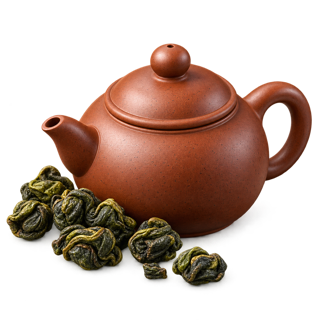
| Leaf form | Rolled leaves |
| Added flavoring | No added flavoring, explicitly stated by seller; allergen certification not established |
| Cup leaf weight | 5 g |
| Cup water volume | 355 mL |
| Water temperature | 100°C / 212°F |
| Cup infusion time | 3–5 minutes |
| Gongfu leaf weight | 7 g |
| Gongfu water volume | 110 mL |
| Gongfu rinse | Listed, duration not stated |
| Gongfu infusion sequence | 25, 35, 45, 55, 65, 75, 85 seconds |
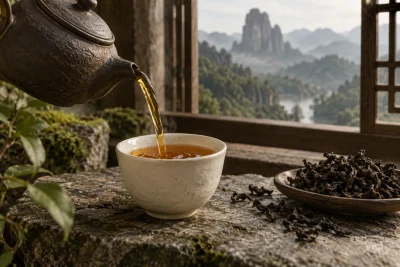
Da Hong Pao Wuyi Rock Oolong Tea
Wuyi Mountain, Nanping, Fujian, China · 2025-04-30
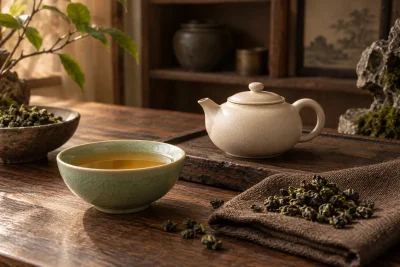
Taiwan Jin Xuan Milk Oolong Tea — Flavored
Ali Shan, Chiayi County, Taiwan · 2026-05-02
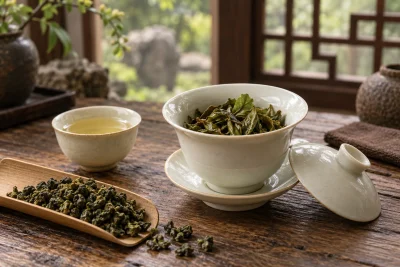
Tie Guan Yin Iron Goddess Oolong Tea
Anxi County, Quanzhou, Fujian, China · 2026-05-18; season label conflicts
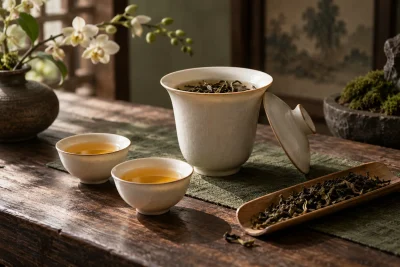
Lao Cong Mi Lan Xiang Phoenix Dan Cong Oolong Tea
Fenghuang Town, Chaozhou, Guangdong, China · 2026-05-20