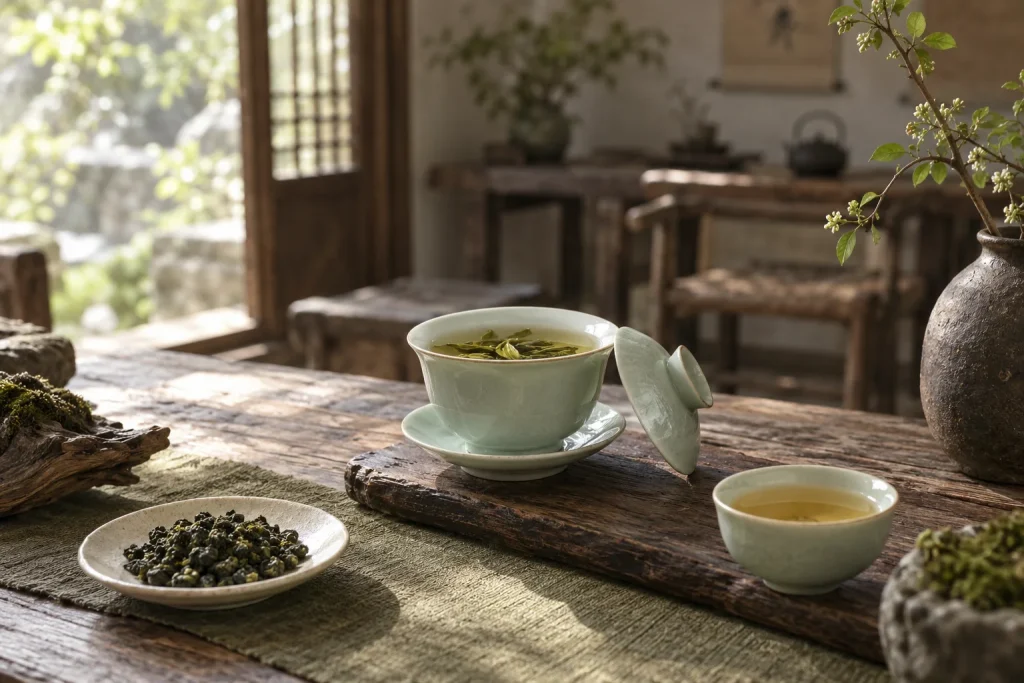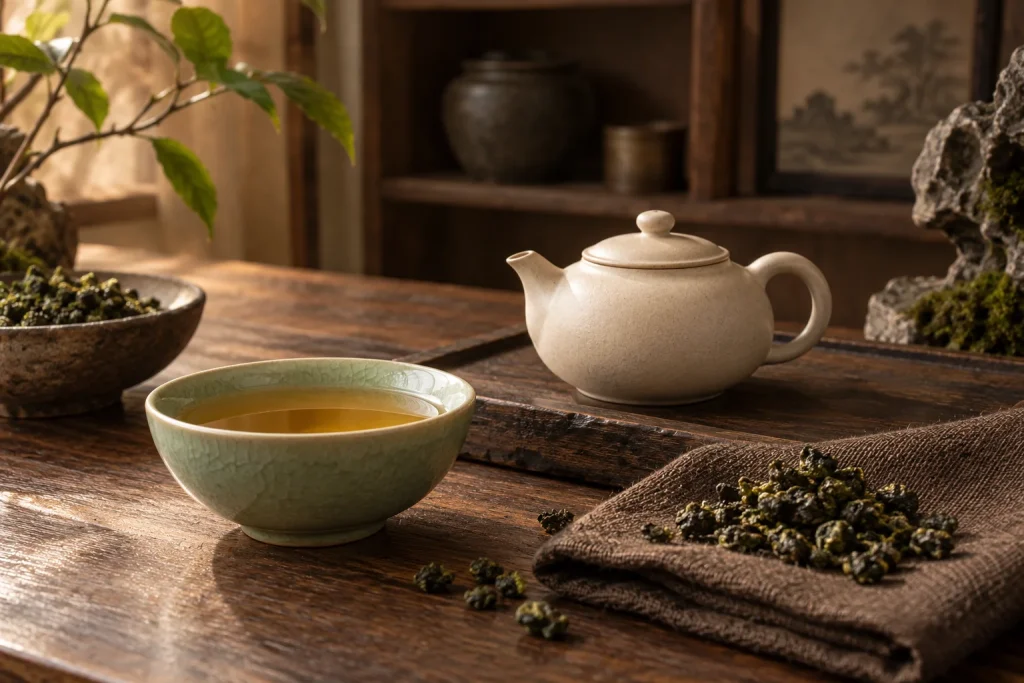
The ingredient difference decides more than the shared name
Both exact listings identify Taicha 12/Jin Xuan from Ali Shan and show the same current harvest date in the checked source. One explicitly states no added flavoring; the other states added edible flavoring. That is the verified reason to distinguish them. It does not establish that the flavored version uses better leaf or that every drinker will find it stronger.
Texture and scent lead to different recommendations
The unflavored corpus includes soft, coating textures and subtle floral-green cups, but also strong milk impressions and cups with little milk character. The flavored corpus includes enjoyable cream/candy aroma, overpowering artificial impressions and unexpectedly faint results. Comparing these separate histories cannot produce a controlled head-to-head flavor score.
Identical recipes do not mean identical experiences
Both merchant cup methods use 5 g/355 mL at 100°C for 3–5 minutes. Both gongfu routines use 7 g/110 mL, a rinse of unspecified duration, then 25, 35, 45, 55, 65, 75 and 85 seconds. You can begin with those matched settings, but the same recipe does not guarantee equal extraction, aroma intensity or enjoyment.
When neither is the right purchase
If you need a precisely guaranteed milk intensity, the evidence cannot supply it. If you need a complete allergen formulation, resolve that with the merchant before ordering. Neither customer enthusiasm nor the name “milk oolong” answers that requirement. The terminology guide explains why tasting language is not an ingredient list.
Exact merchant sources: Taiwan Jin Xuan Milk Oolong Tea — Unflavored, Taiwan Jin Xuan Milk Oolong Tea — Flavored. Selection uses selected original historical customer feedback; no personal tasting or market-wide superiority is claimed.