Before replacing a tea you find flat or harsh, compare it with a second safe drinking water while keeping the recipe unchanged. Hardness, odor and brewing technique are different problems and need different checks.
First separate the water from the kettle
Taste a fresh glass of your normal drinking water. Then smell the clean, empty kettle and a cup of that water heated and cooled enough to assess comfortably. A problem present before tea enters the cup is a reason to investigate the water or equipment first. Taste is not a test of microbiological or chemical safety; follow any local drinking-water advisory.
Water smells or tastes unpleasant
Use another known-safe drinking water for the comparison. Check the actual filter model’s documentation and replacement schedule before expecting it to solve a specific odor.
Kettle has deposits or old aromas
Follow its maker’s cleaning and descaling directions. Rinse as instructed and compare again before changing the tea recipe.
Only one tea tastes wrong
Verify that tea’s dose, temperature and contact time. Water may contribute, but a single disappointing tea does not prove a water problem.
Hardness, pH and TDS are not the same reading
USGS defines hardness in terms of dissolved calcium and magnesium. pH describes acidity or alkalinity, while a TDS reading represents total dissolved solids rather than their individual composition. Two waters with similar TDS can therefore differ in composition. Do not turn one number into a universal “best tea water” target.
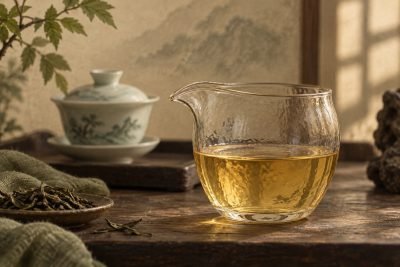
TeaVivre’s water demonstration shows different color and taste when the water used for Dragon Well changes. It is an informal comparison, not proof that pH alone caused the difference: the waters themselves were different. It supports trying another water, rather than chasing the exact pH from that example.
Run a comparison you can interpret
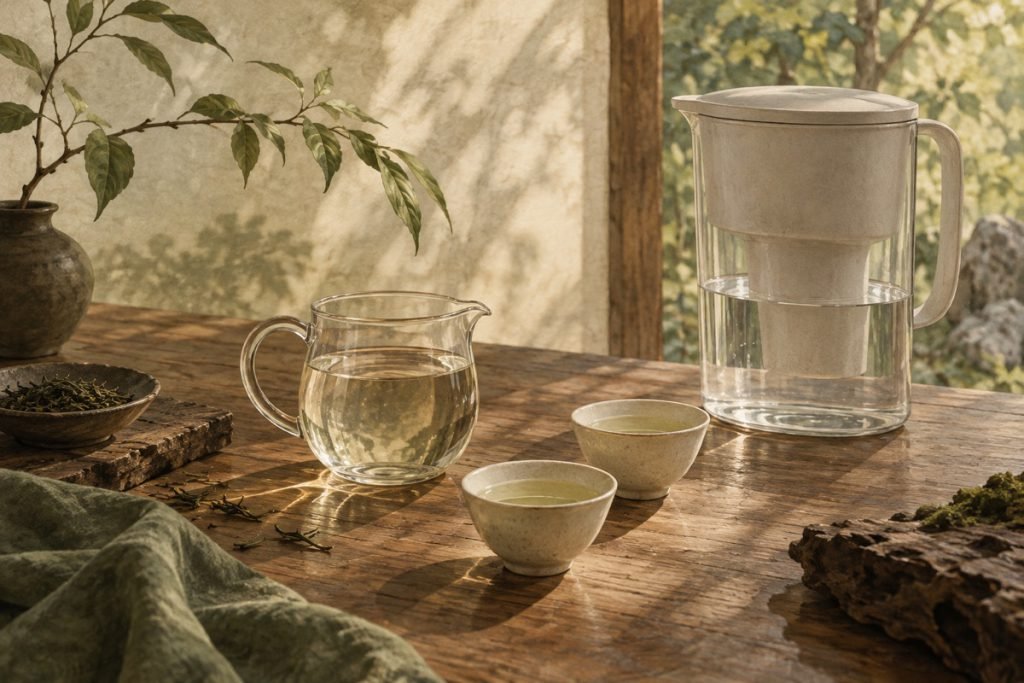
- Choose your regular potable water and one alternative potable water. Record the source or bottle label so you can repeat the result.
- Use the same tea from the same pack, weighed equally. Keep cup shape, water volume, brewing temperature and infusion time the same. Clean equipment between preparations.
- Taste both at a comfortable, similar temperature. Note the tea aroma, any drying or bitter finish, and whether the cup tastes clearer or flatter to you.
- Repeat the comparison before buying equipment. If the difference disappears when dose or timing is controlled, water treatment may not be the useful purchase.
Choose a response, not a magic number
If a different water consistently improves several teas, check your water supplier’s report and the treatment claims of a candidate filter. A filter jug is not automatically a softener, and no filter should be assumed to make unsafe water safe without an appropriate documented capability. If both cups taste similar, retain the simpler water source and work on the recipe.
For refrigerated cold brewing, use safe drinking water and cold storage regardless of which water tastes best. Better flavor does not validate storage safety. Your useful result is a repeatable cup from a practical water source, not an ideal number on a meter.