Tea is not a guaranteed fat-loss product. If an unsweetened tea replaces a sugary drink, the practical change is in what you consume—not proof that the tea itself burns fat.
Keep three questions separate
What changed in the drink?
Compare the ingredients and serving size. Added sugar, honey, syrup and milk still belong in the whole-drink assessment.
What did the research study?
Brewed tea, concentrated extracts and mixed supplements are different products. A study of one does not automatically establish an effect for another.
What outcome is being promised?
A scale change does not, by itself, show long-term fat loss or justify a particular commercial tea.
NCCIH describes a possible modest body-weight effect from catechins and caffeine, with variation by product and activity. That does not support ranking these merchant teas as fat burners or prescribing a daily slimming dose.
Choose a drink you can enjoy without a promise
- Identify the drink you want to replace and its usual additions.
- Try a tea you enjoy plain or with fewer additions.
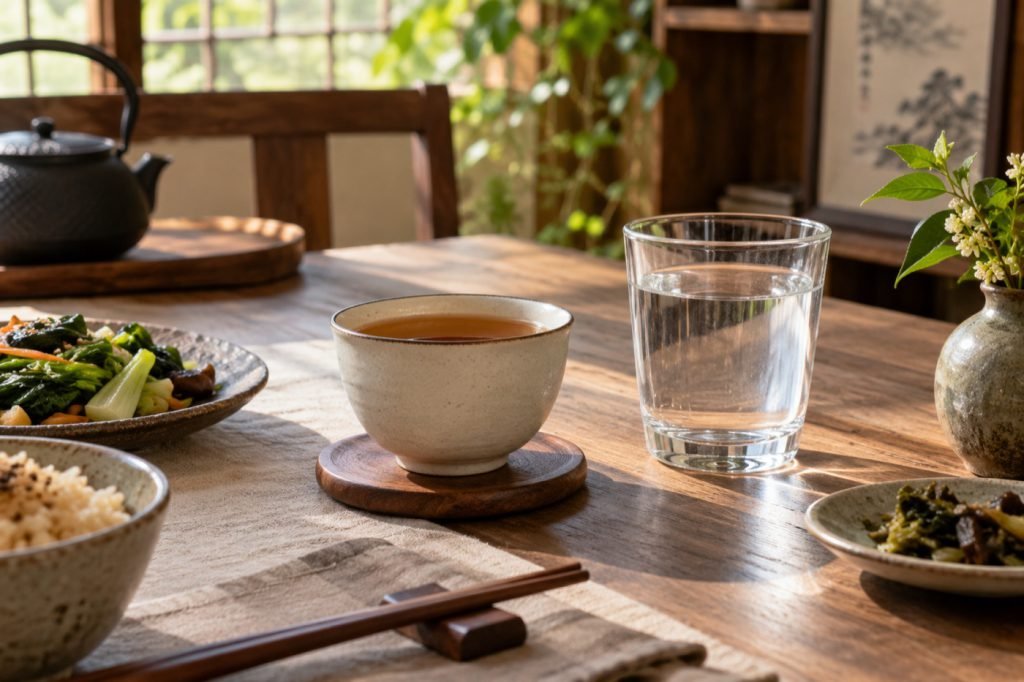
- Keep the actual portion and ingredients visible instead of assuming every tea latte is equivalent.
- Treat longer-term weight management as a broader health question, not a tea-shopping contest.
The words green, pu-erh and organic do not establish a weight-loss advantage for a particular pack. Concentrated green-tea extracts also have a different safety profile from ordinary tea; do not treat increasing concentration as an obvious improvement.
For an everyday drink choice, use the caffeine comparison and consider the whole recipe. A clinician or registered dietitian can help with a personal weight-management plan.
Sources: reference 1, reference 2.