Steep & Origin

  • Home
  • Reviews
  • Best
    • All Best
      • Oolong Tea Picks
    • Chinese Black Tea Picks
    • Green Tea Picks
    • Matcha Picks
    • Pu-erh Tea Picks
    • Tea and Caffeine Picks
    • Tea pottery & teaware Picks
  • Guides
    • All Guides
      • Oolong Tea Guides
    • Chinese Black Tea Guides
    • Evening Tea Guides
    • Green Tea Guides
    • Matcha Guides
    • Organic Tea Guides
    • Pu-erh Tea Guides
    • Tea and Caffeine Guides
    • Tea and Health Guides
    • Tea pottery & teaware Guides
    • White Tea Guides
  • Comparisons
    • All Comparisons
      • Oolong Tea Comparisons
    • Chinese Black Tea Comparisons
    • Green Tea Comparisons
    • Matcha Comparisons
    • Pu-erh Tea Comparisons
    • Tea pottery & teaware Comparisons
  • Favorites
Guides

Chinese black tea types: choose by malt, cocoa, fruit or smoke

3 min read
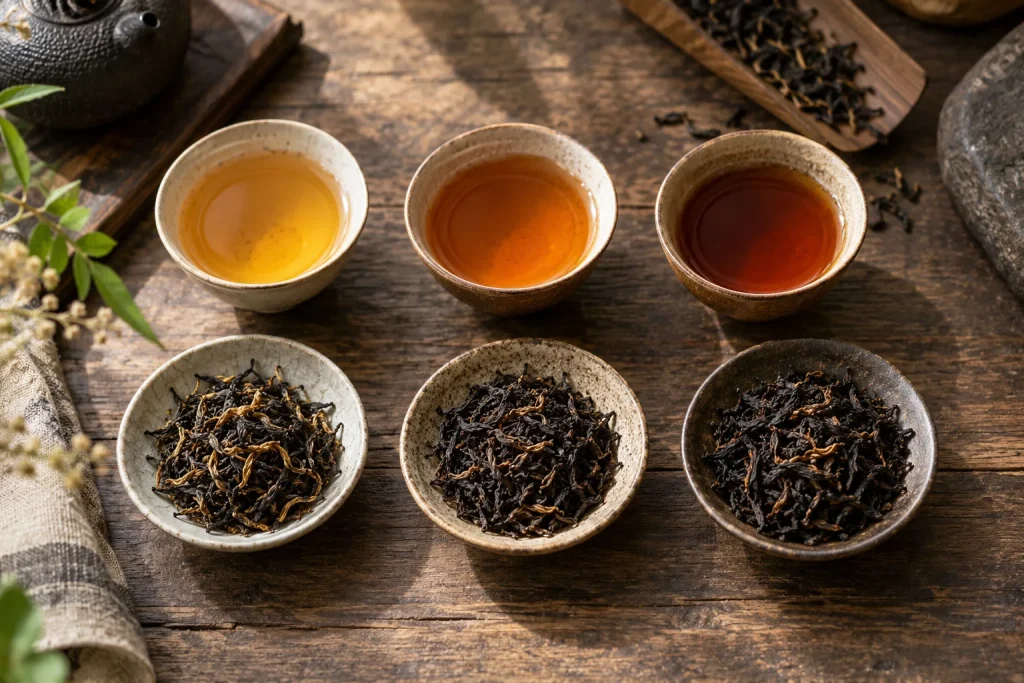
AI-generated tea and teaware scene for Chinese black tea types: choose by malt, cocoa, fruit or smoke — editorial illustration

AI-generated editorial illustration · not an exact-product or customer photograph

Table of Contents

The most useful first distinction is whether you want a sweet, cocoa-leaning cup, a more structured finish, or deliberate pine smoke. This guide maps five reviewed Chinese black teas to those choices. It is a buying orientation, not a claim that every tea from a region tastes the same.

A practical map of the reviewed teas

Tea Direction to explore Main preference check
Golden Monkey Sweet malt, baked and cocoa impressions Can the sweetness feel too prominent to you?
Dian Hong Golden Tip Cocoa depth with floral or fruity detail Do you enjoy a quieter cup if aroma promises more than the taste delivers?
Keemun Hao Ya Cocoa, wood and a structured cup Are you comfortable with some dryness?
Smoky Lapsang Pine smoke and a resinous aroma Do you actively enjoy smoked tea?
Wild Lapsang Honey-like sweetness, cocoa and fruit Are you choosing the exact unsmoked-style listing rather than relying on the shared name?

Origin helps identify; it does not choose for you

The current listings place Golden Monkey in Fuding, Dian Hong in Fengqing, Keemun in Qimen, and the two Lapsangs in the Wuyi area. Those are seller-stated identities. They provide context for comparing actual listings, but neither a region nor a famous name can predict whether you will find a cup smooth, sufficiently strong or interesting.

For a plain sweet cup

Begin by comparing a small Golden Monkey or Wild Lapsang sample. The evidence supports sweet-leaning appeal, while preserving the possibility that the cup feels too sweet or too mild.

For a structured or smoky cup

Keemun and Smoky Lapsang answer different needs. Dryness and cocoa-like structure are not the same as pine smoke; choose the feature you actually want.

Make the first order informative

  1. Pick two contrasting directions rather than several names that sound equally prestigious.
  2. Use each tea’s current instructions. The reviewed black teas do not all specify the same temperature or timing.
  3. Taste plain first if your goal is to choose a tea to drink plain. Additions can be a preference, but they change the comparison.
  4. Write down the flavor you enjoyed and the finish you disliked before ordering a larger pack.

The plain-drinking shortlist narrows the non-smoky choices. If smoke is the uncertainty, start with the Smoky versus Wild Lapsang comparison. The black-tea brewing guide keeps the different recipes side by side.
Build a contrasting black-tea order

Pick the flavor contrast you actually want to explore—sweet malt against structure, or smoke against an unsmoked-style listing. Two modest samples with their own recipes are more informative than several large packs selected by prestige.

Frequently Asked Questions

Is Lapsang always smoky?

No. The two reviewed listings deliberately differ in their smoke profile. Check the exact tea and its processing description.

Does a black tea need boiling water?

Do not assume so. These reviewed recipes include 85°C and 90°C starting temperatures; use the exact instructions.

Share this article

Twitter Facebook LinkedIn Email

Related Articles

AI-generated tea and teaware scene for How to brew white tea: loose leaves, buds and mini cakes — editorial illustration

How to brew white tea: loose leaves, buds and mini cakes

Read More
Editorial illustration: Culinary vs ceremonial matcha: choose for the finished drink or dish

Culinary vs ceremonial matcha: choose for the finished drink or dish

Read More
Editorial illustration: Porcelain vs clay teaware: variety, care and tea choice

Porcelain vs clay teaware: variety, care and tea choice

Read More

About Steep & Origin

Chinese tea, thoughtfully explored.

We distinguish merchant tea details, customer experiences and editorial interpretation. We do not claim personal testing unless it has actually been performed.

Quick Links

  • Home
  • All Reviews
  • Best Articles
  • Comparisons
  • Guides
  • About
  • Contact
  • Privacy Policy

Categories

  • Chinese Black Tea
  • Evening Tea
  • Green Tea
  • Matcha
  • Oolong Tea
  • Pu-erh Tea

© 2026 Steep & Origin. All Rights Reserved.

We may earn a commission when you buy through our affiliate links. Affiliate disclosure