Steep & Origin

  • Home
  • Reviews
  • Best
    • All Best
      • Oolong Tea Picks
    • Chinese Black Tea Picks
    • Green Tea Picks
    • Matcha Picks
    • Pu-erh Tea Picks
    • Tea and Caffeine Picks
    • Tea pottery & teaware Picks
  • Guides
    • All Guides
      • Oolong Tea Guides
    • Chinese Black Tea Guides
    • Evening Tea Guides
    • Green Tea Guides
    • Matcha Guides
    • Organic Tea Guides
    • Pu-erh Tea Guides
    • Tea and Caffeine Guides
    • Tea and Health Guides
    • Tea pottery & teaware Guides
    • White Tea Guides
  • Comparisons
    • All Comparisons
      • Oolong Tea Comparisons
    • Chinese Black Tea Comparisons
    • Green Tea Comparisons
    • Matcha Comparisons
    • Pu-erh Tea Comparisons
    • Tea pottery & teaware Comparisons
  • Favorites
Guides

Longjing vs Bi Luo Chun: choose the green-tea experience you want

3 min read
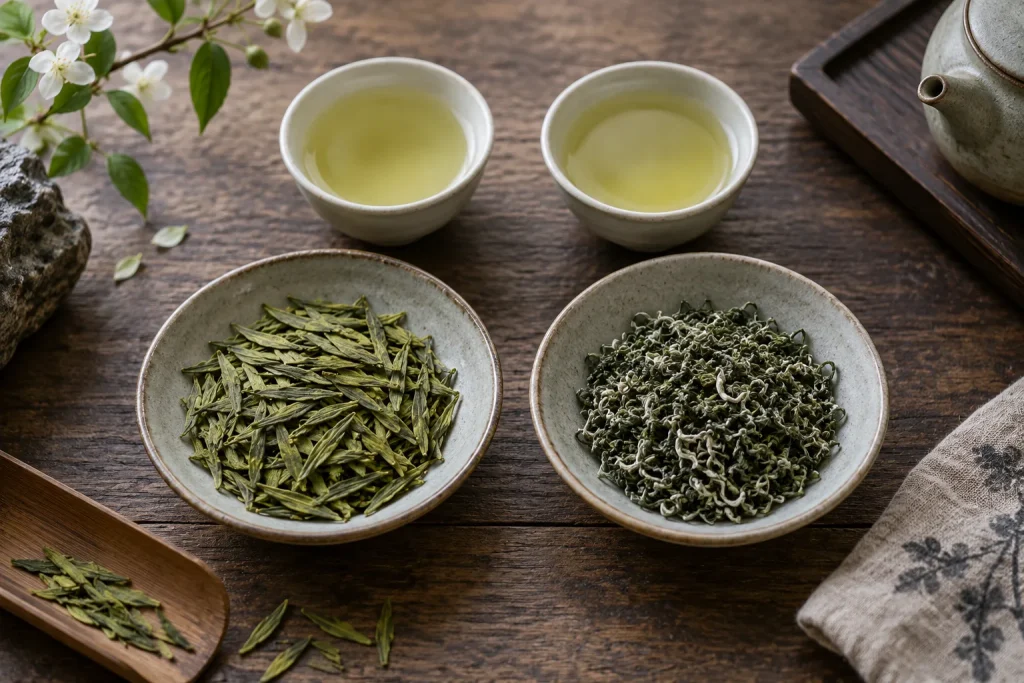
AI-generated tea and teaware scene for Longjing vs Bi Luo Chun: choose the green-tea experience you want — editorial illustration

AI-generated editorial illustration · not an exact-product or customer photograph

Table of Contents

Choose by the cup and finish you enjoy: Longjing is worth exploring for nutty green character, while Bi Luo Chun offers a curled-leaf style whose feedback includes crispness, fruit and a more drying edge. Neither name guarantees a fixed taste. This guide uses the reviewed standard Dragon Well and Bi Luo Chun as examples, not as definitions of every tea sold under those names.

Start with the finish, not the leaf shape

A familiar nutty cup

Dragon Well feedback includes nutty and green impressions, a possible floral accent and enjoyable repeat brewing. It can still become bitter or feel too simple. Choose this direction if a recognizable everyday green cup is the aim.

A brighter, sometimes drier session

Bi Luo Chun feedback includes fruit, corn and nut impressions, with more disagreement about astringency. That makes the finish a useful deciding question: do you enjoy a crisp edge, or do you want the softest possible cup?

Flat versus curled leaf is a visible distinction, but it does not tell you how much you will enjoy the infusion. The current examples also come from different listed regions and use different cup doses. Treat the comparison as two actual teas, not a clean experiment isolating leaf shape.

Compare them without mixing the recipes

Tea Cup starting recipe
Dragon Well 2 g / 250 mL / 85°C / 185°F / 3–5 min
Bi Luo Chun Green Tea 2.5 g / 250 mL / 85°C / 185°F / 3–5 min
  1. Prepare each tea using its own cup recipe and the same measured water volume for that recipe.
  2. Taste once it is comfortable to drink. Note the flavor, the texture and the finish separately.
  3. Decide what bothered you, if anything: lack of strength, an unwanted flavor, or dryness. These are different problems.
  4. Change one parameter in a second trial before deciding to order more. Do not keep adjusting a flavor family you simply dislike.

When neither is the right next purchase

If your main aim is a mild, quiet green tea, Mao Feng may be a more relevant sample than choosing between these two by reputation. If floral perfume is the attraction, jasmine pearls answer a different question entirely: scent becomes a major part of the cup.

Read the Dragon Well review and Bi Luo Chun review for the separate customer syntheses, then use the beginner green-tea shortlist to compare those preferences with the wider selection.
Use the finish to choose your next sample

After trying the two examples, write down which finish you would want again: familiar nutty-green flavor or a brighter, drier edge. If neither appeals, use the beginner shortlist to explore Mao Feng instead of forcing a choice between two famous names.

Frequently Asked Questions

Does curled leaf mean stronger tea?

No. Leaf shape identifies a style but does not establish strength in your cup. Dose, water and time also matter.

Which is better for a soft finish?

The assessed Bi Luo Chun feedback includes marked dryness, but Dragon Well can also become bitter. A small trial is more useful than treating either style as guaranteed soft.

Share this article

Twitter Facebook LinkedIn Email

Related Articles

Editorial illustration: Is there a healthiest tea? Choose around your actual needs

Is there a healthiest tea? Choose around your actual needs

Read More
Illustrated tea setting — AI-generated editorial artwork

What Is Milk Oolong? Jin Xuan and Added Flavoring

Read More
Editorial illustration: Matcha baking: troubleshoot color and bitterness separately

Matcha baking: troubleshoot color and bitterness separately

Read More

About Steep & Origin

Chinese tea, thoughtfully explored.

We distinguish merchant tea details, customer experiences and editorial interpretation. We do not claim personal testing unless it has actually been performed.

Quick Links

  • Home
  • All Reviews
  • Best Articles
  • Comparisons
  • Guides
  • About
  • Contact
  • Privacy Policy

Categories

  • Chinese Black Tea
  • Evening Tea
  • Green Tea
  • Matcha
  • Oolong Tea
  • Pu-erh Tea

© 2026 Steep & Origin. All Rights Reserved.

We may earn a commission when you buy through our affiliate links. Affiliate disclosure