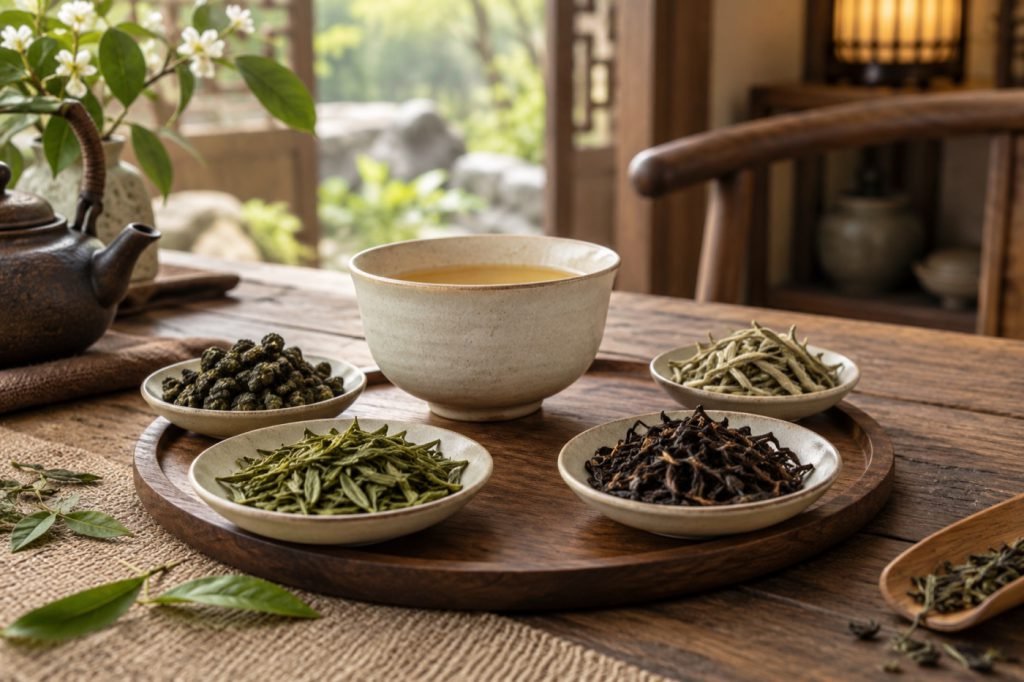
There is no supported universal winner in this tea collection. A useful choice considers the drink you enjoy, its ingredients, caffeine and your own circumstances rather than assigning every tea a health score.
Begin with the whole drink
| Decision | Practical approach |
|---|---|
| You want fewer sweet additions | Choose a flavor you enjoy with less added sweetener. |
| Caffeine bothers you | Check caffeine information and consider a verified caffeine-free option. |
| You value organic production | Check certification rather than treating the word as a medical claim. |
| You have a health condition or take medicines | Ask about relevant interactions instead of selecting a tea from a broad health ranking. |
NCCIH’s green-tea summary says firm conclusions cannot be reached for many promoted uses. It also distinguishes beverages from concentrated products. We do not turn research on an extract into a benefit claim for a particular loose-leaf tea.
What a review can usefully establish
A product review can assess current identity, preparation, flavor feedback and limitations. It can explain why you may prefer a nutty green tea to an earthy ripe pu-erh. It cannot infer clinical superiority from customer stars, a darker liquor or an appealing origin story.
Buy for a repeatable routine
Use a documented preparation and a manageable pack size. Enjoyment matters when the goal is an ordinary daily drink.
Read health claims separately
Ask what product, dose and outcome were actually studied. Keep uncertainty visible rather than using an antioxidant label as a shortcut.
Use organic labeling for a production-standard question, tea versus coffee for caffeine context, and weight-loss evidence if that is the reason you started searching. These are different decisions; one healthiest-tea ranking would blur them.
Sources: reference 1, reference 2, reference 3.