Xing Ren Xiang review: almond notes that may arrive later
Xing Ren Xiang is worth a sample if nutty aroma and a changing fruity-to-almond impression appeal. The name does not guarantee a strong almond taste in the first sip. Some accounts find the note later in the session; others find it subtle, brief or obscured by oversteeping.
We may earn a commission if you buy through our links. Affiliate disclosure.
At a Glance
KEY FEATURES
- Light-baked Xing Ren Xiang Dancong
- Ju Duo Zai
- Cup: 3 g / 355 mL / 100°C (212°F) / 3–5 min
Tea assessment
Research-based editorial fit scores, not personal testing or measured intensity. Historical customer experiences may differ from the current batch.
Fruit-to-nut transitions support a distinctive sampling purpose.
Smooth body and a sweet finish are supported by several accounts.
Attentive timing helps avoid obscuring a faint almond note.
Late astringency and fading limit the twelve-pour schedule.
PROS
- Nutty and fruity phases can make a session engaging.
- A smooth body can balance toast and sweetness.
CONS
- The almond impression may be faint or fleeting.
- Longer steeping can hide the note you wanted.
The almond note has no fixed arrival time
Xing Ren Xiang is an aroma name, not a promise that the first sip will taste strongly of almonds. Original feedback places the nutty impression at different points: after early fruit and flowers, near the third or fourth infusion, or at the opening before it fades. Other accounts find it quite pronounced. That variation is more useful than a single definitive tasting sequence.
| Part of a session | What to pay attention to |
|---|---|
| Opening pours | Record what you actually find: fruit, flowers, toast or nuts. Do not treat an initially fruity cup as a failed almond tea. |
| Middle pours | Notice whether a nutty impression becomes clearer without needing extra strength. Reports of a later almond note justify looking, not expecting it on schedule. |
| Later pours | Check whether sweetness still offsets the drying finish. More astringency with less enjoyable flavor is a reason to stop. |
Preserve the subtle note instead of chasing it
Some feedback describes an insufficiently saturated or bland cup, while another account warns that oversteeping makes the almond harder to detect. These are different problems. Longer contact can intensify extraction without providing the particular aroma you wanted, so a strongly flavored dessert-style expectation is a poor reason for a large first purchase.
Cup
3 g / 355 mL / 100°C (212°F) / 3–5 min. Decant at the chosen time. The cup instructions do not specify a rinse.
Gongfu
8 g / 110 mL / 100°C (212°F). Approximately 5 seconds. Infusion sequence: 10, 13, 18, 20, 23, 25, 30, 40, 50, 65, 80, 100 seconds. Drain fully between pours.
The Xing Ren Xiang listing supplies the methods above. For an exploratory gongfu session, compare the first few pours before increasing strength. If the nutty note remains faint but you enjoy the smooth body and fruity finish, that is still a valid reason to like the tea; the name need not become a tasting test.
If a floral or honeyed direction sounds more appealing than searching for a subtle nutty note, the Dancong shortlist offers a clearer basis for choosing a different sample.
Pros & Cons Analysis
Based on supplied customer reviews and verified product documentation
Pros
- Several accounts connect early fruit or flowers with a later almond-like note. The precise sequence varies, but the changing emphasis is a useful reason to try gongfu preparation.
- Positive reports describe a substantial or smooth cup with mild roast and a lingering sweet finish. That supports a gentler roasted preference rather than a charcoal-led one.
Cons
- Some find it subtle; another says it fades quickly, while an account of blandness finds only a little mango-almond aroma. Do not buy it expecting an almond-flavored dessert drink.
- A detailed account says oversteeping obscures the almond, and another finds later pours increasingly astringent as the pleasant flavors disappear. Chasing the named aroma with more extraction can work against the goal.
Our verdict
Choose Xing Ren Xiang for a measured exploration of fruit, toast and nutty fragrance. Sample before a full bag if a strong almond taste is the deciding factor. Stop when drying late cups replace the sweet finish; completing twelve pours is not the point.
Frequently Asked Questions
Does Almond Aroma mean this contains almonds?
The name describes the tea’s aroma. It is not an ingredient or allergen guarantee; ask the merchant about ingredients and handling if that is important to you.
Why is almond not obvious in the first cup?
The original accounts place it at different points in the session, and some find it faint. Neither a fixed sequence nor a strong almond flavor is guaranteed.
Tea details
| Tea style | Light-baked Xing Ren Xiang Dancong |
|---|---|
| Seller-stated origin | Wudong Village, Fenghuang, Chaozhou, Guangdong, China |
| Cultivar | Ju Duo Zai |
| Listed harvest | May 18, 2026 |
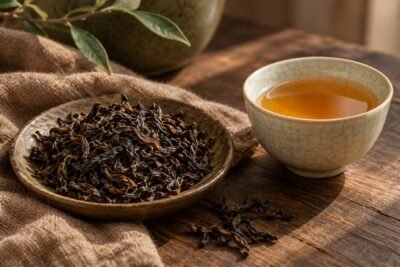
| Leaf form | Tight dark strips |
| Added flavoring | Not independently verified; aroma names are not ingredient declarations |
| Cup leaf weight | 3 g |
| Cup water volume | 355 mL |
| Water temperature | 100°C / 212°F |
| Cup infusion time | 3–5 min |
| Gongfu leaf weight | 8 g |
| Gongfu water volume | 110 mL |
| Gongfu rinse | Approximately 5 seconds |
| Gongfu infusion sequence | 10, 13, 18, 20, 23, 25, 30, 40, 50, 65, 80, 100 seconds |
Lao Cong Mi Lan Xiang Phoenix Dan Cong Oolong Tea
Fenghuang Town, Chaozhou, Guangdong, China · 2026-05-20
Organic Shui Xian (Water Sprite) Oolong Tea
Panlan Village, Yong’an, Fujian, China · September 12, 2025

Taiwan High Mountain Oolong Tea
Mingjian Township, Nantou, Taiwan · May 18, 2026
Nonpareil Taiwan Li Shan Oolong Tea
Fushoushan Farm, Lishan Mountain, Taichung, Taiwan · October 26, 2025