Taiwan High Mountain oolong review: Sijichun for a floral daily cup
TeaVivre’s Taiwan High Mountain listing is a Sijichun oolong from Mingjian. It is a candidate for a refreshing floral cup, not a shortcut to the dark roast some drinkers associate with mountain tea. The feedback includes reliable everyday drinking and clear preference mismatches with its green character.
We may earn a commission if you buy through our links. Affiliate disclosure.
At a Glance
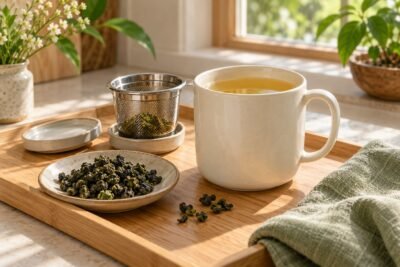
KEY FEATURES
- Taiwan High Mountain named listing
- Sijichun
- Cup: 5 g / 355 mL / 100°C (212°F) / 3–5 min
Tea assessment
Research-based editorial fit scores, not personal testing or measured intensity. Historical customer experiences may differ from the current batch.
Floral freshness suits a lighter daily-drinking preference.
Clean, smooth texture and refreshing finish are supported.
Clear methods are available; aromatic preference is the main uncertainty.
Repeat brewing is supported without a dependable six-cup yield.
PROS
- Floral freshness supports an everyday role.
- Repeat infusions can remain enjoyable.
CONS
- Green and floral notes may be the wrong direction.
- Neither a verified altitude nor a value ranking follows from the name.
Read “Sijichun from Mingjian” before “High Mountain”
The broad product name is less useful than the exact identity: TeaVivre lists Sijichun from Mingjian for this tea. No measured elevation is established in the captured product summary. It should therefore be considered as its own floral Taiwanese oolong, not as evidence that a particular altitude guarantees quality.
A daily cup can be a better aim than an impressive tasting
The source feedback includes repeat purchases, clean texture and a refreshing finish. Those observations support trying it for a regular drinking routine. Historical comments about affordability do not establish today’s value, and you do not need to find an elaborate sequence of flavors for the tea to suit that role.
The strongest mismatch is with a dark-roast preference. A drinker who expected a roasted mountain tea instead found an overwhelmingly floral, green-style cup; other feedback asks for more strength or dislikes the green notes. That is a useful warning about choosing from the name alone, rather than a reason to dismiss the positive daily-drinking accounts.
Try it in the preparation you will use regularly
Cup
5 g / 355 mL / 100°C (212°F) / 3–5 min. Decant at the chosen time. The cup instructions do not specify a rinse.
Gongfu
7 g / 110 mL / 100°C (212°F). Approximately 5 seconds. Infusion sequence: 25, 25, 30, 60, 70, 80 seconds. Drain fully between pours.
The Sijichun listing’s cup recipe provides a straightforward first trial. If the fragrance feels excessive, shortening contact may reduce concentration, but it will not convert this into a roasted oolong. If the cup feels too mild, establish whether you actually like its floral direction before committing to more leaf or a larger purchase.
When choosing a second Taiwanese sample, compare Sijichun with the named Ali Shan, Li Shan and DaYuLing listings. Use that comparison to explore another cultivar or texture preference, rather than assuming this broad High Mountain label puts all four on a single quality ladder.
Pros & Cons Analysis
Based on supplied customer reviews and verified product documentation
Pros
- Regular-use accounts describe a fragrant, refreshing cup with a lingering finish. This is a meaningful fit for someone who prefers a lighter oolong routine.
- A recent favorable account specifically reports successful rebrewing. Treat that as support for trying a session, rather than a calculated cost-per-cup advantage.
Cons
- A dark-oolong drinker finds the floral impression excessive; other accounts identify grassy or gunpowder-like notes. The name does not imply roast.
- The captured exact summary supplies a location and cultivar, not a measured elevation. Historical praise for price cannot establish today’s value against other pack sizes.
Our verdict
Choose this Sijichun listing for a light, clean, floral daily cup. Skip it when your idea of mountain oolong is toasted and dark. Sample alongside Ali Shan if creamy texture is your main interest, and compare current offers only after deciding which profile you prefer.
Frequently Asked Questions
Is this the same product as Ali Shan?
No. This listing names Sijichun from Mingjian, while the reviewed Ali Shan names Jin Xuan from Ali Shan.
What elevation is verified?
No exact elevation is established from the captured product summary. The broad High Mountain name should not be treated as a measured altitude.
Tea details
| Tea style | Taiwan High Mountain named listing |
|---|---|
| Seller-stated origin | Mingjian Township, Nantou, Taiwan |
| Cultivar | Sijichun |
| Listed harvest | May 18, 2026 |
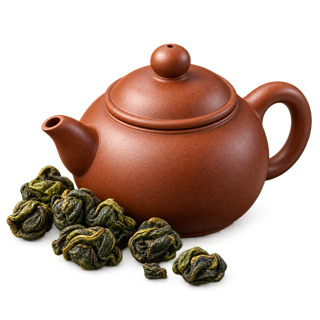
| Leaf form | Rolled semi-balls |
| Added flavoring | Not independently verified; aroma names are not ingredient declarations |
| Cup leaf weight | 5 g |
| Cup water volume | 355 mL |
| Water temperature | 100°C / 212°F |
| Cup infusion time | 3–5 min |
| Gongfu leaf weight | 7 g |
| Gongfu water volume | 110 mL |
| Gongfu rinse | Approximately 5 seconds |
| Gongfu infusion sequence | 25, 25, 30, 60, 70, 80 seconds |
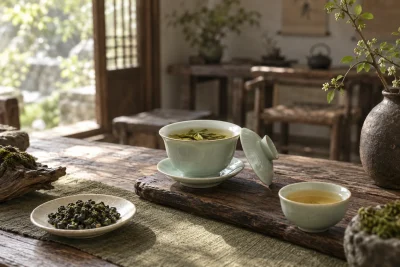
Taiwan Jin Xuan Milk Oolong Tea — Unflavored
Ali Shan, Chiayi County, Taiwan · 2026-05-02
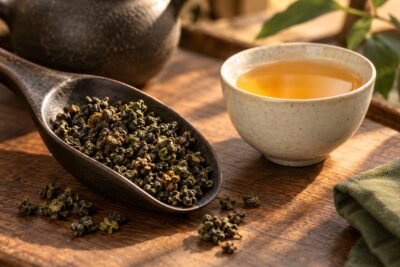
Superfine Taiwan Moderately-Roasted Dong Ding Oolong Tea
Dongding, Lugu Township, Nantou, Taiwan · May 18, 2026
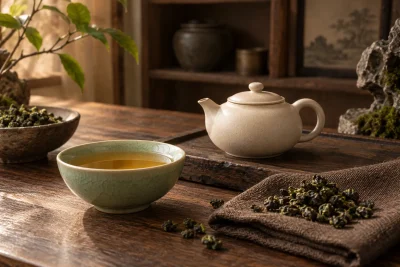
Taiwan Jin Xuan Milk Oolong Tea — Flavored
Ali Shan, Chiayi County, Taiwan · 2026-05-02
Rou Gui Oolong Tea
Zheyang Village, Wuyi Mountain, Nanping, Fujian, China · April 30, 2025