Moderately roasted Dong Ding review: warmth with flowers still present
This Dong Ding makes sense when you want nutty, caramelized warmth without losing all floral character. It is a separate choice from TeaVivre’s green-style Dong Ding. Positive feedback emphasizes a changing, comforting session, while the limits include fading later infusions and an occasional unwelcome aroma.
We may earn a commission if you buy through our links. Affiliate disclosure.
At a Glance
KEY FEATURES
- Moderately roasted Dong Ding
- Qingxin / Chin Shin
- Cup: 5 g / 355 mL / 100°C (212°F) / 3–5 min
Tea assessment
Research-based editorial fit scores, not personal testing or measured intensity. Historical customer experiences may differ from the current batch.
Nutty warmth, fruit and flowers support a balanced roast preference.
Buttery and honey-like texture is a positive theme.
Timing and an isolated unpleasant-aroma report favor a measured first session.
A developing middle is supported, with later fading.
PROS
- Roast and floral sweetness can coexist.
- The session can develop after a light first pour.
CONS
- The later pours may not sustain the early complexity.
- Not every aroma or preparation is agreeable.
Roast and flowers can occupy the same cup
The moderately roasted Dong Ding is interesting because the feedback does not reduce it to toast. Nutty warmth, caramelized sweetness and buttery texture sit beside floral and fruity descriptions. Its role is for someone who wants a roasted Taiwanese tea with aromatic detail still present, rather than the greener character of the standard Dong Ding.
The middle of the session is the reason to pay attention
A detailed gongfu account describes a light, floral opening, a stronger second and third infusion, and a later shift toward grain-like notes as the brighter impressions recede. Other accounts support the combination of caramel, fruit and flowers without reproducing that exact order. The useful possibility is development across the session, not a guaranteed tasting script.
Use the roasted Dong Ding schedule
Cup
5 g / 355 mL / 100°C (212°F) / 3–5 min. Decant at the chosen time. The cup instructions do not specify a rinse.
Gongfu
7 g / 110 mL / 100°C (212°F). Approximately 5 seconds. Infusion sequence: 20, 30, 40, 50, 70, 90, 120 seconds. Drain fully between pours.
These are the moderately roasted listing’s brewing instructions. The side-by-side Dong Ding brewing guide shows the difference from the green-style version. Keep the leaf drained between pours and watch how the roast and fragrance balance, instead of using a longer steep solely to recover a fading floral note.
Balance is reported, but not universal
There is contrary feedback about an unwelcome shellfish-like aroma and bitterness after long gaps between infusions. These are limited observations, not established defects of every batch, and the broader positive descriptions do not erase them. A small purchase is particularly useful if you are sensitive to unusual savory aromas: you can decide whether the nutty-floral combination works in the preparation you actually use.
Pros & Cons Analysis
Based on supplied customer reviews and verified product documentation
Pros
- The original sample supports a middle ground between green oolong and a heavily baked cup. Nutty and caramelized associations add warmth while fruit and flowers remain noticeable.
- A detailed account finds the second and third infusions more intense before the profile gradually settles. A quiet opening need not be the most representative cup.
Cons
- The same favorable account finds less endurance than some other roasted oolongs. The seven-step recipe is not proof of seven equally interesting cups.
- An isolated account reports a shellfish-like aroma and bitterness when waiting between infusions. That does not establish a contamination claim, but it prevents describing every session as clean and bitterness-free.
Our verdict
Choose the moderately roasted Dong Ding when green-style oolong feels too leafy but heavy charcoal is not what you want either. It is especially worth a sample for nutty warmth with a floral finish. Enjoy the developing middle of the session and stop when only the less interesting base remains.
Frequently Asked Questions
Is moderate roast the same as aged oolong?
No. Roasting describes processing; age concerns time and storage. Neither can be inferred from the other.
Does this use the green Dong Ding recipe?
The cup doses match, but the gongfu sequences differ. Use the sequence for this exact roasted listing.
Tea details
| Tea style | Moderately roasted Dong Ding |
|---|---|
| Seller-stated origin | Dongding, Lugu Township, Nantou, Taiwan |
| Cultivar | Qingxin / Chin Shin |
| Listed harvest | May 18, 2026 |
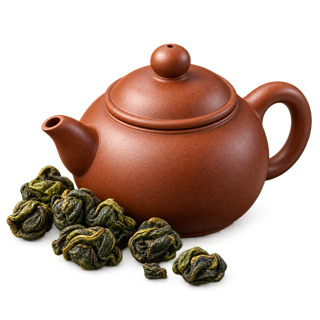
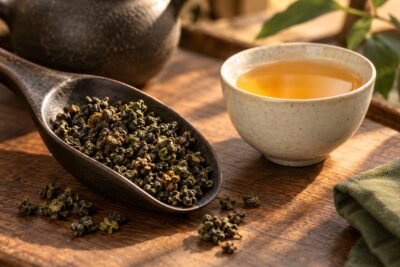
| Leaf form | Rolled semi-balls |
| Added flavoring | Not independently verified; aroma names are not ingredient declarations |
| Cup leaf weight | 5 g |
| Cup water volume | 355 mL |
| Water temperature | 100°C / 212°F |
| Cup infusion time | 3–5 min |
| Gongfu leaf weight | 7 g |
| Gongfu water volume | 110 mL |
| Gongfu rinse | Approximately 5 seconds |
| Gongfu infusion sequence | 20, 30, 40, 50, 70, 90, 120 seconds |
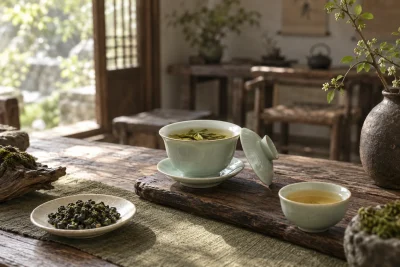
Taiwan Jin Xuan Milk Oolong Tea — Unflavored
Ali Shan, Chiayi County, Taiwan · 2026-05-02
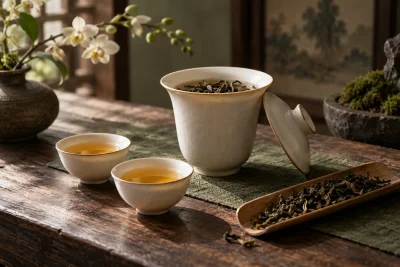
Lao Cong Mi Lan Xiang Phoenix Dan Cong Oolong Tea
Fenghuang Town, Chaozhou, Guangdong, China · 2026-05-20
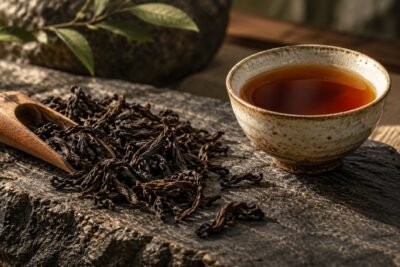
Rou Gui Oolong Tea
Zheyang Village, Wuyi Mountain, Nanping, Fujian, China · April 30, 2025
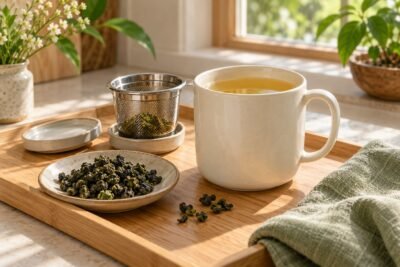
Taiwan High Mountain Oolong Tea
Mingjian Township, Nantou, Taiwan · May 18, 2026