Rou Gui oolong review: heavy roast comes before the cinnamon
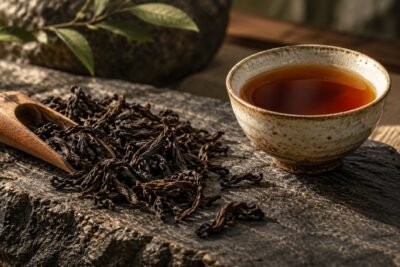
Rou Gui is the batch’s clearest choice for a dark, assertively roasted cup. Cinnamon-like spice may appear, but it can sit behind wood, charcoal and other dark notes. Buy it for a roast preference first; do not expect a sweet cinnamon-flavored drink.
We may earn a commission if you buy through our links. Affiliate disclosure.
At a Glance
KEY FEATURES
- Heavily baked Rou Gui oolong
- Rou Gui
- Cup: 5 g / 355 mL / 100°C (212°F) / 5–8 min
Tea assessment
Research-based editorial fit scores, not personal testing or measured intensity. Historical customer experiences may differ from the current batch.
Strong roast and spice fit a clearly defined dark-tea preference.
Sweet, smooth cups coexist with bitter roast impressions.
High gongfu dose and very short opening pours need careful timing.
Middle infusions can be rewarding, but later bitter wood limits endurance.
PROS
- A pronounced roasted profile suits dark-oolong drinkers.
- Sweetness and fruit can emerge behind the roast.
CONS
- Cinnamon can be faint or completely obscured.
- Pushing later infusions can emphasize bitterness.
Choose the roast before the cinnamon
The merchant explicitly describes this Rou Gui as heavily baked, and the customer evidence makes that the central buying decision. Wood, charcoal and dark spice can dominate; cinnamon, fruit and flowers may be faint underneath. A buyer expecting a sweet cinnamon drink could dislike the very feature that a dark-oolong drinker enjoys.
The disagreement is about balance, not whether the roasting exists. Some accounts find warmth, sweetness and fruit behind it; others find the darker notes overwhelming. There is no basis here for promising that airing the tea or waiting a fixed number of weeks will reveal the cup you wanted.
You do not need gongfu to assess the dark character
A detailed account enjoys this tea as a strong conventional cup as well as in short infusions. Choose the cup method if that is how you normally drink roasted tea; gongfu is useful when you want to follow the transition from the assertive opening into the later wood-and-spice finish. The methods below are the merchant’s current starting recipes, not the individual customer’s alternative quantities.
Cup
5 g / 355 mL / 100°C (212°F) / 5–8 min. Decant at the chosen time. The cup instructions do not specify a rinse.
Gongfu
9 g / 110 mL / 100°C (212°F). Approximately 5 seconds. Infusion sequence: 5, 5, 10, 15, 30, 50, 80, 110, 150, 200, 250 seconds. Drain fully between pours.
Stop when wood and bitterness replace the interest
The gongfu evidence includes floral and spicy impressions through the middle of a session, followed by bitter roast and wood after the more appealing notes fade. That is a practical stopping signal. The long printed sequence is not a challenge to finish, and continuing an unpleasant session does not establish better value.
If you want a roasted cup but are uncertain about this level of baking, compare Rou Gui with Organic Shui Xian. The comparison preserves a second important difference: the Rou Gui names Wuyi Mountain, while that Shui Xian declares Yong’an. They are two exact offers to choose between, not a controlled test of cultivars grown in the same place.
Pros & Cons Analysis
Based on supplied customer reviews and verified product documentation
Pros
- Wood, spice and a strong baked character are supported by both enthusiastic and critical accounts. For a reader seeking that direction, intensity is the attraction rather than a defect.
- Positive sessions describe dark fruit, a sweet woody cup and a softer finish than the initial aroma suggests. These are possible rewards for a measured brew, not guaranteed notes.
Cons
- Several accounts cannot find the advertised cinnamon or fruit through the roast. The cultivar name is not a promise of a spice-forward cup.
- A detailed session loses its floral and spicy interest before the listed eleven infusions. More steeps do not automatically mean better drinking or value.
Our verdict
Choose Rou Gui when strong roast and woody spice are already preferences. Sample first if cinnamon is the main attraction or charcoal is a concern. For a less forceful direction, compare the exact Organic Shui Xian listing, while remembering that its origin is Yong’an rather than this Wuyi source.
Frequently Asked Questions
Is cinnamon added to Rou Gui?
Rou Gui is the cultivar name in this listing. Cinnamon-like aroma is a sensory description, not evidence of added cinnamon.
Will resting the tea remove the roast?
No predictable result or waiting period is established here. Do not buy an unwanted roast profile on the assumption that storage will transform it.
Tea details
| Tea style | Heavily baked Rou Gui oolong |
|---|---|
| Seller-stated origin | Zheyang Village, Wuyi Mountain, Nanping, Fujian, China |
| Cultivar | Rou Gui |
| Listed harvest | April 30, 2025 |
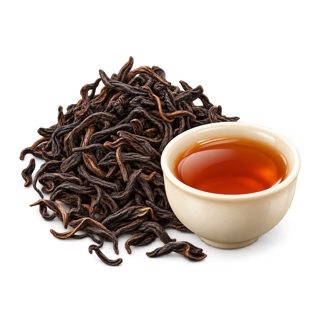
| Leaf form | Twisted dark strips |
| Added flavoring | Not independently verified; aroma names are not ingredient declarations |
| Cup leaf weight | 5 g |
| Cup water volume | 355 mL |
| Water temperature | 100°C / 212°F |
| Cup infusion time | 5–8 min |
| Gongfu leaf weight | 9 g |
| Gongfu water volume | 110 mL |
| Gongfu rinse | Approximately 5 seconds |
| Gongfu infusion sequence | 5, 5, 10, 15, 30, 50, 80, 110, 150, 200, 250 seconds |
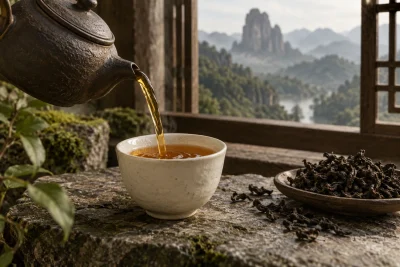
Da Hong Pao Wuyi Rock Oolong Tea
Wuyi Mountain, Nanping, Fujian, China · 2025-04-30
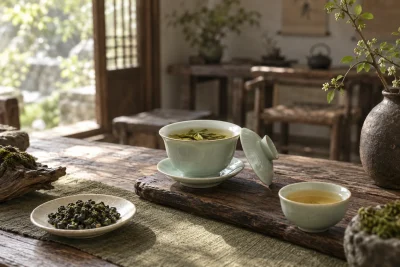
Taiwan Jin Xuan Milk Oolong Tea — Unflavored
Ali Shan, Chiayi County, Taiwan · 2026-05-02

Taiwan High Mountain Oolong Tea
Mingjian Township, Nantou, Taiwan · May 18, 2026
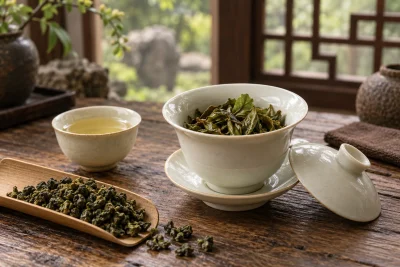
Tie Guan Yin Iron Goddess Oolong Tea
Anxi County, Quanzhou, Fujian, China · 2026-05-18; season label conflicts