The origin distinction belongs at the start
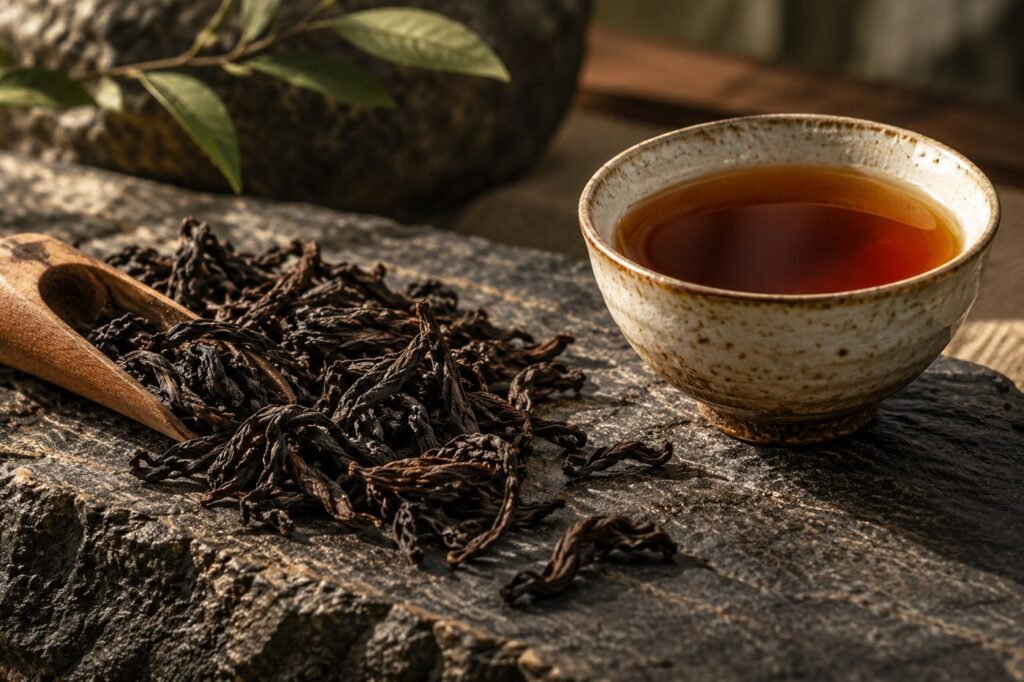
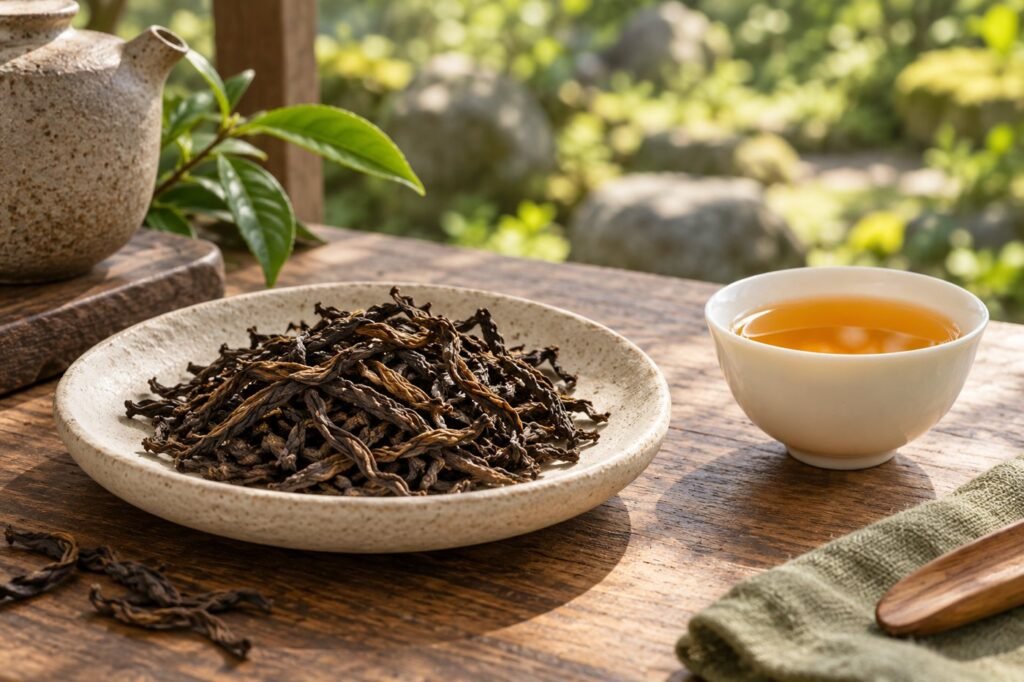
Both are Fujian oolongs, but their source locations and baking descriptions differ. Rou Gui is explicitly heavily baked. Organic Shui Xian is described as medium baked and is sold with organic certification claims that should be verified for the supplied pack if essential.
| Decision detail | Rou Gui Oolong Tea | Organic Shui Xian (Water Sprite) Oolong Tea |
|---|---|---|
| Seller-stated origin | Zheyang Village, Wuyi Mountain, Nanping, Fujian, China | Panlan Village, Yong’an, Fujian, China |
| Cultivar | Rou Gui | Shui Xian |
| Listed harvest | April 30, 2025 | September 12, 2025 |
| Cup starting point | 5 g / 355 mL / 100°C (212°F) / 5–8 min | 3 g / 355 mL / 100°C (212°F) / 3–5 min |
| Gongfu starting point | 9 g / 110 mL / 100°C (212°F) | 8 g / 110 mL / 100°C (212°F) |
What the original accounts add to the labels
Rou Gui’s roast can dominate its named cinnamon, with wood, dark spice and occasional fruit behind it. Some drinkers love that force; others find too little else. Shui Xian’s positive evidence combines roast with fruit, sweetness and a soft body, although a critical account still finds charcoal prominent. Medium roast is not a guarantee that you will perceive it as mild.
Do not confuse concentration with cultivar
The conventional recipes are notably different: Rou Gui uses five grams for five to eight minutes; Shui Xian uses three grams for three to five minutes in the same water volume. Brewing both with the stronger Rou Gui method would change the question. Start with their own methods, then conduct an equal-parameter experiment only if that is what you deliberately want to investigate.
The Rou Gui brewing guide explains its fast first gongfu pours. Neither eleven versus ten listed infusions nor a fractional star difference establishes a value winner.