Steep & Origin

  • Home
  • Reviews
  • Best
    • All Best
      • Oolong Tea Picks
    • Chinese Black Tea Picks
    • Green Tea Picks
    • Matcha Picks
    • Pu-erh Tea Picks
    • Tea and Caffeine Picks
    • Tea pottery & teaware Picks
  • Guides
    • All Guides
      • Oolong Tea Guides
    • Chinese Black Tea Guides
    • Evening Tea Guides
    • Green Tea Guides
    • Matcha Guides
    • Organic Tea Guides
    • Pu-erh Tea Guides
    • Tea and Caffeine Guides
    • Tea and Health Guides
    • Tea pottery & teaware Guides
    • White Tea Guides
  • Comparisons
    • All Comparisons
      • Oolong Tea Comparisons
    • Chinese Black Tea Comparisons
    • Green Tea Comparisons
    • Matcha Comparisons
    • Pu-erh Tea Comparisons
    • Tea pottery & teaware Comparisons
  • Favorites
Guides

Brewing Rou Gui: keep heavy roast separate from overextraction

2 min read
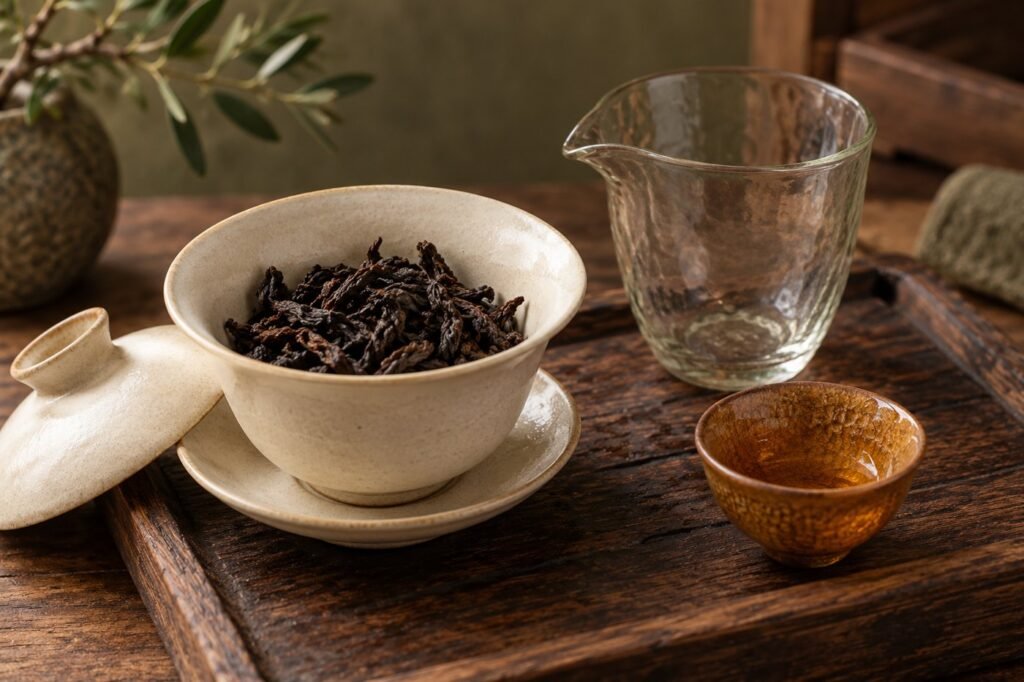
Editorial illustration for Brewing Rou Gui: keep heavy roast separate from overextraction

Table of Contents

TeaVivre’s Rou Gui is explicitly heavily baked. Brewing can change how concentrated or drying the cup becomes, but it does not guarantee that cinnamon and fruit will emerge from behind the roast. Start with the exact method and stop when the remaining cup is no longer appealing.

Two very different starting preparations

Cup method

5 g / 355 mL / 100°C (212°F) / 5–8 min. Begin at five minutes rather than treating eight as the required target.

Gongfu method

9 g / 110 mL / 100°C (212°F). The listing specifies an approximately five-second rinse, followed by very short opening infusions.

The Rou Gui review retains the original evidence on roast dominance and later fading. Its methods come from the exact merchant listing, not a generic recipe for all rock tea.

Prepare for the five-second opening

  1. Set the receiving pitcher beside the gaiwan before adding water.
  2. Weigh nine grams for the documented 110 mL method; do not borrow a different tea’s dose.
  3. Rinse for approximately five seconds as listed, then drain.
  4. Follow the sequence 5, 5, 10, 15, 30, 50, 80, 110, 150, 200, 250 seconds. The first two drinking pours are only five seconds each.
  5. Decant completely and taste each pour before committing to the next longer time.

Identify which problem you are trying to solve

Observation Interpretation and next step
The aroma is strongly roasted, but the cup is sweet and pleasant That combination appears in positive feedback. There is no need to weaken a cup you enjoy just because the dry aroma is forceful.
The cup is bitter or drying Shorten the next contact as a single-variable adjustment. A complete decant prevents unintended continued extraction.
The cup is comfortable but cinnamon remains faint This may be the profile, not a brewing failure. Do not automatically add leaf or time to chase the cultivar name.
Later pours taste mainly of bitter wood Stop. A detailed historical session lost its preferred floral and spice notes before the end of the printed sequence.

If heavy roast is simply not your preference, compare Organic Shui Xian in a small sample using its own lower-dose cup method. Do not buy a larger Rou Gui pack on an unverified promise that storage will remove the roast.
Frequently Asked Questions

Why is the cup steep long but the gongfu opening short?

The documented gongfu method uses much more leaf relative to water. The complete dose, volume and time belong together.

Can I re-roast or air the tea to fix it?

No home treatment is recommended here. It would introduce another uncontrolled change and would not guarantee the flavor you want.

Share this article

Twitter Facebook LinkedIn Email

Related Articles

AI-generated tea and teaware scene for Shou Mei mini cake review: a convenient portion for a sweet white-tea session — editorial illustration

Storing white tea: drinking now or keeping a reserve

Read More
Editorial illustration: Gongfu tea set essentials: build a useful small setup

Gongfu tea set essentials: build a useful small setup

Read More
AI-generated tea and teaware scene for Keemun vs Dian Hong: structure or a sweeter cocoa direction? — editorial illustration

Keemun vs Dian Hong: structure or a sweeter cocoa direction?

Read More

About Steep & Origin

Chinese tea, thoughtfully explored.

We distinguish merchant tea details, customer experiences and editorial interpretation. We do not claim personal testing unless it has actually been performed.

Quick Links

  • Home
  • All Reviews
  • Best Articles
  • Comparisons
  • Guides
  • About
  • Contact
  • Privacy Policy

Categories

  • Chinese Black Tea
  • Evening Tea
  • Green Tea
  • Matcha
  • Oolong Tea
  • Pu-erh Tea

© 2026 Steep & Origin. All Rights Reserved.

We may earn a commission when you buy through our affiliate links. Affiliate disclosure