Organic Shui Xian review: roasted sweetness from Yong’an
Organic Shui Xian offers a roasted, fruity-sweet direction with a softer profile in positive feedback. Its listed origin is Yong’an in Fujian, not the Wuyi Mountain origin of TeaVivre’s Rou Gui. Choose it for the cup and the exact listing, rather than assuming every Shui Xian is the same regional product.
We may earn a commission if you buy through our links. Affiliate disclosure.
At a Glance
KEY FEATURES
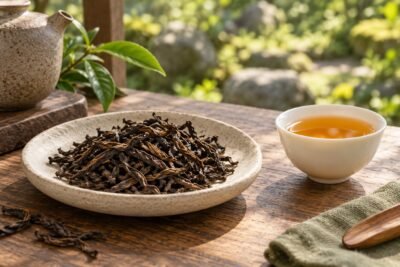
- Medium-baked Shui Xian oolong
- Shui Xian
- Cup: 3 g / 355 mL / 100°C (212°F) / 3–5 min
Tea assessment
Research-based editorial fit scores, not personal testing or measured intensity. Historical customer experiences may differ from the current batch.
Roasted fruit and sweetness support a specific alternative to heavy roast.
Soft and full-bodied accounts are meaningful strengths.
The lower cup dose is clear; roast preference remains personal.
Several accounts support a sustained session, without proving ten satisfying pours.
PROS
- Roast can leave room for fruity sweetness.
- Soft body can make the roast easier to enjoy.
- Several accounts support a sustained session.
CONS
- Charcoal may still dominate for your palate.
- It should not be sold to the reader as Wuyi-grown.
This Shui Xian declares Yong’an, not Wuyi Mountain
Shui Xian is the cultivar name; the inspected product table places this tea in Yong’an, Fujian. That matters if you are shopping specifically for Wuyi provenance. Similar roast or mineral-like tasting language does not make the locations equivalent. The organic description is also the seller’s designation; this review does not independently certify it.
The useful question is how much sweetness survives the roast
Roasted fruit with a soft body
Positive accounts describe fruitiness, a sweet finish and softness or creaminess, particularly in early pours. This gives the tea a role for someone who likes roast but still wants the cup to feel rounded.
Charcoal can remain the deciding limit
Other feedback finds the charcoal prominent or prefers Da Hong Pao’s complexity. The medium-roast description should not be read as a guarantee that a roast-sensitive drinker will find it mild.
These accounts support a conditional choice: buy for roasted sweetness and mouthfeel, with the possibility of a more charcoal-led cup. The organic label alone cannot answer that taste question.
Give repeated infusions a purpose
Cup
3 g / 355 mL / 100°C (212°F) / 3–5 min. Decant at the chosen time. The cup instructions do not specify a rinse.
Gongfu
8 g / 110 mL / 100°C (212°F). Approximately 5 seconds. Infusion sequence: 5, 10, 20, 35, 45, 60, 90, 120, 210, 280 seconds. Drain fully between pours.
TeaVivre’s Organic Shui Xian page supplies the quantities and sequence. Several original accounts describe staying power, which makes a gongfu trial reasonable. During that trial, watch whether the soft body and fruit remain together; extra pours that retain only roast may not be the part you bought it for.
For the next purchase, the roasted Fujian shortlist puts it alongside Rou Gui, Da Hong Pao and Huang Guanyin while keeping their origin declarations separate. That is a more useful comparison than placing every roasted Shui Xian under a single regional label.
Pros & Cons Analysis
Based on supplied customer reviews and verified product documentation
Pros
- Several original accounts enjoy fruit and sweetness alongside the baked character. That supports sampling it when dark oolong appeals but a purely charred impression does not.
- Creaminess in early pours and a full, soft mouthfeel give this tea an appeal separate from its fruit aroma. A roast-sensitive drinker still needs to sample it because charcoal remains prominent in contrary feedback.
- Positive reports specifically describe staying power and repeated satisfying infusions. They support trying gongfu preparation, without establishing that all ten printed pours will remain worthwhile.
Cons
- The critical feedback describes a strong charcoal note and less complexity than a preferred Da Hong Pao. Medium baking on the label does not guarantee that you will find the roast restrained.
- The exact source names Yong’an. A Wuyi-style comparison can be useful, but it must not erase the declared origin or imply protected-region provenance.
Our verdict
Sample Organic Shui Xian for roasted fruit and a soft, sweet finish, with the possibility of a more prominent charcoal impression. It is a useful alternative beside Rou Gui, not an interchangeable Wuyi-origin product. Verify the supplied certification if organic status is essential to the purchase.
Frequently Asked Questions
Is this Shui Xian grown in Wuyi?
The inspected listing names Panlan Village, Yong’an, Fujian. This review retains that origin rather than inferring Wuyi from the cultivar.
Does organic mean it will taste better?
No. Certification and flavor preference are separate questions; the current pack’s certification should be checked with the merchant if required.
Tea details
| Tea style | Medium-baked Shui Xian oolong |
|---|---|
| Seller-stated origin | Panlan Village, Yong’an, Fujian, China |
| Cultivar | Shui Xian |
| Listed harvest | September 12, 2025 |
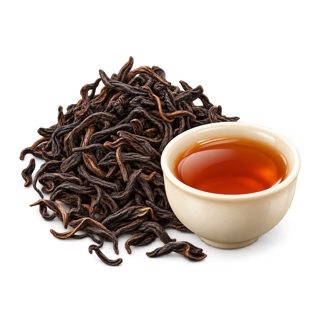
| Leaf form | Twisted dark strips |
| Added flavoring | Not independently verified; aroma names are not ingredient declarations |
| Cup leaf weight | 3 g |
| Cup water volume | 355 mL |
| Water temperature | 100°C / 212°F |
| Cup infusion time | 3–5 min |
| Gongfu leaf weight | 8 g |
| Gongfu water volume | 110 mL |
| Gongfu rinse | Approximately 5 seconds |
| Gongfu infusion sequence | 5, 10, 20, 35, 45, 60, 90, 120, 210, 280 seconds |
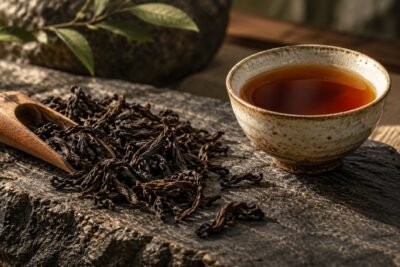
Rou Gui Oolong Tea
Zheyang Village, Wuyi Mountain, Nanping, Fujian, China · April 30, 2025
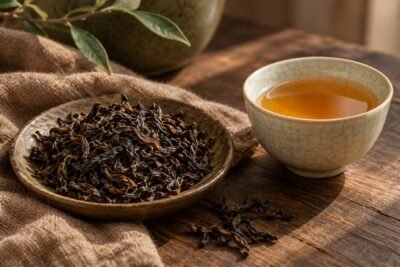
Wudong Xing Ren Xiang (Almond Aroma) Phoenix Dan Cong Oolong Tea
Wudong Village, Fenghuang, Chaozhou, Guangdong, China · May 18, 2026
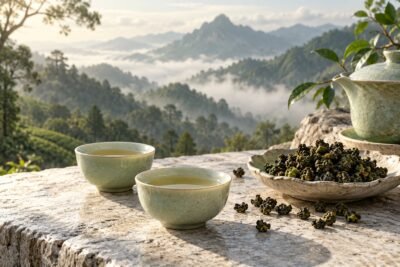
Nonpareil Taiwan Li Shan Oolong Tea
Fushoushan Farm, Lishan Mountain, Taichung, Taiwan · October 26, 2025
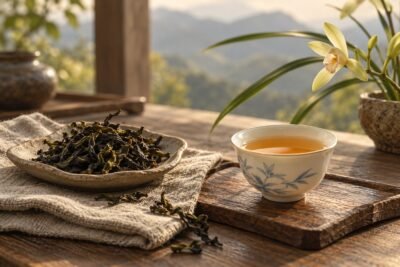
Huang Guanyin (Yellow Goddess) Wuyi Rock Oolong Tea
Xiaoqiao, Jian’ou, Fujian, China · April 30, 2026