For everyday white tea, protect dry leaves from moisture, odors, heat and light in a secure food-safe container. If you want to keep tea for years, preserve its identity and storage history as carefully as the leaves. An older date alone does not establish better tea.
Separate preservation from a bet on aging
Tea to drink now
Choose packaging you can close reliably after each use. Keep enough accessible for your normal routine and leave the rest protected. You do not need to age a white tea before enjoying it.
Tea to hold
Keep a separate, labeled reserve with the purchase date, merchant, harvest and packing details. Treat the future taste as an unknown outcome rather than a reason to buy more than you want to drink.
TeaVivre’s white-tea storage guide emphasizes a dry, odor-free environment and protection from light. Its storage articles and individual listings use different wording around sealing and ventilation. For an ordinary home cupboard, a practical distinction is a suitable surrounding room versus leaving the tea itself open to room odors: ventilation is not a reason to store loose leaves uncovered.
Set up the cupboard once
- Choose a cool, dry location away from cooking steam, direct sun and scented products. Avoid a damp cupboard or basement simply because it is dark.
- Keep the original food-safe pouch if it seals well. Add an opaque outer container when the pouch needs support or protection from light.
- Store different teas and batches separately. Keep the label with the tea rather than relying on memory after several months.
- Write down when you first opened it. Inspect the package closure during normal use instead of opening every reserve packet for curiosity.
- Buy a quantity that fits your drinking pace. A small pack that you enjoy is a better result than a large collection you are keeping only because the listing praises age.
This is a practical preservation routine, not a controlled aging protocol. It does not prescribe added humidity, home re-drying or a desiccant mixed with the leaf. If the packaging gives more specific instructions for the exact tea, follow those and ask the merchant to resolve any conflict before long storage.
Keep harvest, pressing and purchase dates separate
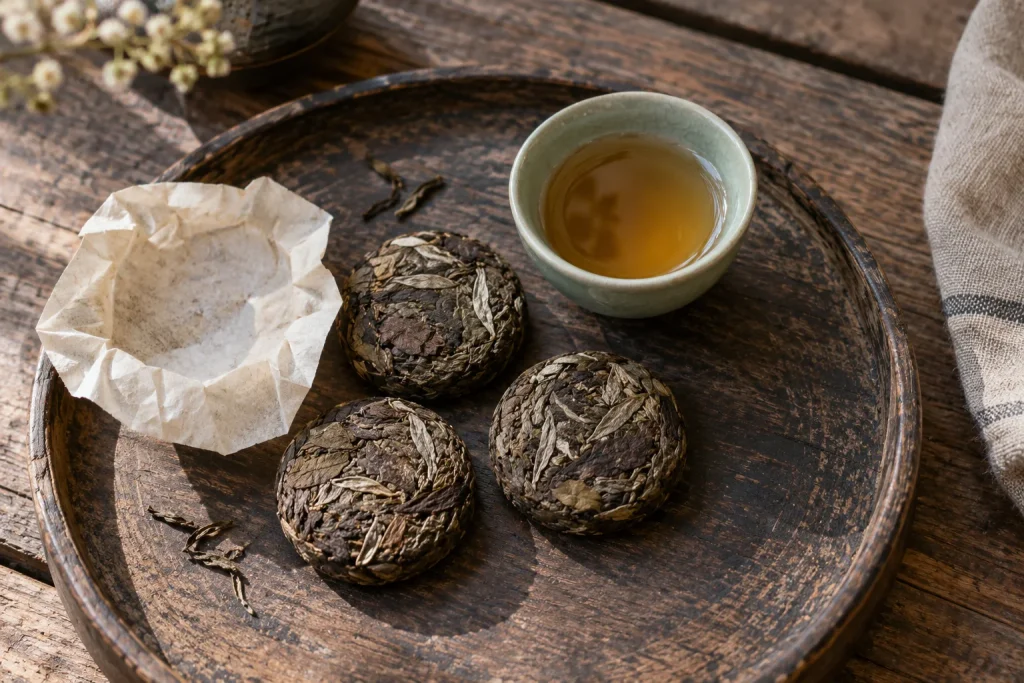
The Shou Mei mini cake makes this distinction concrete: its listing names a 2018 harvest and a 2020 pressing date. That is different from saying it was harvested when pressed or that you have personally stored it for the intervening years. Record both dates and any storage information the seller actually supplies.
A current White Peony versus Premium White Peony comparison can also involve different listed harvests. A later purchase does not necessarily mean a newer harvest, and “premium” does not tell you the complete storage history.
Judge the tea you have, not a promised future cup
If aroma becomes less appealing, note that honestly instead of assuming every change is improvement. Dampness or visible mold is a reason to discard affected tea, not an invitation to air-dry it and call it aged. There is no verified home treatment here that restores contaminated tea.
For an aging experiment, keep it small: taste the tea before setting aside a labeled reserve, retain your brewing notes, and compare later using the same preparation. The result belongs to that tea and your storage conditions; it cannot prove that all white tea improves with time.