Steep & Origin

  • Home
  • Reviews
  • Best
    • All Best
      • Oolong Tea Picks
    • Chinese Black Tea Picks
    • Green Tea Picks
    • Matcha Picks
    • Pu-erh Tea Picks
    • Tea and Caffeine Picks
    • Tea pottery & teaware Picks
  • Guides
    • All Guides
      • Oolong Tea Guides
    • Chinese Black Tea Guides
    • Evening Tea Guides
    • Green Tea Guides
    • Matcha Guides
    • Organic Tea Guides
    • Pu-erh Tea Guides
    • Tea and Caffeine Guides
    • Tea and Health Guides
    • Tea pottery & teaware Guides
    • White Tea Guides
  • Comparisons
    • All Comparisons
      • Oolong Tea Comparisons
    • Chinese Black Tea Comparisons
    • Green Tea Comparisons
    • Matcha Comparisons
    • Pu-erh Tea Comparisons
    • Tea pottery & teaware Comparisons
  • Favorites

White Peony vs Premium White Peony: what changes?

Choose between these two White Peony listings by the kind of cup you want, not by assuming that Premium means stronger or easier to brew. They share an origin, cultivar and published preparation, while their leaf descriptions and customer experiences offer more useful distinctions.

We may earn a commission if you buy through our links. Affiliate disclosure.

Compare the teas

White Peony Bai MuDan Tea

Everyday leaf

White Peony Bai MuDan Tea

Check price at Amazon Jump to details
Premium White Peony Bai MuDan Tea

Floral interest

Premium White Peony Bai MuDan Tea

Check price at Amazon Jump to details

The comparison is narrower than the names suggest

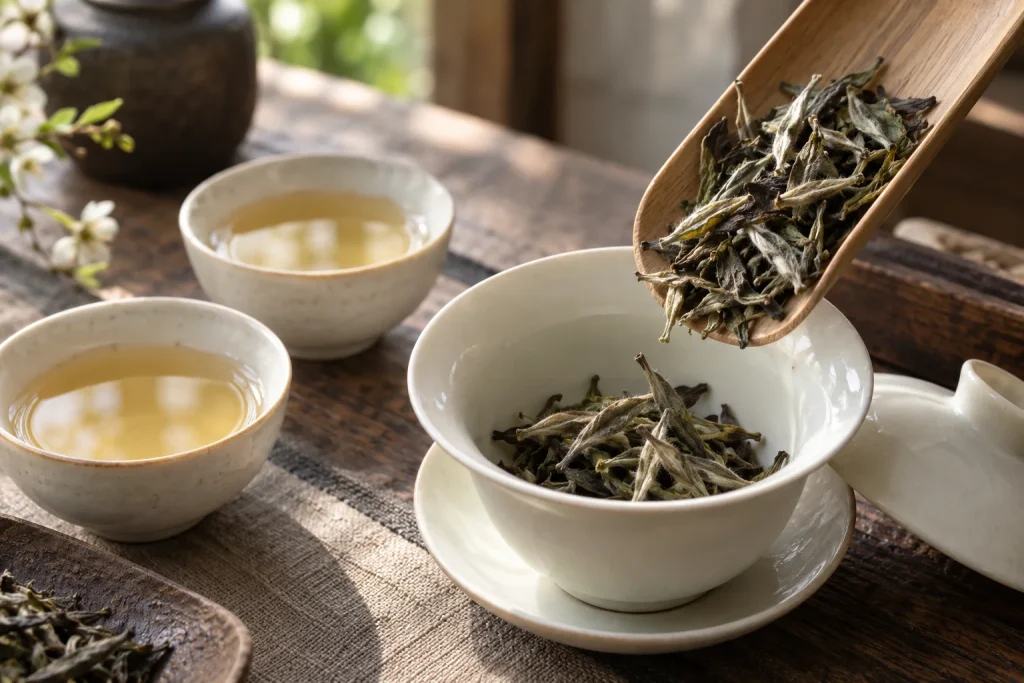
This pair is TeaVivre’s White Peony and Premium White Peony, excluding the Organic versions. Both listings identify Mt. Taimu, Fuding Dabaihao and Nanguang Tea Garden. The standard listing describes buds and leaves; Premium emphasizes plump downy buds with a smaller amount of leaf. That supports a difference in selection, not a measured promise of better flavor.

Question White Peony Premium White Peony
Displayed harvest May 13, 2026 May 16, 2025
Leaf description Buds with opened leaves Bud-focused selection with some leaves
Cup starting point 2 g / 355 mL / 85°C / 5–8 min 2 g / 355 mL / 85°C / 5–8 min
Gongfu starting point 5 g / 110 mL / 85°C 5 g / 110 mL / 85°C

The harvests shown on the inspected pages differ. This is not a same-harvest experiment isolating grade. Neither our comparison nor historical reviews can tell you how much of a difference comes from selection, storage, preparation or that particular harvest.

What the customer evidence changes

Standard: a quieter everyday choice

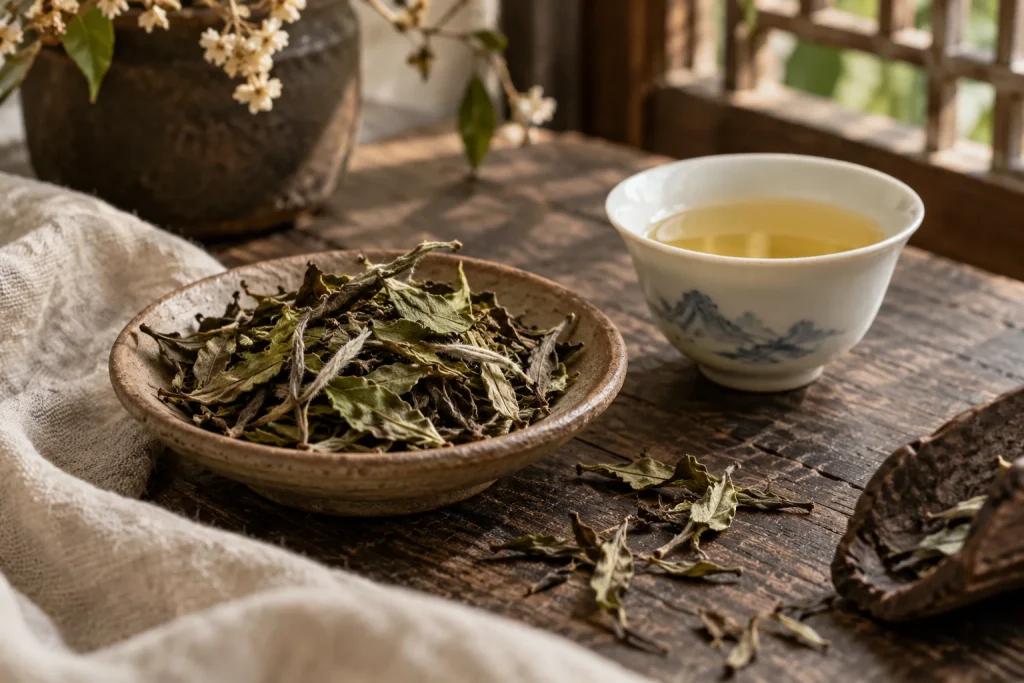
The read set includes smooth, gently sweet, woody or meadow-like cups and an identifiable soybean note. It also includes a bitter, less fragrant experience. Its everyday appeal is supported; effortless sweetness in every preparation is not.

Premium: fragrance is the reason to try it

Floral, honey-like and rounded impressions give the Premium listing a clear role. A direct historical comparison favors its fuller aroma, but other feedback finds it light or unexceptional, and some reports describe fading fragrance or bitterness.

The standard review and Premium review develop those findings separately. They are not two sides of a controlled tasting, and one unusually enthusiastic account should not become a universal upgrade claim.

A useful side-by-side session

The identical recipes make a small comparison practical. Use the same water, measured dose, water volume and temperature, and label two cups before brewing. Taste them plain first. Ask whether you would choose the Premium cup again for its actual aroma and finish, rather than trying to guess which one should win.

For gongfu, both listings specify an approximately five-second rinse followed by 25, 45, 70, 90 and 150 seconds. Decant completely between infusions. A Premium customer report links bitterness with long gaps between steeps; that is a reported limitation of one routine, not a verified rule that immediately brewing all the tea will solve every bitter cup.
Compare the offer you will buy

Check the same pack size, packaging and warehouse before judging the price difference. A sample price beside a full-bag price cannot establish value. There is no current price-based winner in this comparison.

Everyday leaf

White Peony Bai MuDan Tea

White Peony Bai MuDan Tea

Get it now:

Check latest price

Leaf & origin

  • Buds and opened leaves
  • 2 g / 355 mL / 85°C / 5–8 min

Your cup if

  • You enjoy a mild, leafy cup with a quiet sweet finish.

Consider another tea if

  • You need strong fragrance or assume white tea cannot become bitter.

This is the option to keep in the comparison when you want an unobtrusive cup rather than maximum fragrance. Its customer evidence supports gentle sweetness and woody or meadow-like character, while the bitter or muted experiences argue for measuring the brew before deciding.

Tea styleWhite Peony
Seller-stated originMt. Taimu, Fuding City, Fujian Province, China
CultivarFuding Dabaihao
Harvest date2026-05-13
Cup method: leaf2 g
Cup method: water355 mL
Cup method: temperature85°C / 185°F
Cup method: time5–8 min
Gongfu method: leaf5 g
Gongfu method: water110 mL
Gongfu method: temperature85°C / 185°F
Gongfu infusion sequence25, 45, 70, 90, 150 s; rinse: around 5 seconds
Seller storage instructionsStore in cool, dry place away from sunlight; keep ventilated
Leaf formatLoose leaf
Production dateNot applicable — loose leaf
Floral interest

Premium White Peony Bai MuDan Tea

Premium White Peony Bai MuDan Tea

Get it now:

Check latest price

Leaf & origin

  • Bud-focused loose white tea
  • Same published recipe as standard

Your cup if

  • You value floral aroma and a softly textured cup.
  • You can give a subtle tea attention rather than expect an obvious flavor punch.

Consider another tea if

  • Your routine leaves long gaps between infusions and you are unwilling to trial it.
  • You would be disappointed by lightness or fragrance fading across a session.

Premium earns a place here because of the floral and rounded impressions in its own customer evidence, not because its name automatically outranks the standard. The more bud-focused description is a verified distinction; the preferred cup still needs to be decided by taste.

Tea styleWhite Peony
Seller-stated originMt. Taimu, Fuding City, Fujian Province, China
CultivarFuding Dabaihao
Harvest date2025-05-16
Cup method: leaf2 g
Cup method: water355 mL
Cup method: temperature85°C / 185°F
Cup method: time5–8 min
Gongfu method: leaf5 g
Gongfu method: water110 mL
Gongfu method: temperature85°C / 185°F
Gongfu infusion sequence25, 45, 70, 90, 150 s; rinse: around 5 seconds
Seller storage instructionsStore in cool, dry place away from sunlight; keep ventilated
Leaf formatLoose leaf
Production dateNot applicable — loose leaf

Tea comparison

Editorial scores are research-based judgments for the uses described in each review, not personal tests or customer averages. Compare the stated fit and evidence limits alongside the number.

Feature White Peony review: a leafy white tea for a quiet daily cup Premium White Peony review: floral softness with session limits
Product Image
White Peony review: a leafy white tea for a quiet daily cup
Premium White Peony review: floral softness with session limits
Category White Tea White Tea
Aroma & flavor
Editorial assessment
3.0 / 5
4.0 / 5
Texture & finish
Editorial assessment
3.0 / 5
4.0 / 5
Brewing ease
Editorial assessment
3.0 / 5
3.0 / 5
Repeat-infusion appeal
Editorial assessment
3.0 / 5
3.0 / 5
Tea style White Peony White Peony
Seller-stated origin Mt. Taimu, Fuding City, Fujian Province, China Mt. Taimu, Fuding City, Fujian Province, China
Cultivar Fuding Dabaihao Fuding Dabaihao
Leaf format Loose leaf Loose leaf
Harvest date 2026-05-13 2025-05-16
Production date Not applicable — loose leaf Not applicable — loose leaf
Cup method: leaf 2 g 2 g
Cup method: water 355 mL 355 mL
Cup method: temperature 85°C / 185°F 85°C / 185°F
Cup method: time 5–8 min 5–8 min
Gongfu method: leaf 5 g 5 g
Gongfu method: water 110 mL 110 mL
Gongfu method: temperature 85°C / 185°F 85°C / 185°F
Gongfu infusion sequence 25, 45, 70, 90, 150 s; rinse: around 5 seconds 25, 45, 70, 90, 150 s; rinse: around 5 seconds
Seller storage instructions Store in cool, dry place away from sunlight; keep ventilated Store in cool, dry place away from sunlight; keep ventilated
Review / offer View Deal View Deal

Choose for your next cup

Choose standard White Peony

You want a gentle, leafy everyday white tea and its flavor already satisfies you. There is no need to upgrade solely because another listing carries a higher grade label.

Choose Premium White Peony

You want to explore a more bud-focused selection and the floral, rounded character described in its feedback. Buy a sample first if lightness or fading fragrance would disappoint.

Choose neither for a guaranteed forceful cup or a caffeine-free evening drink. For a different white-tea format, the beginner shortlist includes Silver Needle and Shou Mei mini cakes.

Frequently Asked Questions

Are the brewing instructions different?

No. Both inspected listings give the same cup and gongfu recipes. The Premium label does not require a different starting method.

Is Premium White Peony always sweeter?

No. Positive feedback includes sweet, floral cups, but lightness, fading fragrance and bitterness also occur. The two listings have different displayed harvests, so grade alone does not explain every difference.

×

About Steep & Origin

Chinese tea, thoughtfully explored.

We distinguish merchant tea details, customer experiences and editorial interpretation. We do not claim personal testing unless it has actually been performed.

Quick Links

  • Home
  • All Reviews
  • Best Articles
  • Comparisons
  • Guides
  • About
  • Contact
  • Privacy Policy

Categories

  • Chinese Black Tea
  • Evening Tea
  • Green Tea
  • Matcha
  • Oolong Tea
  • Pu-erh Tea

© 2026 Steep & Origin. All Rights Reserved.

We may earn a commission when you buy through our affiliate links. Affiliate disclosure