White Peony review: a leafy white tea for a quiet daily cup
White Peony is a reasonable first sample if you want a leafy white tea with a gentle, woody or meadow-like character rather than a forceful flavor.
We may earn a commission if you buy through our links. Affiliate disclosure.
At a Glance
KEY FEATURES
- Style: White Peony
- Seller-stated origin: Mt. Taimu, Fuding City, Fujian Province, China
- Listed harvest: 2026-05-13
- Cup recipe: 2 g / 355 mL / 85°C / 185°F / 5–8 min
Tea assessment
Research-based editorial assessment for the uses described below, not personal tasting or hands-on testing. Scores are qualitative judgments out of 5, separate from customer stars; historical feedback may cover other harvests or variants.
Leafy, woody and meadow-like impressions are central; fragrance may be too faint.
Gentle sweetness can coexist with dryness or bitterness.
Use the loose-leaf recipe before assuming a pale cup needs hotter or longer brewing.
Some sessions move toward fruit and sweetness; no fixed endurance is established.
PROS
- Gentle sweetness and a leafy profile
- Can develop through another infusion
CONS
- May seem thin or muted
- Not invariably soft
The customer evidence includes sweet, smooth daily cups, but also thinness, dryness and some bitterness. Its appeal depends on enjoying a quieter tea rather than expecting the pale liquor to behave like black tea.
The leaf-led character is the choice
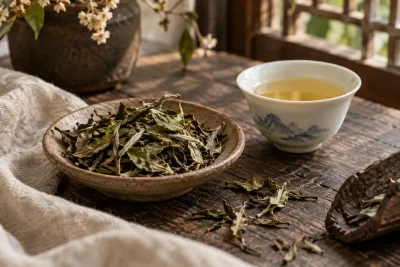
This listing combines buds and leaves. Assessed feedback describes field, wood, hay and gentle sweetness, with some cups developing across infusions. If those flavors sound inviting, the tea offers a clear starting point for exploring white tea without requiring a bud-only style.
Mildness and dryness can coexist
A light cup can still finish dry or bitter. Contrary feedback includes both too little flavor and an unexpectedly strong woody or grassy taste. That means a blanket instruction to brew every white tea hotter or longer would miss the actual preference question.
White Peony: loose-leaf cup and gaiwan methods
Cup & infuser
2 g / 355 mL / 85°C / 185°F / 5–8 min. Begin at the lower end of the stated time range, then separate the leaves from the drink. Taste before changing one setting in the next cup.
Gongfu & gaiwan
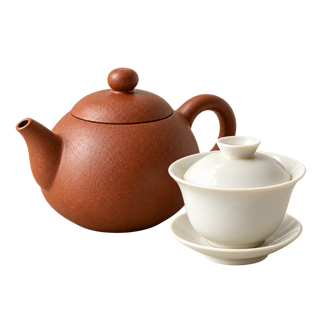
5 g / 110 mL / 85°C / 185°F. Rinse: around 5 seconds. Drinking infusions: 25 → 45 → 70 → 90 → 150 seconds. Pour off each infusion before the next.
Source: the exact merchant brewing instructions, checked October 3, 2026. These are starting recipes, not in-house test results.
When gentle white tea is too faint or too dry
| What matters to you | What to try or consider |
|---|---|
| You are new to white tea | Use the 2 g / 355 mL cup recipe before increasing intensity. Taste after five minutes, the lower end of the published range. |
| The woody character is the problem | Changing steep time may change strength without changing the flavor family. Consider another style rather than treating every dislike as a brewing error. |
For a wider preparation or selection decision, use how to brew white tea: buds, leaves and mini cakes. The recipe here remains the starting point for this exact tea.
For storage, the merchant specifies: Store in cool, dry place away from sunlight; keep ventilated.
Review basis: selected original customer feedback across harvests, combined with merchant documentation; no personal tasting or customer-consensus calculation.
Pros & Cons Analysis
Based on supplied customer reviews and verified product documentation
Pros
- Suitable for a quiet everyday routine. The positive evidence connects smooth, unobtrusive flavor with repeat drinking. It offers a useful choice for someone who enjoys subtle tea without requiring a dramatic aromatic performance.
- Taste beyond the first cup. The read set includes changes from hay or soybean-like impressions toward fruit and a sweet aftertaste. That supports trying another steep while you enjoy it, not promising a fixed endurance.
Cons
- Subtlety can be underwhelming. Several assessed impressions find insufficient fragrance or depth. If strong flavor is your priority, a small sample is a better introduction than a large pack selected on the reputation of white tea.
- Dryness and bitterness remain possible. The contrary evidence includes a drying or bitter cup. Follow this listing’s recipe before deciding whether more concentration would actually improve the tea for you.
White Peony for an unobtrusive daily cup
Where White Peony Bai MuDan Tea fits
Choose White Peony for a gentle, leaf-led daily cup and a low-commitment introduction to white tea.
The preference that rules it out
Skip a large first order if you equate satisfaction with strong fragrance or a dense cup.
Before a larger purchase
This is a preference-led starting point, not a claim that all beginners should choose the same tea.
Frequently Asked Questions
What is the cup recipe for this tea?
2 g / 355 mL / 85°C / 185°F / 5–8 min. Use the current pack instructions if its identity differs.
Is this based on your own tasting?
No. It synthesizes original customer feedback and merchant documentation. The assessment bars are research-based suitability judgments, not personal tasting results.
How should I store it?
Store in cool, dry place away from sunlight; keep ventilated. Follow the instructions supplied with your exact pack.
Tea details
| Tea style | White Peony |
|---|---|
| Seller-stated origin | Mt. Taimu, Fuding City, Fujian Province, China |
| Cultivar | Fuding Dabaihao |
| Harvest date | 2026-05-13 |
| Cup method: leaf | 2 g |
| Cup method: water | 355 mL |
| Cup method: temperature | 85°C / 185°F |
| Cup method: time | 5–8 min |
| Gongfu method: leaf | 5 g |
| Gongfu method: water | 110 mL |
| Gongfu method: temperature | 85°C / 185°F |
| Gongfu infusion sequence | 25, 45, 70, 90, 150 s; rinse: around 5 seconds |
| Seller storage instructions | Store in cool, dry place away from sunlight; keep ventilated |
| Leaf format | Loose leaf |
| Production date | Not applicable — loose leaf |
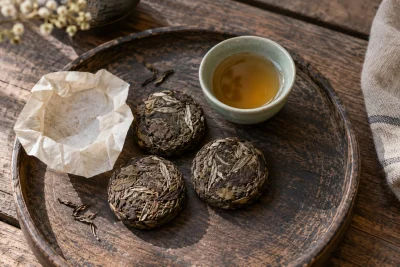
Fuding Shou Mei White Tea Mini Cake
Dieshi Town, Fuding City, Fujian Province · 2018-07-20
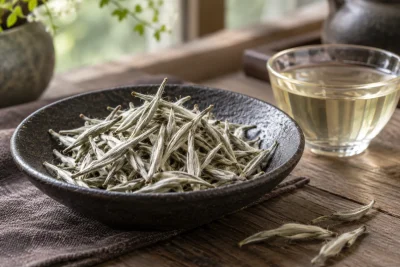
Silver Needle White Tea Bai Hao Yin Zhen
Fuding City, Fujian Province · 2025-05-16
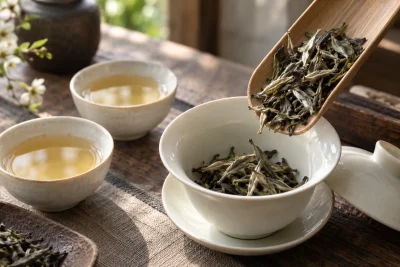
Premium White Peony Bai MuDan Tea
Mt. Taimu, Fuding City, Fujian Province · 2025-05-16