Match the first sample to a real preference
You want a quiet everyday cup
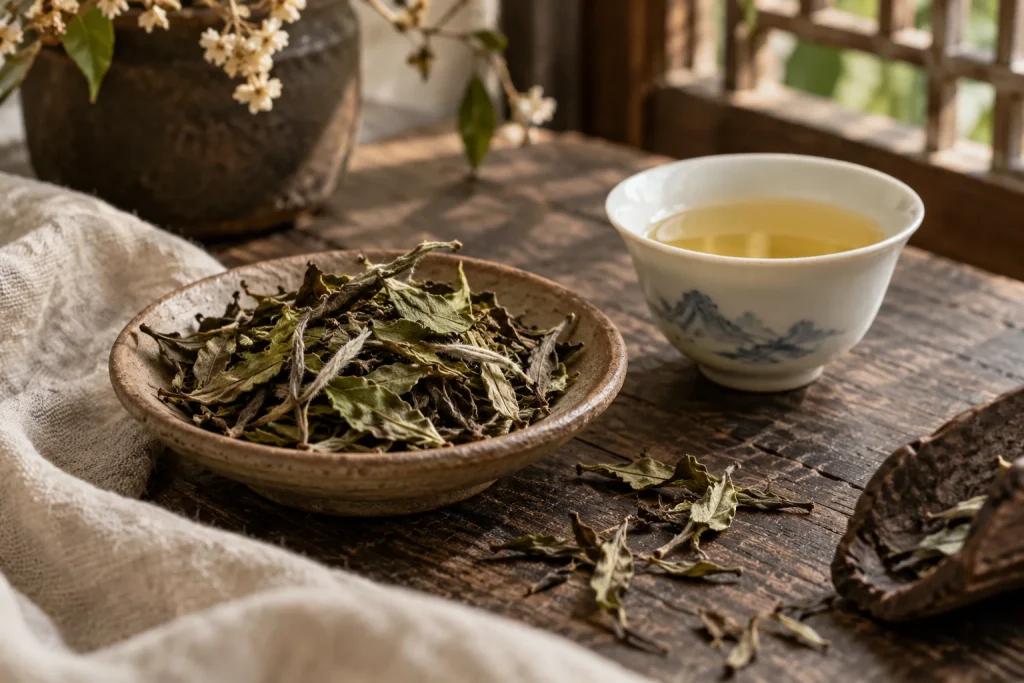
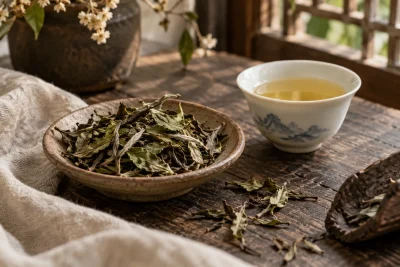
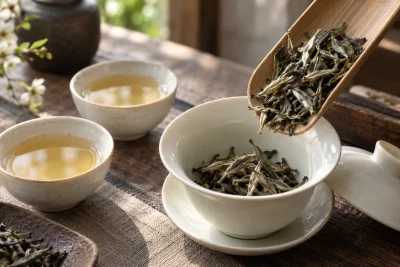
Start with standard White Peony if a mild leafy, woody or meadow-like character sounds inviting.
You notice fragrance more than strength
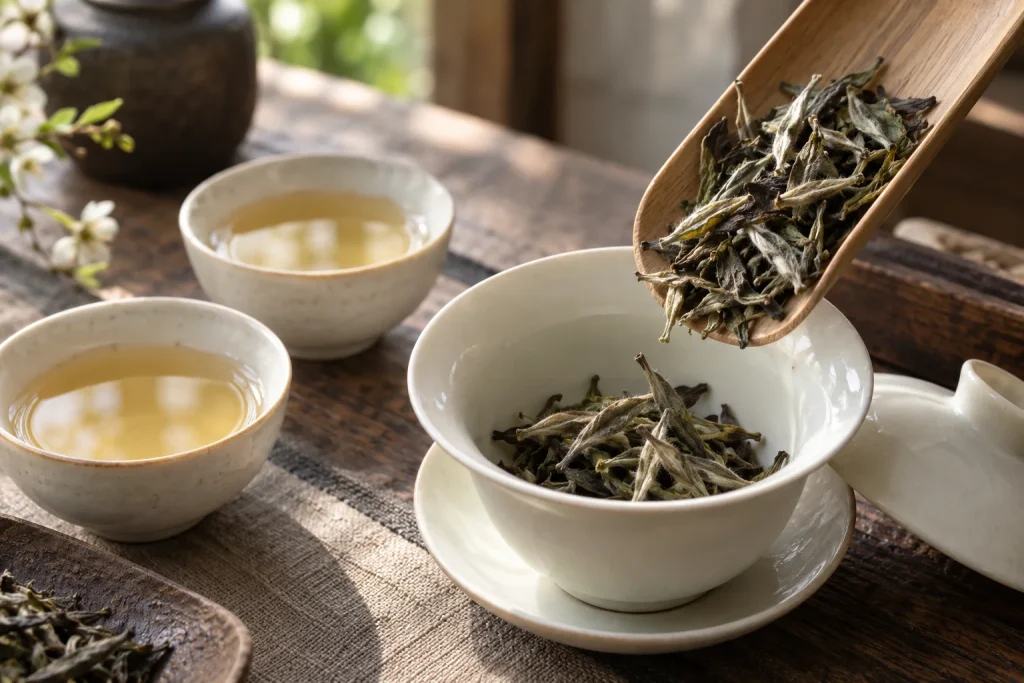
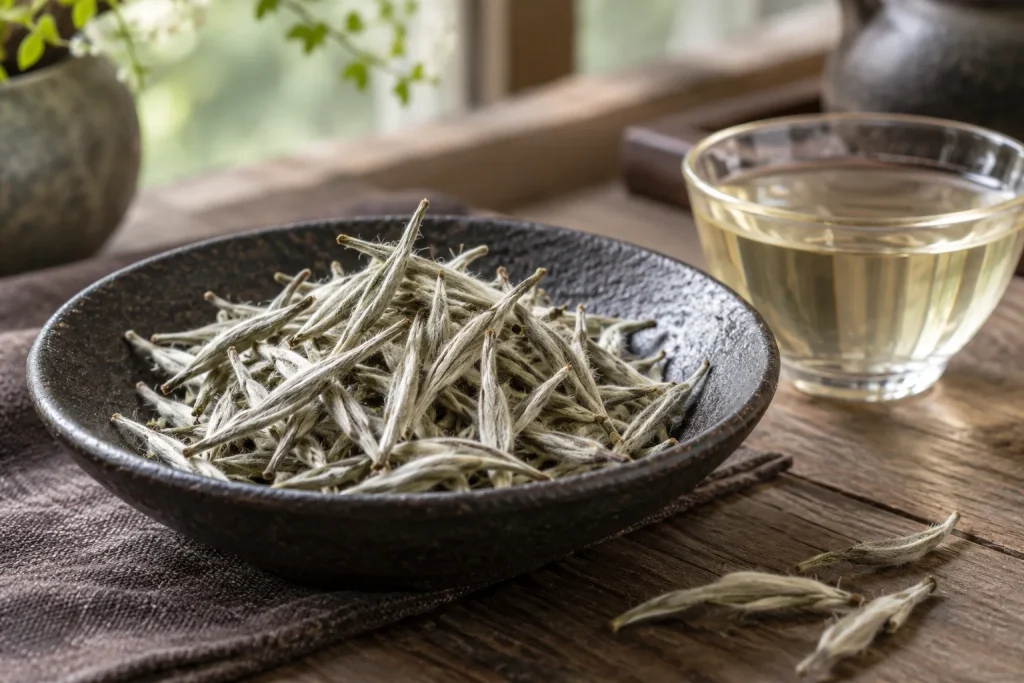
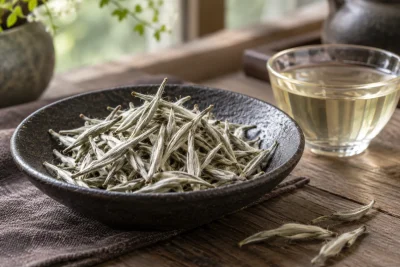
Compare Premium White Peony with Silver Needle, accepting that both can feel delicate rather than forceful.
You want fewer portioning decisions
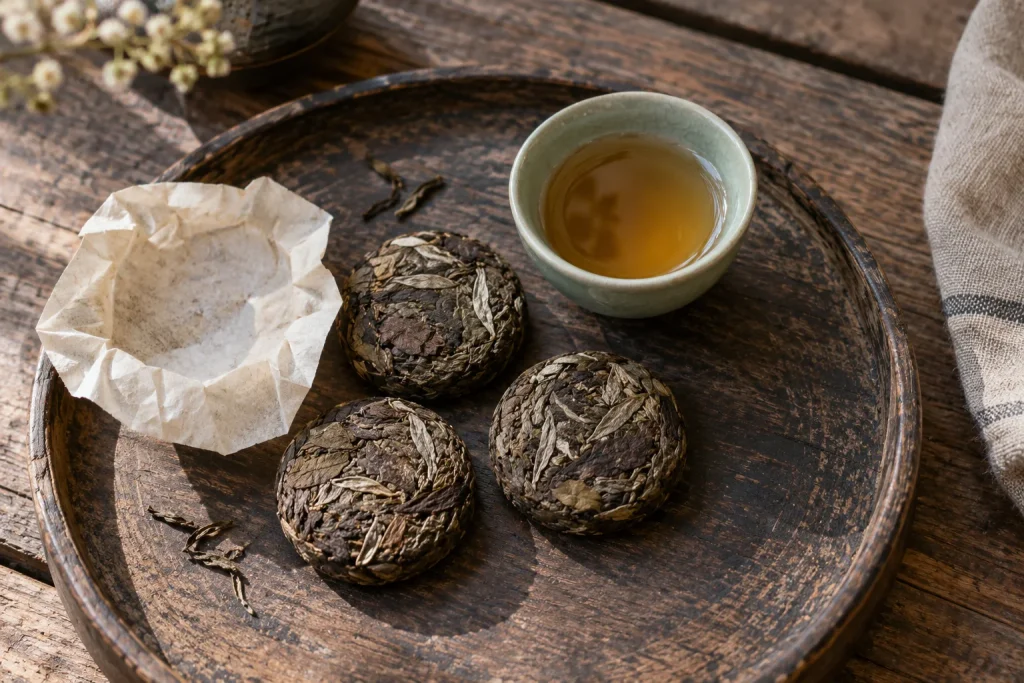
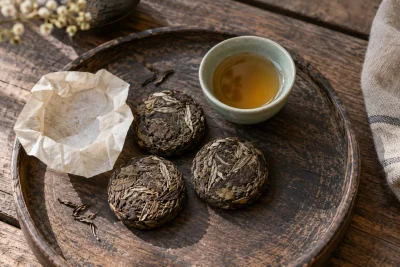
Try Shou Mei mini cakes if individual portions and a honeyed or woody direction appeal.
This shortlist covers the four exact white teas already reviewed here. It does not rank the entire TeaVivre catalog or claim a controlled tasting. Original customer accounts inform the fit recommendations; merchant instructions supply the recipes. Historical feedback does not guarantee the current harvest will reproduce every note.
Do not give all four the same brew
| Tea | Cup starting point | Why it matters |
|---|---|---|
| White Peony | 2 g / 355 mL / 85°C / 5–8 min | A relatively light dose; measure before deciding it is too faint. |
| Premium White Peony | 2 g / 355 mL / 85°C / 5–8 min | Same method as standard, so the label alone does not change the recipe. |
| Silver Needle | 3 g / 355 mL / 85°C / 5–8 min | More leaf in the same water; bud appearance is not a dose measure. |
| Shou Mei mini cake | One piece, about 5 g / 355 mL / 95°C / 5–8 min | A larger, compressed portion with a hotter starting method. |
These are the exact listings’ conventional cup instructions. The white-tea brewing guide and linked individual reviews contain the separate gongfu sequences. The listed number of steeps is not a quality ranking, and more leaf per cup is not proof of better value.
A small order that teaches you something
For the broadest contrast, choose one loose tea and the mini cake. For a narrower grade question, choose the two White Peonies and use their shared recipe; the White Peony comparison explains why the different harvests still limit the conclusions.
Reserve enough leaf for a second session. A first cup tells you what happened with one dose, water source and steep; repeating it tells you more than opening every sample at once. Avoid buying several near-identical grades unless that is the question you actually want to investigate.