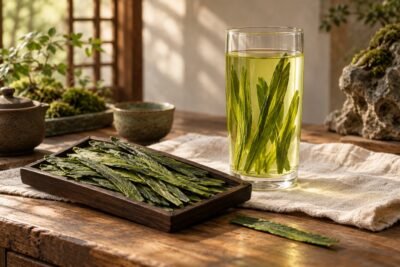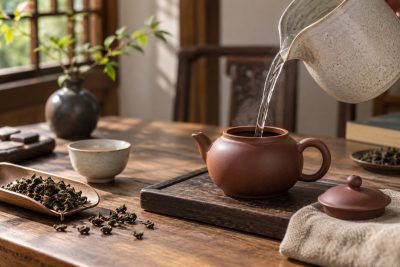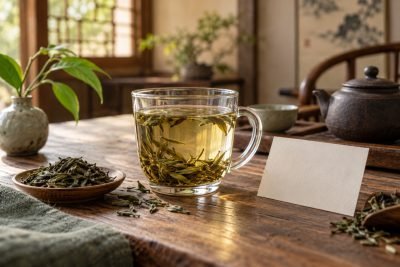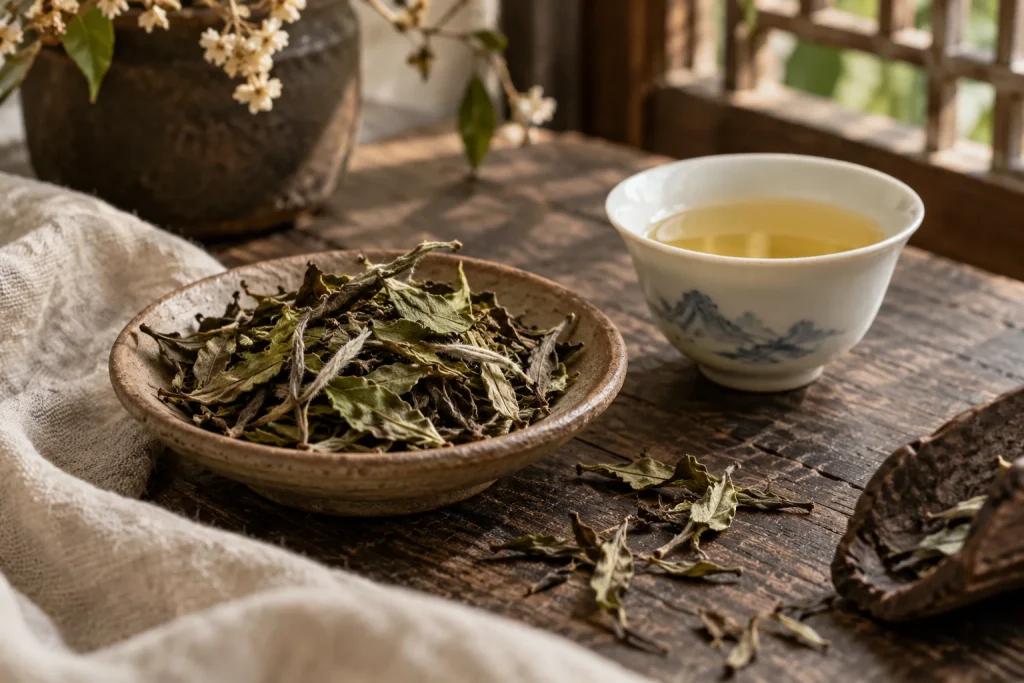
Build a sample order around one question: which tea style you prefer, whether a premium version is worthwhile to you, or which preparation fits your day. Choose contrasting teas and keep enough leaf to repeat a promising result. A large collection of one-off tastings can leave you with fewer useful answers than three carefully chosen samples.
Choose the question before the assortment
| Your question | A focused order | What it can tell you |
|---|---|---|
| Which direction do I enjoy? | One green, one white and one black tea | A broad preference to explore next. |
| Do I prefer the premium listing? | Standard and Premium White Peony | Your preference between these exact batches, not a universal grade ranking. |
| Which format fits my routine? | Dragon Pearls and Golden Tip | Whether the portioning and brewing pace work for you. |
These are editorial order structures, not official bundles. The white-tea shortlist helps choose a white sample; the two Yunnan black teas provide a format comparison. Avoid adding several nearby grades unless that narrower comparison is the purpose of the order.
Read what is actually in a sample pack
TeaVivre’s Award Winning Teas Assortment Samples A currently lists paired samples of five teas, with some portions measured in grams and another by piece. Read the current pack list before ordering: the name of an assortment does not guarantee that it contains your target tea or the same contents as an older review.
For individual samples, check whether the displayed quantity means one packet or several. The new loose-leaf listings inspected for this batch offer a ten-gram sample as two five-gram packets. That is useful for planning, but not a rule for every tea or sampler. Do not assume an account promotion or free-sample allowance is permanent.
Count sessions from the recipe, not the packet
At its documented cup dose, ten grams of Golden Tip provides four 2.5 g portions. Ten grams of Dragon Pearls provides two 5 g portions. Those are dry-leaf calculations, not guarantees of how many enjoyable cups each tea will produce. Reinfusions use the same portion, and the recipes also differ in time and temperature.
- Record each exact name, grade, sample weight or piece count and the recipe you intend to use. Keep any harvest label with the packet.
- Make the first session using that tea’s own starting instructions. Use familiar water and a vessel whose comfortable fill you know.
- Write a short note: aroma, taste, finish, one thing you liked and one thing that bothered you. Avoid forcing a numerical score before you know your preferences.
- Reserve another portion for the tea you are undecided about. Change one variable if the first brew had a clear problem.
- Buy a larger pack only when you want to repeat the cup and the routine. Compare the total order cost and selected pack size at checkout.
Make the second order smaller in scope
If the green sample was your favorite, explore that direction next rather than ordering every category again. If both White Peonies pleased you, compare their current offers and decide whether the difference you noticed matters enough to you. If neither worked, changing the style may be more useful than moving up another grade.
Keep opened green samples protected with the daily-pouch storage routine. A forgotten sample left open beside the kettle is a poor basis for deciding that a tea style is not for you.