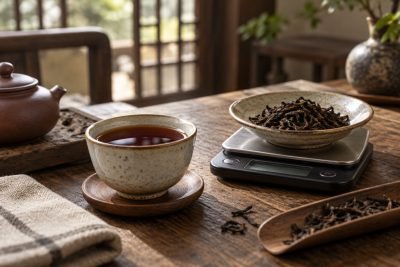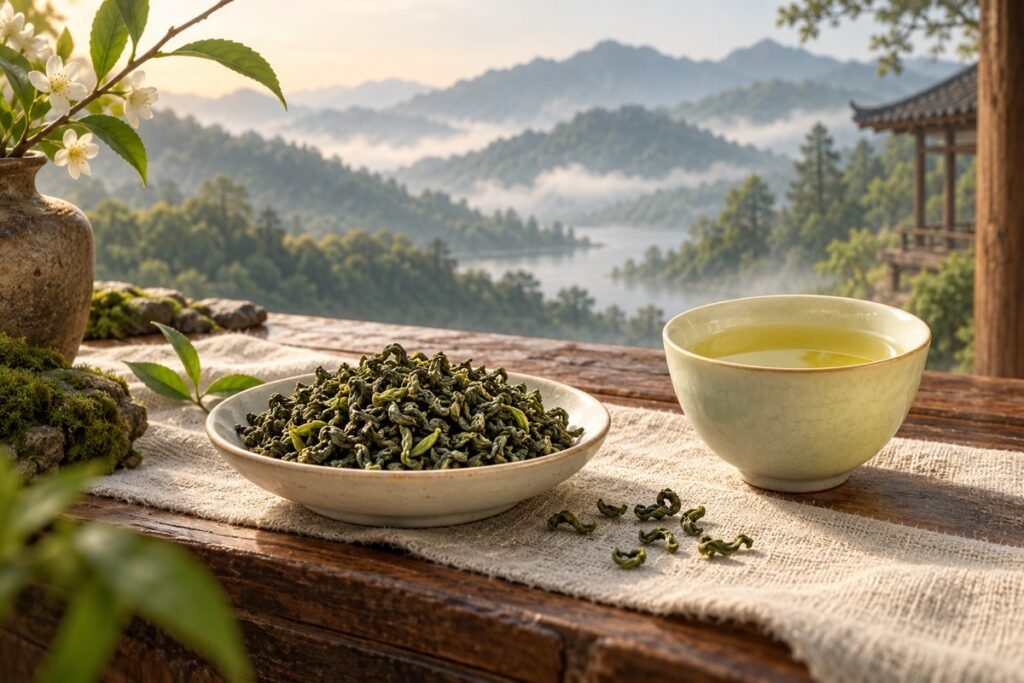
Keep the tea you use frequently in a small, well-sealed, opaque pouch in a cool, dry place. Protect a longer-term refrigerated reserve from odors and moisture, and let a cold sealed packet warm before opening it. The useful distinction is how often you open the tea, not simply whether you own a fridge.
Decide which pack you are storing
TeaVivre’s green-tea refrigeration guide distinguishes tea you expect to finish soon from a longer reserve. Its exact Tai Ping Hou Kui and Lu Shan Yun Wu listings recommend airtight, opaque refrigerated storage. Read the selected package’s instructions too: a broad guide should not erase an exact product’s requirements.
Daily portion
Keep a manageable amount in a clean, dry, food-safe pouch or container that closes securely. Choose a cool cupboard away from the kettle, stove, window and strong-smelling ingredients.
Reserve portion
Keep unopened or carefully sealed tea inside an additional odor-resistant container when refrigerating. Avoid opening the entire reserve every time you make a cup.
Splitting a larger purchase into a working portion and reserve is an editorial handling strategy. It reduces the number of occasions on which you disturb the full stock; it is not a tested promise of a particular shelf life.
Open a cold packet without adding moisture
- Take out only the sealed portion you intend to use. Keep the remaining reserve protected.
- Let the closed packet reach room temperature before opening. Condensation is the reason not to expose cold leaves immediately to humid room air.
- Use a dry utensil to take out tea. Keep the pouch away from steam while the kettle is running.
- Close the pouch promptly and return it to its chosen storage place. Label the opening date so you can prioritize older opened tea.
TeaVivre’s older storage advice explicitly warns against opening cold packets before they warm. Its various articles differ on freezing and storage duration, so this routine does not prescribe a freezer schedule or a universal number of fresh-tasting months.
Fix the storage problem before changing the recipe
| What you notice | What to check |
|---|---|
| The tea picks up a kitchen smell | Check the closure and nearby foods or cleaning products. Change the storage location. |
| A pouch is left open beside the kettle | Move it before brewing and close it before handling hot water. |
| Your large bag gets less interesting before you finish it | Buy a smaller quantity next time or divide a reserve at the start. |
| One cup tastes flat | Repeat a measured brew and check water before deciding storage is the cause. |
Color and a single disappointing cup cannot by themselves tell you whether dry tea is spoiled. If leaves are damp or visibly moldy, do not try to rescue them by roasting or extending the brew; discard the affected tea. For ordinary loss of aroma, the practical fix is a smaller, better-protected purchase next time.
End with a routine you will follow: one working pouch, a sealed reserve only when needed, and no open tea beside steam. The sample-order guide helps avoid buying more green tea than you can assess and finish.