Da Wu Ye review: a floral finish that rewards a light hand
Da Wu Ye is a Dancong to sample for orchid-like aroma, gentle toast and a sweet finish. Its weakness is also clear in the original feedback: too much leaf or too long a steep can make it bitter, while a careful cup may still feel mild to someone seeking more depth.
We may earn a commission if you buy through our links. Affiliate disclosure.
At a Glance
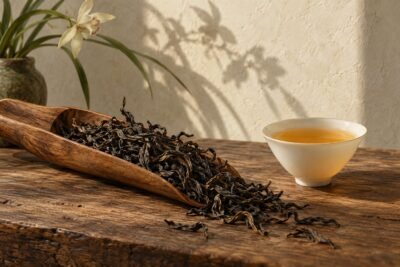
KEY FEATURES
- Da Wu Ye Phoenix Dancong
- Da Wu Ye
- Cup: 3 g / 355 mL / 95°C (203°F) / 3–5 min
Tea assessment
Research-based editorial fit scores, not personal testing or measured intensity. Historical customer experiences may differ from the current batch.
Orchid-like fragrance and a sweet finish support an aroma-focused role.
Smooth accounts coexist with a dry or short finish.
Dose and time sensitivity make careful brewing important.
Development is reported, but later extraction can become harsh.
PROS
- Aromatic sweetness gives a mild cup a reason to linger.
- The profile can change across short infusions.
CONS
- Oversteeping can quickly turn it bitter.
- Quiet flavor or a dry finish can still disappoint.
A light hand matters more than dark-looking leaves
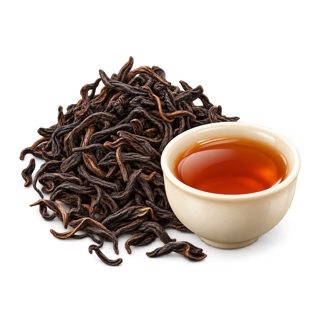
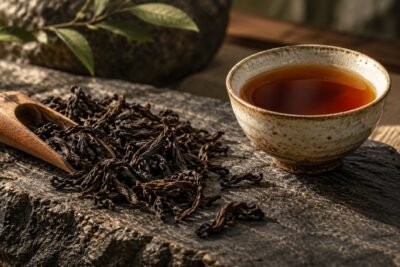
Da Wu Ye’s leaf appearance can suggest a stronger cup than the feedback describes. Some accounts find the experience concentrated in orchid-like fragrance and the returning sweetness after swallowing, with a much milder immediate taste. Others enjoy a progression from flowers toward fruit and creaminess. Those are reasons to explore short infusions, not reasons to pack the vessel until the liquor becomes forceful.
Set up for the five-second opening
The documented Da Wu Ye gongfu method uses 95°C water and begins with a five-second infusion. Have the receiving pitcher ready before pouring. That practical setup matters because the original evidence repeatedly connects excess leaf or prolonged contact with bitterness.
Cup
3 g / 355 mL / 95°C (203°F) / 3–5 min. Decant at the chosen time. The cup instructions do not specify a rinse.
Gongfu
8 g / 110 mL / 95°C (203°F). Approximately 5 seconds. Infusion sequence: 5, 10, 15, 20, 25, 30, 45, 55, 75, 90, 120, 150 seconds. Drain fully between pours.
Separate extraction trouble from a flavor mismatch
| If the cup does this | What to try or conclude |
|---|---|
| Becomes bitter after more leaf or longer contact | Return to a measured dose and shorten the next contact; keep other variables stable so the change tells you something. |
| Stays smooth but mostly floral | More extraction may not create the fruit or roast you wanted. Limited complexity is a reported preference objection even in a well-behaved cup. |
| Leaves a dry, short finish instead of lasting sweetness | Stop when the finish no longer appeals. Positive endurance accounts do not require you to keep brewing your own disappointing session. |
This is why Da Wu Ye is a conditional introduction to Dancong: its lighter aromatic character can be inviting, but the timing needs attention. The Dancong sample guide helps choose a second tea that tests a real contrast, such as stronger fruit or a different finish, instead of ordering another aroma name without a question in mind.
Pros & Cons Analysis
Based on supplied customer reviews and verified product documentation
Pros
- Orchid-like fragrance and a returning sweet finish are supported by detailed accounts. Judge the aftertaste as part of the experience rather than looking only for initial strength.
- One session develops from light floral notes toward creaminess and fruit; another balances toast with later sweetness. That supports attentive repeated pours.
Cons
- Multiple accounts connect too much leaf or prolonged contact with bitterness. This is a poor choice for someone who wants to leave leaves sitting unattended in a small concentrated brew.
- A restrained cup is not automatically complex. Original feedback includes insufficient depth, a short dry finish and an experience carried more by aroma than flavor.
Our verdict
Choose Da Wu Ye when an aromatic finish and a lighter Dancong profile interest you, and you are willing to control timing. If a strong fruit-and-roast cup is essential, compare another small sample before deciding. Do not try to manufacture complexity by packing more leaves into the gaiwan.
Frequently Asked Questions
Does dark-looking leaf mean a heavy roast?
Not reliably. This product’s original feedback often describes a lighter cup; leaf color alone does not establish roast intensity.
Must I complete twelve infusions?
No. Twelve is the supplied sequence length, not a requirement or a promise that you will enjoy every pour.
Tea details
| Tea style | Da Wu Ye Phoenix Dancong |
|---|---|
| Seller-stated origin | Fengxi Village, Fenghuang, Chaozhou, Guangdong, China |
| Cultivar | Da Wu Ye |
| Listed harvest | May 18, 2026 |
| Leaf form | Long, slightly curled leaves |
| Added flavoring | Not independently verified; aroma names are not ingredient declarations |
| Cup leaf weight | 3 g |
| Cup water volume | 355 mL |
| Water temperature | 95°C / 203°F |
| Cup infusion time | 3–5 min |
| Gongfu leaf weight | 8 g |
| Gongfu water volume | 110 mL |
| Gongfu rinse | Approximately 5 seconds |
| Gongfu infusion sequence | 5, 10, 15, 20, 25, 30, 45, 55, 75, 90, 120, 150 seconds |
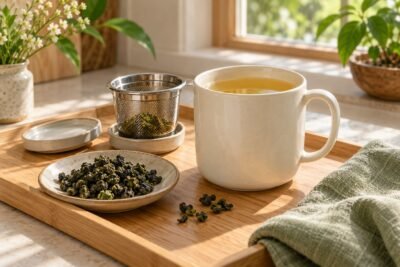
Taiwan High Mountain Oolong Tea
Mingjian Township, Nantou, Taiwan · May 18, 2026
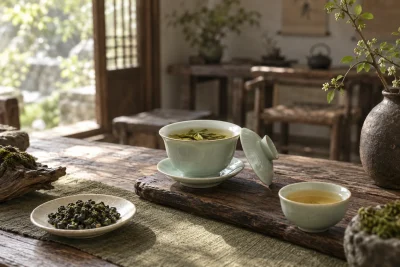
Taiwan Jin Xuan Milk Oolong Tea — Unflavored
Ali Shan, Chiayi County, Taiwan · 2026-05-02
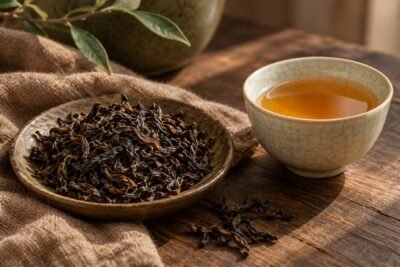
Wudong Xing Ren Xiang (Almond Aroma) Phoenix Dan Cong Oolong Tea
Wudong Village, Fenghuang, Chaozhou, Guangdong, China · May 18, 2026
Rou Gui Oolong Tea
Zheyang Village, Wuyi Mountain, Nanping, Fujian, China · April 30, 2025