Wen Shan Baozhong review: loose leaves and a gentle floral cup
This Baozhong is a small-sample choice for a soft, floral oolong in a loose strip-shaped leaf. The available customer evidence is limited to six displayed accounts, so the recommendation is deliberately narrow: explore its gentle sweetness, without assuming the name proves a particular growing district or superior endurance.
We may earn a commission if you buy through our links. Affiliate disclosure.
At a Glance
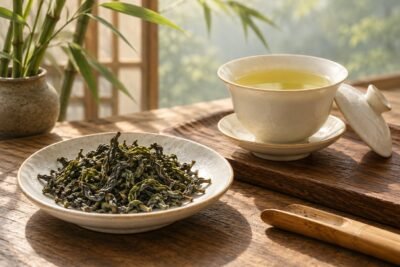
KEY FEATURES
- Baozhong / Pouchong oolong
- Qingxin / Chin Shin
- Cup: 3.5 g / 355 mL / 100°C (212°F) / 2–3 min
Tea assessment
Research-based editorial fit scores, not personal testing or measured intensity. Historical customer experiences may differ from the current batch.
Six accounts support a promising gentle floral direction, provisionally.
Smooth and buttery reports are positive but sparse.
A clear short cup method is available; broad forgivingness is unproven.
Long sessions are reported in a small sample, so the assessment remains conditional.
PROS
- Gentle floral sweetness supports a lighter preference.
- The cup may develop beyond its quiet opening.
CONS
- The evidence base is small and mainly favorable.
- The name and stated location need to be distinguished.
First, separate the Baozhong name from the stated origin
The product title says Wen Shan Baozhong, but its table identifies Zhushan in Nantou and the Shan Lin Xi tea area. This review does not relocate the tea to fit the title. Confirm provenance before purchasing if Wen Shan origin is the deciding requirement; the supplied table supports a more specific and different description.
Loose strips call for their own cup recipe
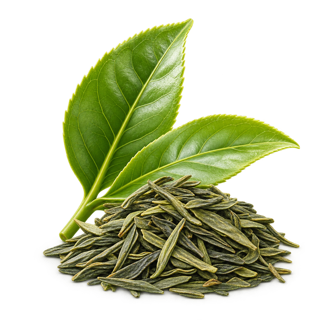
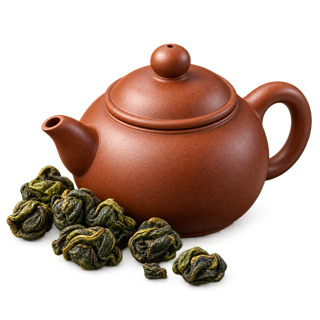
This Qingxin listing has slightly curled strips rather than tightly rolled balls. The conventional recipe uses 3.5 grams for two to three minutes, so borrowing the five-gram recipe of a rolled Taiwanese oolong changes the preparation before you have assessed the tea itself.
Cup
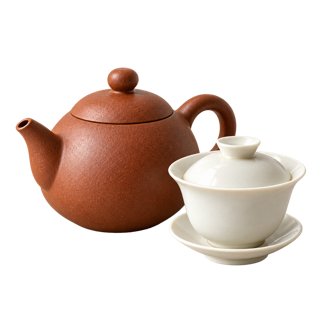
3.5 g / 355 mL / 100°C (212°F) / 2–3 min. Decant at the chosen time. The cup instructions do not specify a rinse.
Gongfu
7 g / 110 mL / 100°C (212°F). Approximately 5 seconds. Infusion sequence: 10, 10, 15, 20, 30, 40, 50 seconds. Drain fully between pours.
These quantities are from the exact Baozhong offer. The short conventional cup is a practical first trial. With gongfu, give the opening a chance to develop: the available feedback includes a quiet, almost green-tea-like start becoming more distinctive around the third infusion. That is a possibility, not a rule for every session.
Six accounts support a small trial, not a broad ranking
Only six displayed customer records were available for this intake. They describe gentle floral sweetness, smoothness and some buttery or milky impressions, with favorable reports of repeated pours. There is also a slight peppery-bitter note. The limited, mainly positive sample cannot establish consistent bitterness-free brewing or superior endurance across batches.
The useful next question is whether you prefer this loose-leaf format and gentle cup to a rolled oolong. Baozhong versus Tie Guan Yin compares their actual methods and the unequal evidence bases. Buy enough for a small trial of that preference, rather than treating a promising handful of accounts as proof of a best-in-class tea.
Pros & Cons Analysis
Based on supplied customer reviews and verified product documentation
Pros
- The limited original accounts describe softness, floral fragrance and subtle sweetness. That is enough to justify a small trial for this preference, not a broad best-in-class claim.
- A detailed account reports a clearer individual character by the third infusion, and two accounts enjoy repeated pours. Keep those observations bounded to this small sample.
Cons
- Only six displayed records were available for this intake. There is little contrary detail beyond a slight bitter note, so confidence in general ease or consistency remains limited.
- The exact origin table points to Nantou, not a location verified merely by the Wen Shan title. Confirm provenance with the merchant if that is central to the purchase.
Our verdict
Try a small Baozhong sample if you want loose-shaped leaves, gentle floral sweetness and a shorter conventional cup recipe. Compare it with the existing Tie Guan Yin for leaf format and cup fit, while recognizing that this Baozhong’s customer evidence is much smaller.
Frequently Asked Questions
Is this Baozhong from Wen Shan?
The title uses Wen Shan, but the inspected origin table names Zhushan, Nantou and the Shan Lin Xi tea area. This review does not resolve that naming difference by guessing.
Can it replace Tie Guan Yin in the same recipe?
The listed cup dose and time differ. Begin with the exact Baozhong recipe, then compare the preparations you would actually use.
Tea details
| Tea style | Baozhong / Pouchong oolong |
|---|---|
| Seller-stated origin | Zhushan, Nantou, Taiwan; garden listed as Shan Lin Xi Tea Area |
| Cultivar | Qingxin / Chin Shin |
| Listed harvest | May 3, 2026 |
| Leaf form | Slightly curled strips |
| Added flavoring | Not independently verified; aroma names are not ingredient declarations |
| Cup leaf weight | 3.5 g |
| Cup water volume | 355 mL |
| Water temperature | 100°C / 212°F |
| Cup infusion time | 2–3 min |
| Gongfu leaf weight | 7 g |
| Gongfu water volume | 110 mL |
| Gongfu rinse | Approximately 5 seconds |
| Gongfu infusion sequence | 10, 10, 15, 20, 30, 40, 50 seconds |
Organic Shui Xian (Water Sprite) Oolong Tea
Panlan Village, Yong’an, Fujian, China · September 12, 2025
Lao Cong Mi Lan Xiang Phoenix Dan Cong Oolong Tea
Fenghuang Town, Chaozhou, Guangdong, China · 2026-05-20
Ya Shi Xiang Phoenix Dan Cong Oolong Tea
Pingkengtou Village, Fenghuang, Guangdong, China · May 18, 2026
Taiwan Jin Xuan Milk Oolong Tea — Unflavored
Ali Shan, Chiayi County, Taiwan · 2026-05-02