Ali Shan oolong review: creaminess without a heavy roast
Ali Shan is a sensible sample when you want floral fragrance and a creamy-feeling cup without the dark roast of a rock oolong. Its appeal is softness and balance rather than force. Historical feedback also describes muted batches, so the award label is a reason to look closer, not a guarantee of intensity.
We may earn a commission if you buy through our links. Affiliate disclosure.
At a Glance
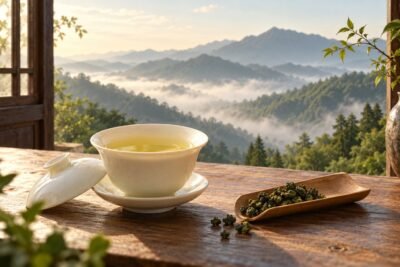
KEY FEATURES
- Light Taiwanese oolong
- Jin Xuan / Taicha 12
- Cup: 5 g / 355 mL / 100°C (212°F) / 3–5 min
Tea assessment
Research-based editorial fit scores, not personal testing or measured intensity. Historical customer experiences may differ from the current batch.
Floral and creamy reports support a gentle aromatic role.
Silky texture is a consistent positive theme within the read sample.
Documented methods are clear, but intensity and batch character vary.
Early development is reported alongside fading and disappointing sessions.
PROS
- A gentle floral direction avoids a dark-roast emphasis.
- Silky texture gives the mild cup substance.
- The early infusions can develop as the leaves open.
CONS
- Subtlety and harvest variation can disappoint.
- The season label and harvest date disagree.
What would make a gentle Ali Shan worth buying?
For this Jin Xuan listing, the useful distinction is between flavor strength and texture. Historical accounts describe a silky, buttery cup even when the flowers are restrained. If you want an oolong that feels substantial without a dark roasted taste, that combination is a reason to try it. If you judge a tea mainly by the force of its aroma, the same softness can feel underwhelming.
The evidence does not support treating the award label as a consistency guarantee. Repeat-purchase feedback includes both continuing satisfaction and disappointment with darker, blander batches. That disagreement matters more to a reorder than the number of attractive flavor words in the description.
Follow the opening of the rolled leaf
A detailed session describes creaminess becoming more apparent through the first few infusions as the leaves open. An editorial way to assess a sample is therefore to notice texture separately from scent: does the second or third cup become fuller, or does it remain merely mild? There is no need to call a quiet cup complex if it does not give you more to enjoy.
Cup
5 g / 355 mL / 100°C (212°F) / 3–5 min. Decant at the chosen time. The cup instructions do not specify a rinse.
Gongfu
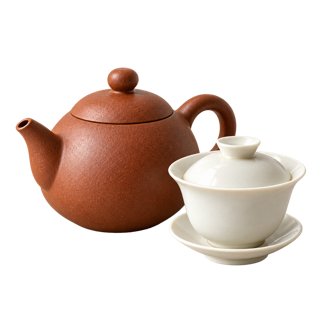
7 g / 110 mL / 100°C (212°F). Rinse listed; duration unspecified. Infusion sequence: 25, 25, 30, 40, 60, 90, 120, 180 seconds. Drain fully between pours.
These quantities come from TeaVivre’s Ali Shan instructions. For a first cup, begin at the shorter end of the stated range. In gongfu preparation, give the expanding leaves room and judge the later cups by the remaining sweetness and texture, rather than by completing eight pours.
An Ali Shan–Li Shan comparison changes more than the mountain
This product names Jin Xuan, while the reviewed Li Shan names Qingxin. Cultivar and batch differ, so tasting the two cannot isolate altitude as the cause of a preference. The Ali Shan and Li Shan comparison is useful if you are choosing between creamy balance and a potentially greener, more savory direction; it is not a prestige ranking.
Pros & Cons Analysis
Based on supplied customer reviews and verified product documentation
Pros
- Gardenia-like and floral sweetness gives the cup a clear role for someone seeking lighter aroma rather than charcoal. The original accounts also show that this fragrance can be too restrained for another preference.
- Smooth, creamy and buttery mouthfeel is described independently of flavor strength. That is a reason to sample Ali Shan for texture even when you do not want a forceful cup.
- One detailed session describes creamy notes gaining presence over the first few pours. Give the rolled leaf room to expand rather than judging its whole character from the dry aroma or first sip.
Cons
- A mild cup is not automatically a flawed cup, but weak aromatic impact matters if that is what you are buying. Both a wish for greater intensity and a disappointing repeat purchase appear in the sample.
- The listing says Autumn Tea while displaying a May harvest. Confirm the supplied season with the merchant if it affects the choice; this review does not resolve that conflict by guessing.
Our verdict
Start with Ali Shan if creamy texture and a soft floral finish are the qualities you want to explore. Compare it with Li Shan for a different cultivar and batch, rather than assuming a more prestigious name must give a stronger cup. Choose a roasted oolong instead if warmth and toast are essential.
Frequently Asked Questions
Is this the same tea as Jin Xuan milk oolong?
This Ali Shan listing specifies the Jin Xuan cultivar, but that does not make every Jin Xuan or milk-oolong offer the same product. Compare the exact origin, processing and ingredient declaration.
Is it an autumn harvest?
The merchant season label says autumn while its harvest date is in May. Confirm the selected batch rather than relying on the season label alone.
Tea details
| Tea style | Light Taiwanese oolong |
|---|---|
| Seller-stated origin | Ali Shan, Jiayi County, Taiwan |
| Cultivar | Jin Xuan / Taicha 12 |
| Listed harvest | May 18, 2026; season label says Autumn |
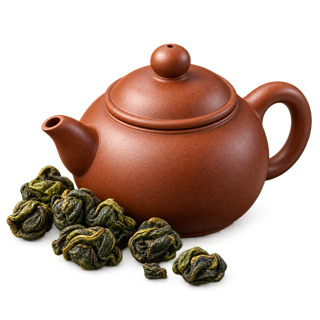
| Leaf form | Rolled balls |
| Added flavoring | Not independently verified; aroma names are not ingredient declarations |
| Cup leaf weight | 5 g |
| Cup water volume | 355 mL |
| Water temperature | 100°C / 212°F |
| Cup infusion time | 3–5 min |
| Gongfu leaf weight | 7 g |
| Gongfu water volume | 110 mL |
| Gongfu rinse | Rinse listed; duration unspecified |
| Gongfu infusion sequence | 25, 25, 30, 40, 60, 90, 120, 180 seconds |
Da Wu Ye (Big Dark Leaf) Phoenix Dan Cong Oolong Tea
Fengxi Village, Fenghuang, Chaozhou, Guangdong, China · May 18, 2026
Lao Cong Mi Lan Xiang Phoenix Dan Cong Oolong Tea
Fenghuang Town, Chaozhou, Guangdong, China · 2026-05-20
Wudong Xing Ren Xiang (Almond Aroma) Phoenix Dan Cong Oolong Tea
Wudong Village, Fenghuang, Chaozhou, Guangdong, China · May 18, 2026
Nonpareil Taiwan DaYuLing High Mountain Cha Wang Oolong Tea
Dayuling Area, Taichung, Taiwan; garden listed as Fushoushan Farm · May 18, 2026; season label says Autumn